



When properly packaged and strain-relieved, optical fibers and photonic ICs are extremely resilient to vibration.
Engineering
Photonic Circuits
Eliminate bandwidth bottlenecks and EMI vulnerabilities by migrating critical signal paths to integrated photonic circuits.
How we approach Photonic Circuits
As the density of sensors on tactical platforms increases, traditional copper interconnects become severe bottlenecks, adding unacceptable weight and EMI susceptibility. We design and integrate photonic circuit architectures that use light instead of electricity for data transfer.
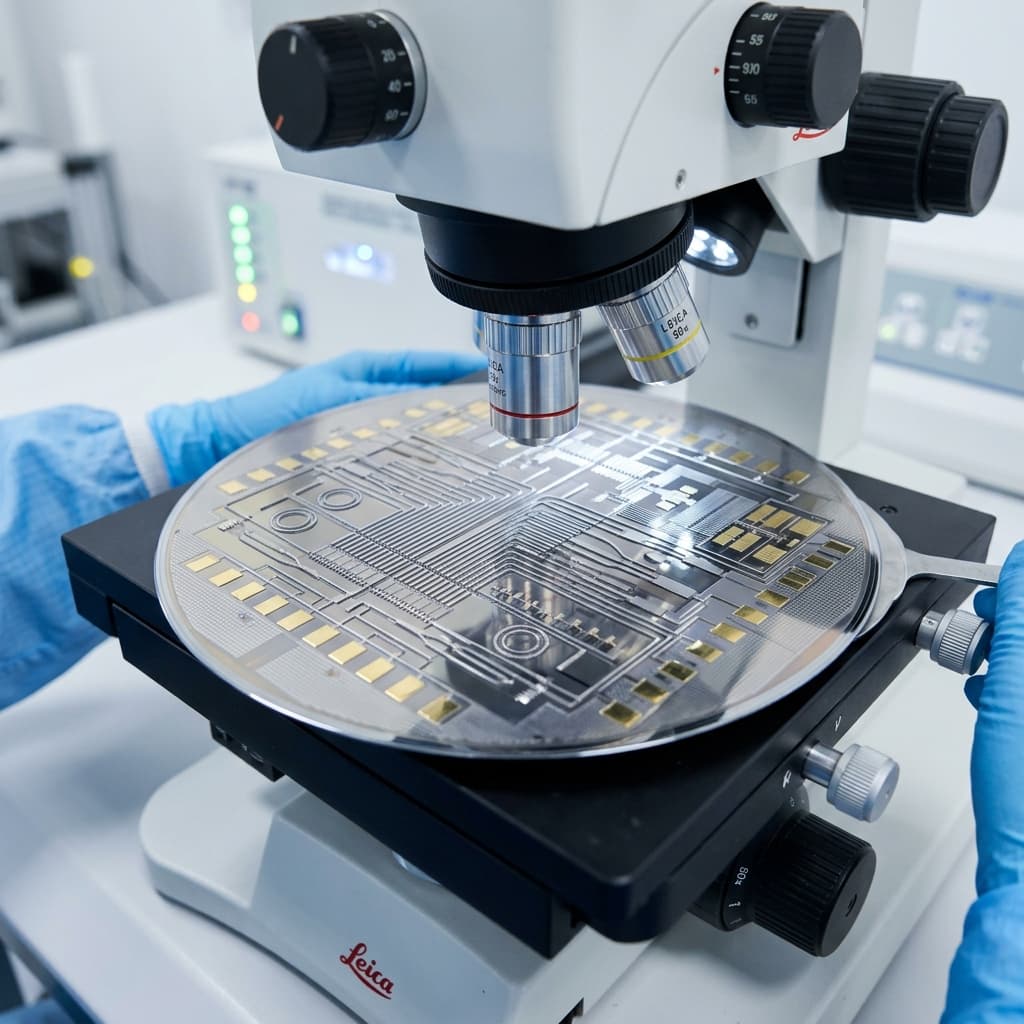
Integrated photonics allow for massive bandwidth improvements, crucial for fusing high-resolutions EO/IR, radar, and LIDAR data streams in real time. Our engineers specialize in the delicate alignment and packaging of silicon photonics with conventional electronic processors.
Beyond simple data transit, we implement analog photonic processing, enabling instantaneous spectrum analysis for electronic warfare applications without the latency of analog-to-digital conversion.
We ruggedize these delicate optical assemblies to withstand the extreme shock and thermal cycling demanded by military specifications.
Related areas in this practice
Light Speed Integration
Photonics offer a paradigm shift in SWaP-C (Size, Weight, Power, and Cost), providing immunity to electromagnetic interference.
- EMI-immune data transit.
- Multi-terabit sensor fusion bandwidth.
- Optical phased array integration.
- Ruggedized fiber interconnects.
Packaging Silicon Photonics
The hardest part of integrated photonics is the optical packaging. We utilize sub-micron active alignment techniques to ensure optical fibers couple perfectly with the silicon die, sealing them hermetically.
Photonic Circuits FAQ
Insights into optical computing.
Optical Engineering
Architecture
Map data flows for copper-to-optical conversion.
Packaging
Design hermetic optical transceiver modules.
Testing
Validate signal integrity under thermal stress.

Talk with engineers who own the work
Request a technical pass on Photonic Circuits: constraints, risks, and a practical next step with clear assumptions.