

Engineering
Aerodynamics
Directly rigorously relate fabric canopy aerodynamics essentially to dangerous oscillation limits, vast landing footprint dispersion, and strict operational envelopes.

How we approach Aerodynamics
Complex parachute aerodynamics couples unsteady high velocity fluid flow with deformable flexible textile structures. Apparent atmospheric wind vectors, asymmetrical turn rates, and ultimate terminal sink speed mathematically drive tactical mission outcomes alongside nominal textbook drag area calculations.
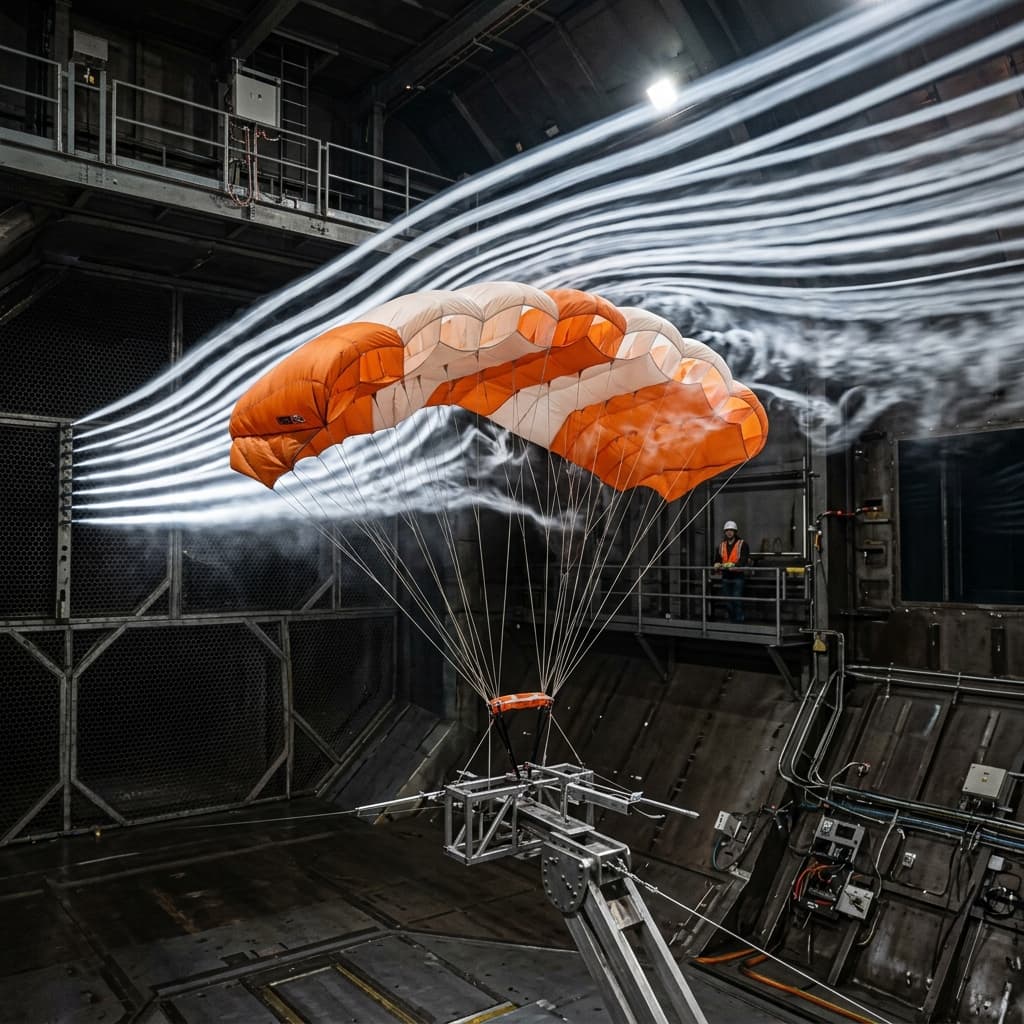
We connect specialized massive wind tunnel evaluation data to strict flight limits that deployed military operators can navigate under varying hostile terrain. These limits are validated against extreme asymmetric payloads and shifting air density profiles.
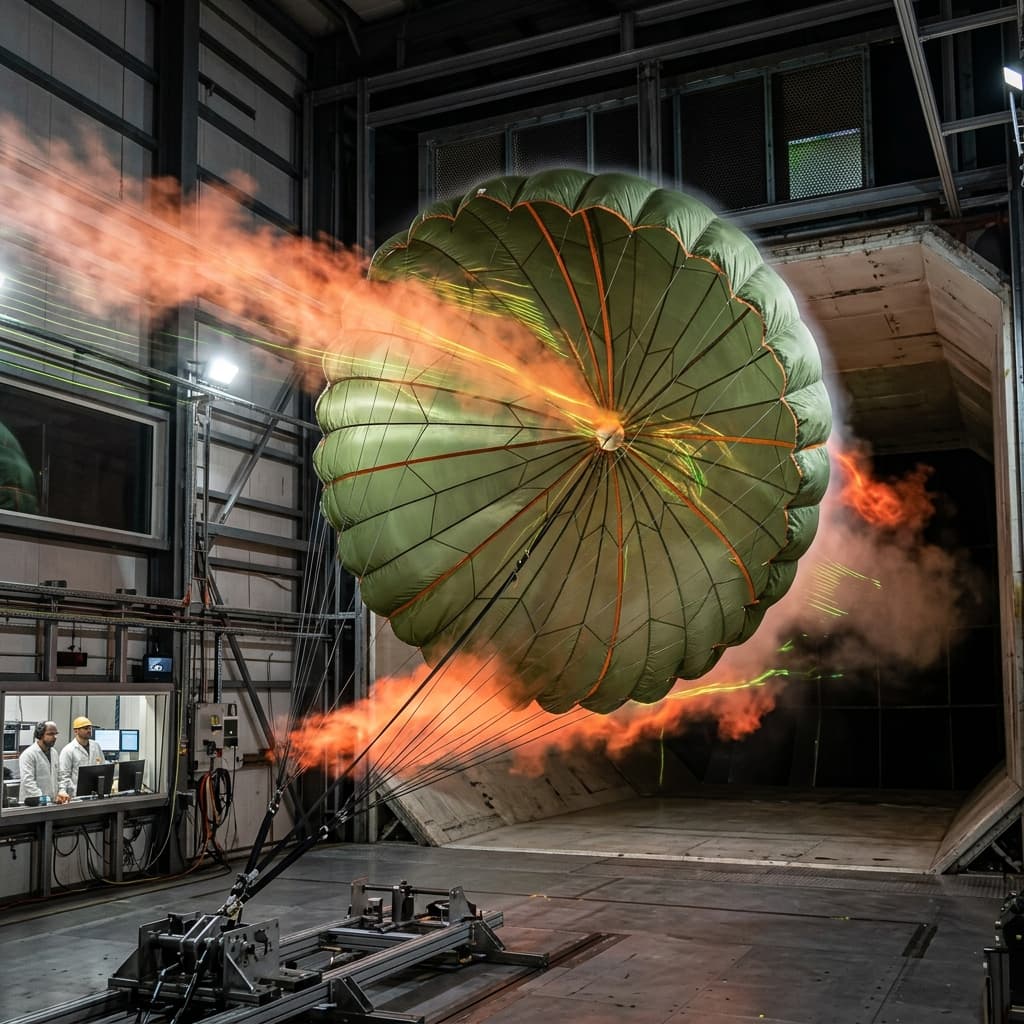
Advanced programs require transparent forward looking predictive physics models. We isolate and validate localized canopy states, dynamic payload mass asymmetry impacts, and extreme environmental density conditions to bracket chaotic operations and refine flight telemetry limits.

Related areas in this practice
Strict confident operational limits backed heavily with empirical evidence
Theoretical aerodynamic platform claims rapidly forcefully become strict usable flight envelopes boasting explicit detailed mathematical provenance detailing exactly which wind tests and precisely what physical configurations remain comprehensively unresolved.
- Massive sprawling testing scenario test matrices actively accounting for brutal crosswinds, extreme payload mass variations, and drastic oxygen starved deployment altitudes.
- Tight highly scrutinized mathematical correlation successfully aligning complex onboard data telemetry directly with actual perceived operator field observations.
- Robust predefined operational mitigations immediately deployed specifically whenever internal predictive algorithms dangerously significantly diverge essentially from actual measured flight telemetry data firmly at the very edges of the certified platform envelope.

Talk with engineers who own the work
Request a technical pass on Aerodynamics: constraints, risks, and a practical next step with clear assumptions.