

Engineering
Canopy design
Turn opening dynamics and structural margins into explicit geometry decisions, systematically avoiding guesswork derived directly from legacy patterns.

How we approach Canopy design
Modern canopy design balances fundamental drag area requirements against dynamic stability parameters and rigid structural reserves. Engineering teams must resolve limiting packing volume constraints and complex suspension line routing architectures to ensure reliable deployment sequencing.
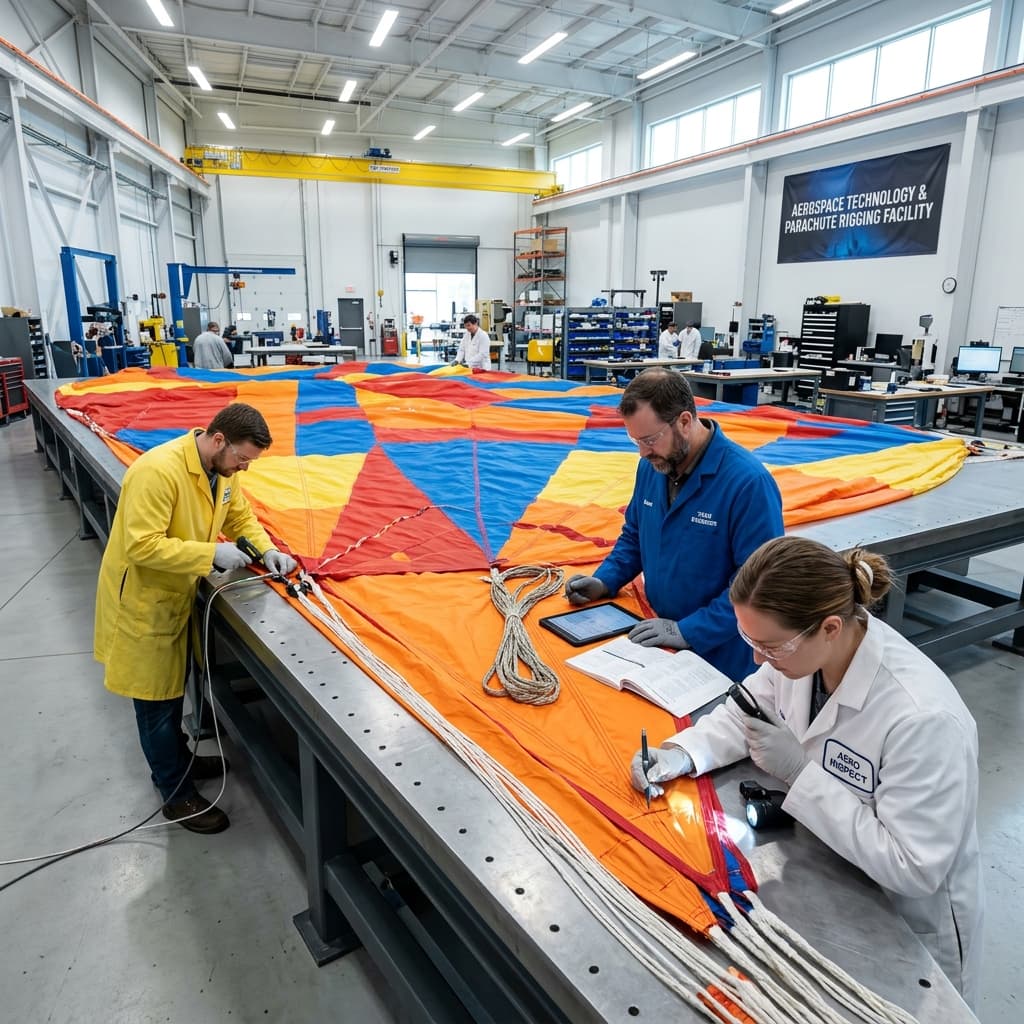
We assist development programs in mathematically expressing chaotic opening scenarios as defined structural load cases. Variables such as aggressive line stretch rates, localized inflation pressures, and asymmetrical slider or mechanical reefing behavior dictate panel cuts, strategic radial reinforcement webbing, and precise trailing edge vent schedules.
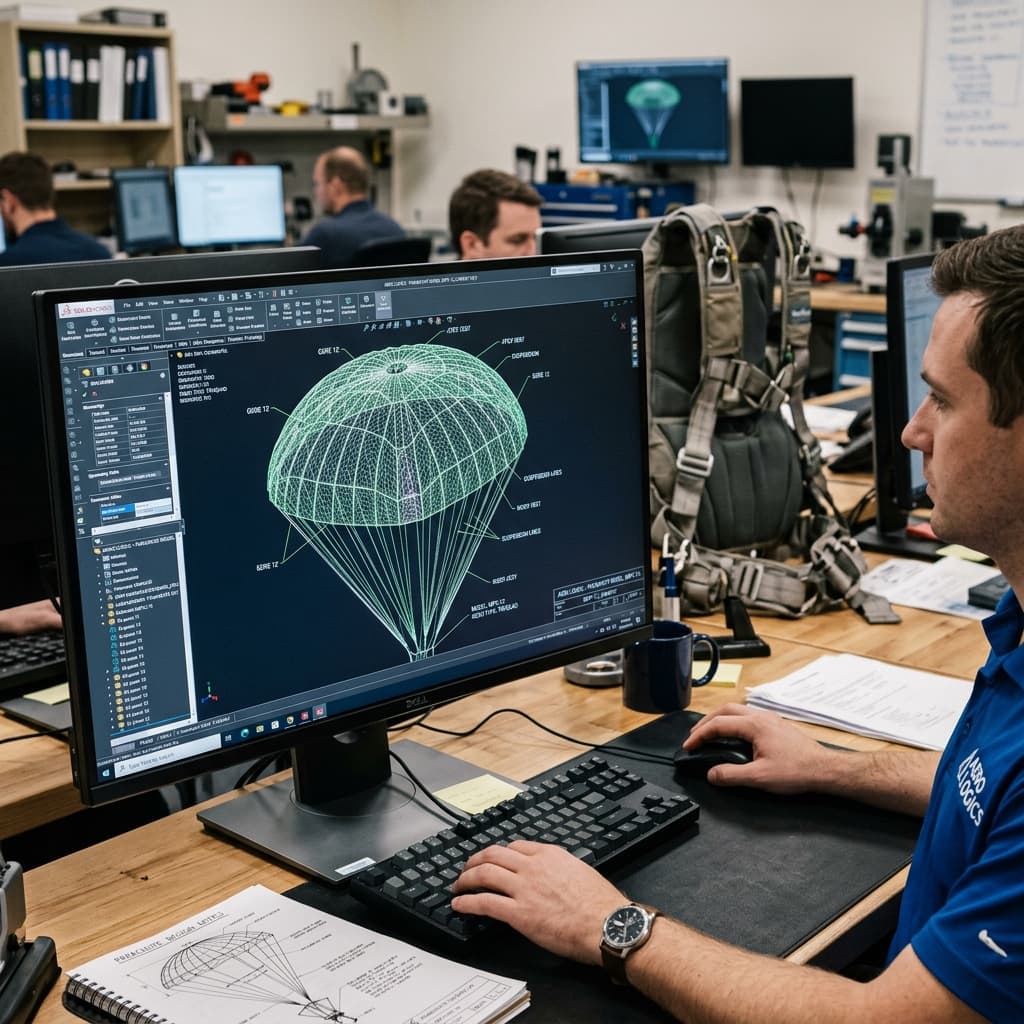
When military platforms iterate through new payload profiles, we maintain comprehensive mathematical baselines. This includes defining which geometric modifications mandate destructive retesting, isolating exact seam allowances that affect tensile strength, and demonstrating how manufacturing floor tolerances propagate into observed flight performance data.

Related areas in this practice
Defensible geometry paired with verification hooks
Fundamental design choices fundamentally remain strictly tied directly to the empirical tests that physically prove them, guaranteeing iterations never dangerously outrun mathematical evidence.
- Chaotic opening shocks and dynamic inflation loads captured strictly as highly structured predictable engineering load cases.
- Deep analytical sensitivity notes defining acceptable variances for mechanical line length, synthetic textile stretch, and heavy packing density.
- Rigorous manufacturing controls completely protecting critical aerodynamic dimensions directly scaling straight through mass factory production.
Empirical inflation stability algorithms
We deliberately directly relate calculated vent geometry and bottom skirt mechanical behavior directly to physically observed flight oscillation frequencies and measured heavy payload sink rate data.
Integrating this deeply analytical approach ensures that any iterative aerodynamic tuning moves always continuously remain heavily grounded strictly in empirical mathematical measurements rather than subjective pilot feeling.

Talk with engineers who own the work
Request a technical pass on Canopy design: constraints, risks, and a practical next step with clear assumptions.