

Engineering
Testing & certification
Qualification and conformity evidence structured for audits and fleet configuration control.

How we approach Testing & certification
Physical testing conclusively proves abstract mathematical assumptions utilizing irrefutable empirical evidence. We strictly mandate extreme environmental chamber stress, rigorous electromagnetic interference sweeps, corrupt software load evaluations, and exhaustive flight boundary expansions. Regulatory certification is rarely granted on theoretical models alone; it requires brutal, undeniable physical proof.
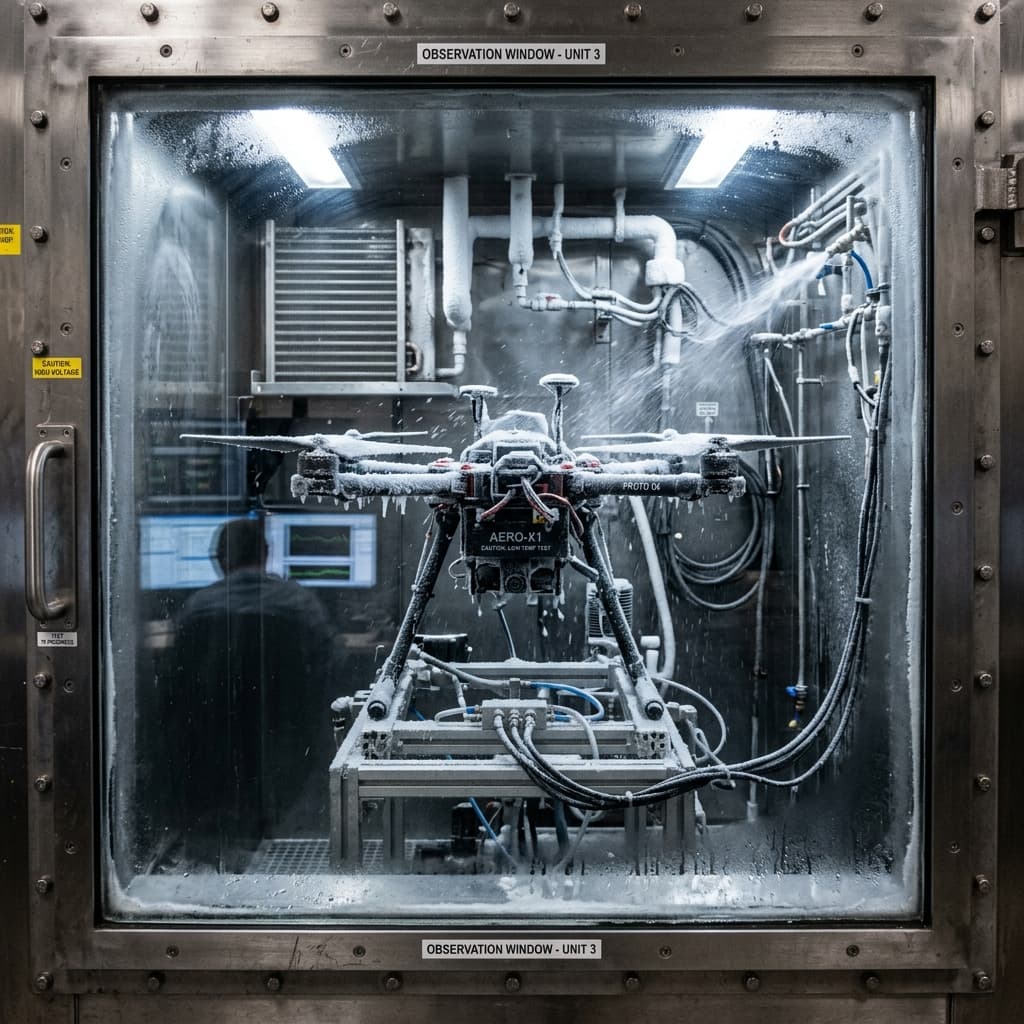
We brilliantly structure master test plans ensuring that any resulting hardware failures are immediately informative, actively driving direct engineering resolutions rather than sparking endless unguided debugging loops. By heavily instrumenting the airframe during flight tests to capture high-rate telemetry, we ensure engineers possess the absolute data necessary to definitively isolate failure modes.
Aviation certification conformity pathways vastly fluctuate based on weight class and regional regulatory jurisdiction. We painstakingly map granular engineering data points directly against the extensive safety checklists expected by international civil aviation authorities, translating raw flight logs into actionable regulatory artifacts.
Structural fatigue testing forms the backbone of a defensible service life prediction. We subject critical load-bearing assemblies - such as wing spars and motor mounts - to hundreds of thousands of cyclical load variations simulating decades of intense turbulent flight, ensuring the composite structures degrade predictably rather than failing catastrophically.
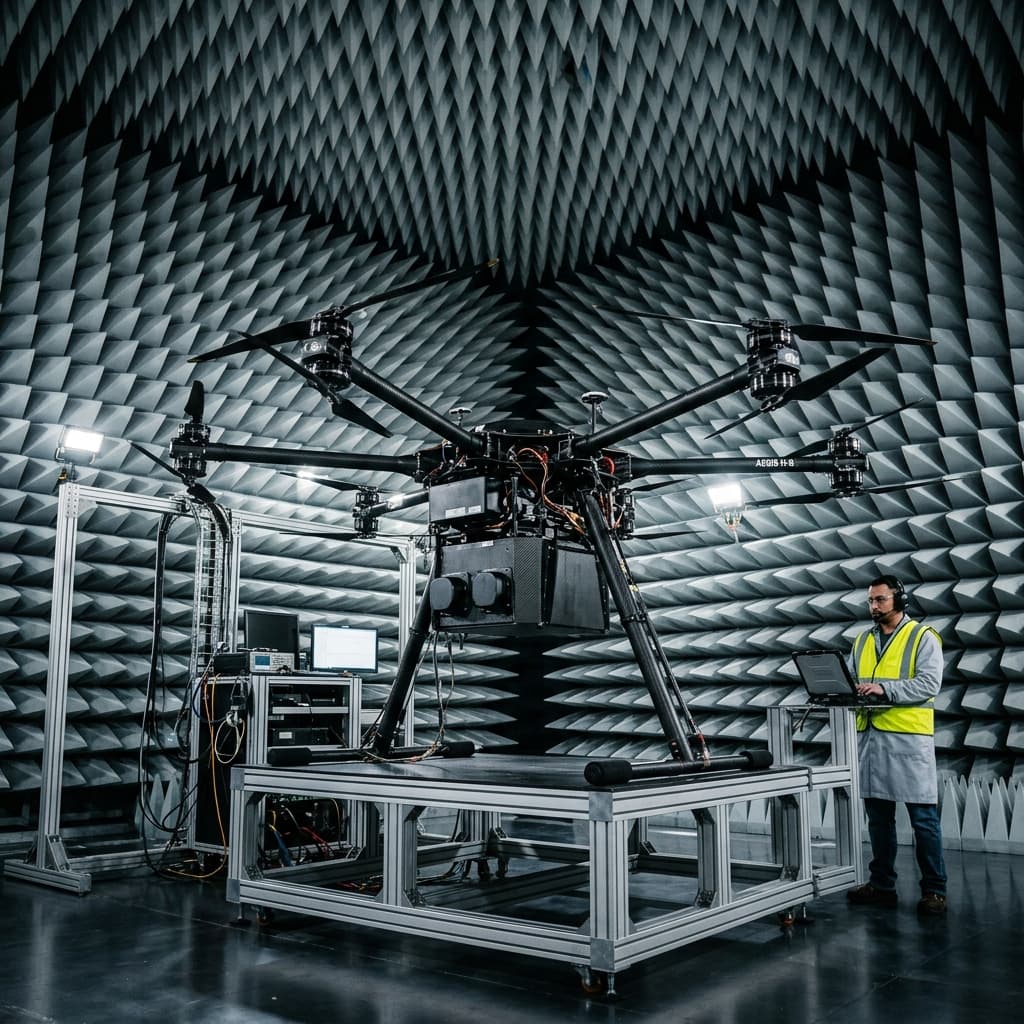
Electromagnetic compatibility (EMC) testing is aggressively pursued to ensure the drone cannot be easily jammed or degraded by dense urban RF environments. By placing the vehicle into massive anechoic chambers, we bathe the avionics in high-power directed energy, guaranteeing the primary flight controller maintains absolute stability under severe digital duress.
Finally, the software certification process rigorously targets the autonomy logic layers. Using hardware-in-the-loop simulators, we continuously run millions of randomized, synthetic fault scenarios (Monte Carlo simulations) against the final compiled firmware, mathematically proving the reliability of the system’s automated failsafe responses.

Related areas in this practice
Compiling irrefutable safety evidence
All executed tests are intrinsically traceable right back to core system requirements. Any observed performance anomalies remain permanently open until complete root cause analysis determines whether to execute a localized fix or order an immediate fleet wide operational grounding.
- Punishing environmental and three dimensional vibration profiles carefully matched evaluating forces beyond projected operational extremes.
- Strict embedded software load verification hashes and highly proven automated system rollback criteria.
- Extensively detailed flight test execution cards equipped with strict quantitative mathematical acceptance gates rather than subjective pilot feeling.
Qualification versus field acceptance
Type qualification demonstrates absolutely that the pristine theoretical design processes adequate structural and thermal margins. Serial field acceptance proves that the actually manufactured unit on the factory floor perfectly matches that qualified mathematical baseline.
We fiercely keep those two verification threads entirely distinct. This discipline ensures that minor manufacturing inconsistencies surfacing in the field never illegitimately erode or slowly corrupt the fundamental assumptions of the original certified platform envelope.

Talk with engineers who own the work
Request a technical pass on Testing & certification: constraints, risks, and a practical next step with clear assumptions.