

Engineering
Fleet operations
Transform individualized robotic entities into a unified intelligent operational matrix maximizing massive warehouse throughput and forward staging efficiency.

How we approach Fleet operations
Massive scale autonomy necessitates intelligent swarm choreography. Operating hundreds of independent mobile robots inside confined warehouse topologies creates exponential collision probability. Our fleet operations center orchestrates precise physical routing algorithms predicting intersecting paths several minutes before they occur preventing operational gridlock.
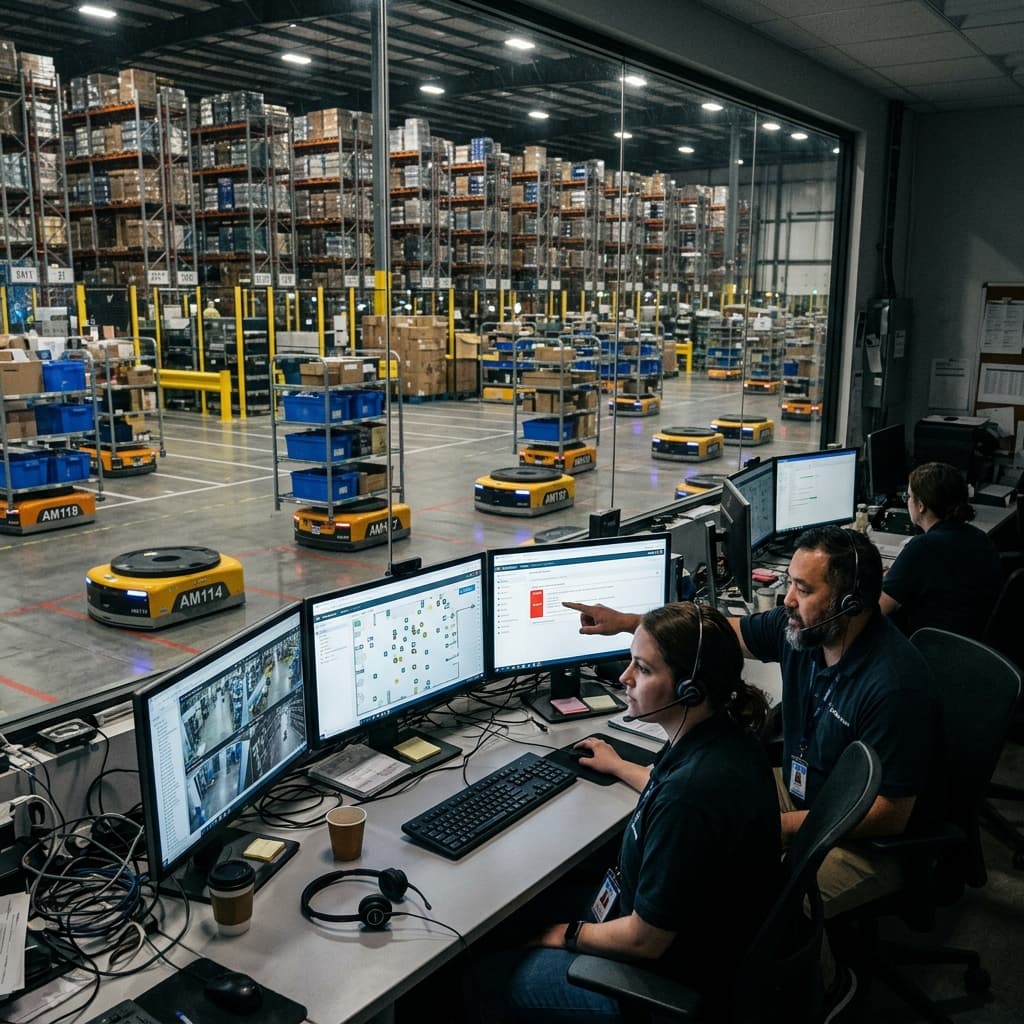
Dynamic task allocation maximizes overall swarm utilization rates. The centralized intelligence layer evaluates battery charge levels payload capacities and localized traffic density before assigning specialized transport parameters. This continuous calculation ensures no single robotic node experiences premature battery exhaustion during critical high volume distribution surges.
Localized physical dropouts plague traditional wireless communication networks inside dense metallic structures. We mitigate this through mesh relay logic allowing individual platforms to bounce encrypted telemetry packets between each other until reaching the primary control terminal. This distributed data networking eliminates dead zones guaranteeing total continuous visibility.
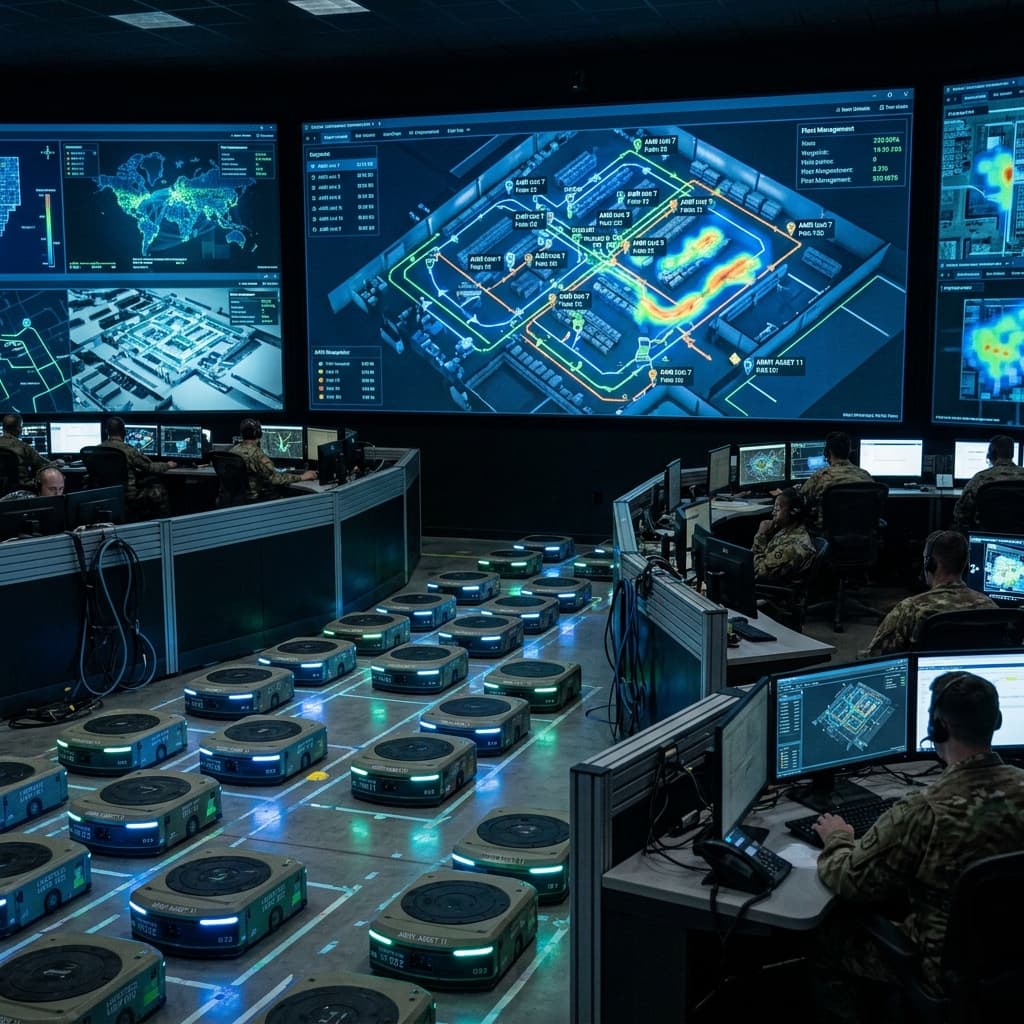
Unexpected obstacles require immediate swarm intelligence redistribution. When a specific access corridor becomes blocked by fallen debris the discovering platform instantly broadcasts localized coordinate updates across the entire unified fleet. Subsequent units automatically recalculate their trajectory vectors bypassing the hazard without requiring manual human recalculation.
Predictive maintenance schedules integrate directly into the fleet command cycles. By analyzing micro variations in individual motor torque across the entire robotic population the system identifies specific units suffering accelerated mechanical wear. These degraded nodes receive automated routing toward localized maintenance bays before experiencing physical drivetrain failure.

Related areas in this practice
Governing synchronized autonomy
Expanding operational throughput requires abandoning singular asset control embracing continuous distributed logic models.
- Dynamic traffic queuing algorithms managing high density choke points maximizing physical flow rates.
- Redundant localized edge servers guaranteeing uninterrupted fleet logic processing despite primary cloud disconnections.
- Automated charging station routing maximizing overall fleet availability across consecutive multi shift duty cycles.

Talk with engineers who own the work
Request a technical pass on Fleet operations: constraints, risks, and a practical next step with clear assumptions.