


Yes. By routing logs through a secure unidirectional gateway, we maintain entirely uncompromised control boundaries while heavily feeding corporate analytical lakes.
Engineering
GCS integration
Telemetry, commands, and operator workflows that stay trustworthy across links and software releases.

How we approach GCS integration
Ground control stations effectively act as the central operator window securely peering into the active mechanical system. Telemetry health dashboards, real time payload status, and secure command pathways must remain flawlessly trustworthy under immense psychological pressure. The absolute worst time to experience interface latency or software crashing is during an emergency automated abort sequence.
We proactively meticulously map communication message sets, establish exact allowable technical latency thresholds, and test physical failover switching configurations bridging the aircraft, intermediate signal relays, and the operator displays. By enforcing rigorously tight serialization protocols (like MAVLink or custom STANAG 4586 implementations), we ensure data remains completely uncorrupted across the RF gap.
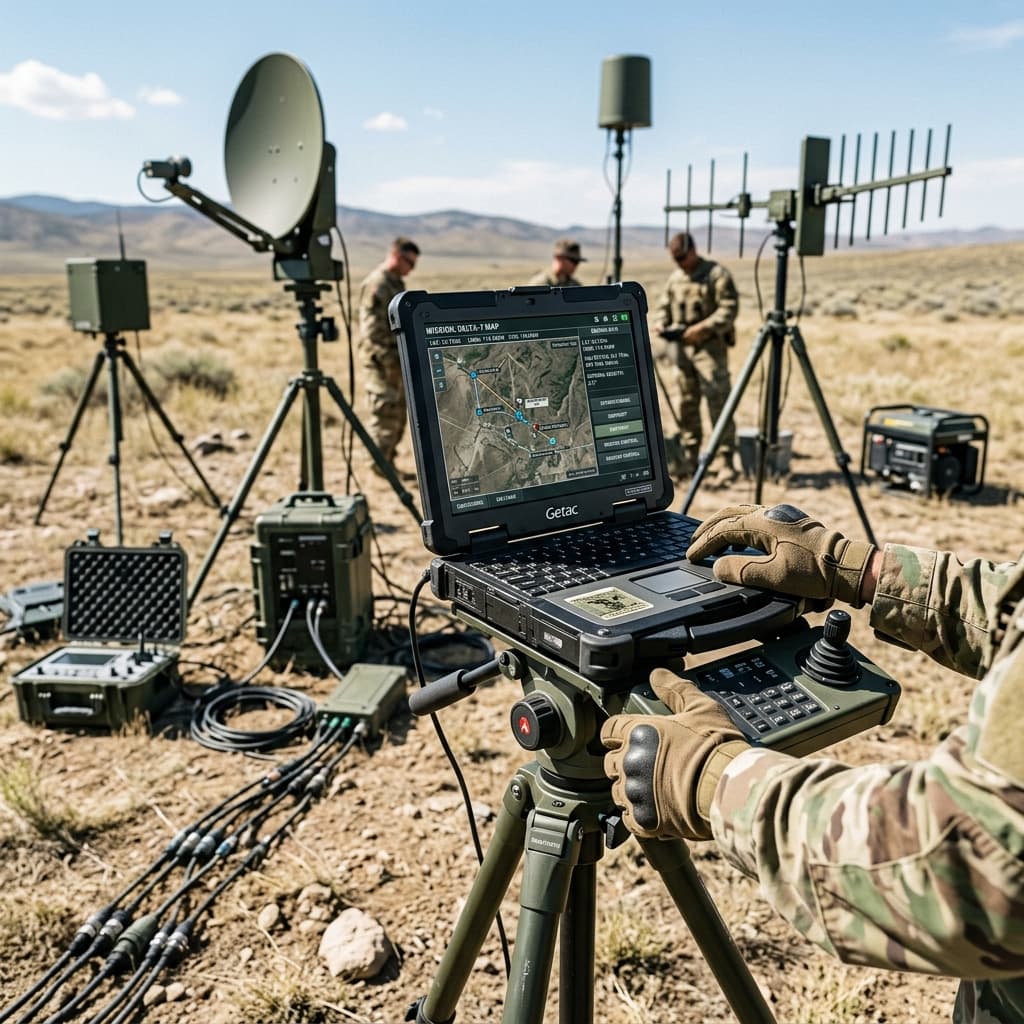
Complex human factors heavily matter. Unnecessary alert flooding, latent mode confusion, and insufficient geospatial context drastically affect baseline mission safety. We aggressively prototype interface workflows heavily relying on real operators exceedingly early in the design cycle, optimizing the layout so critical abort toggles are inherently separated from routine payload controls.
Moreover, the physical integration of the GCS hardware into a ruggedized field environment dictates immense thermal and structural challenges. A commercial laptop naturally overheats and throttles performance under direct desert sunlight. We purposefully design heavily cooled, IP67-rated control enclosures boasting ultra-bright sunlight-readable displays.
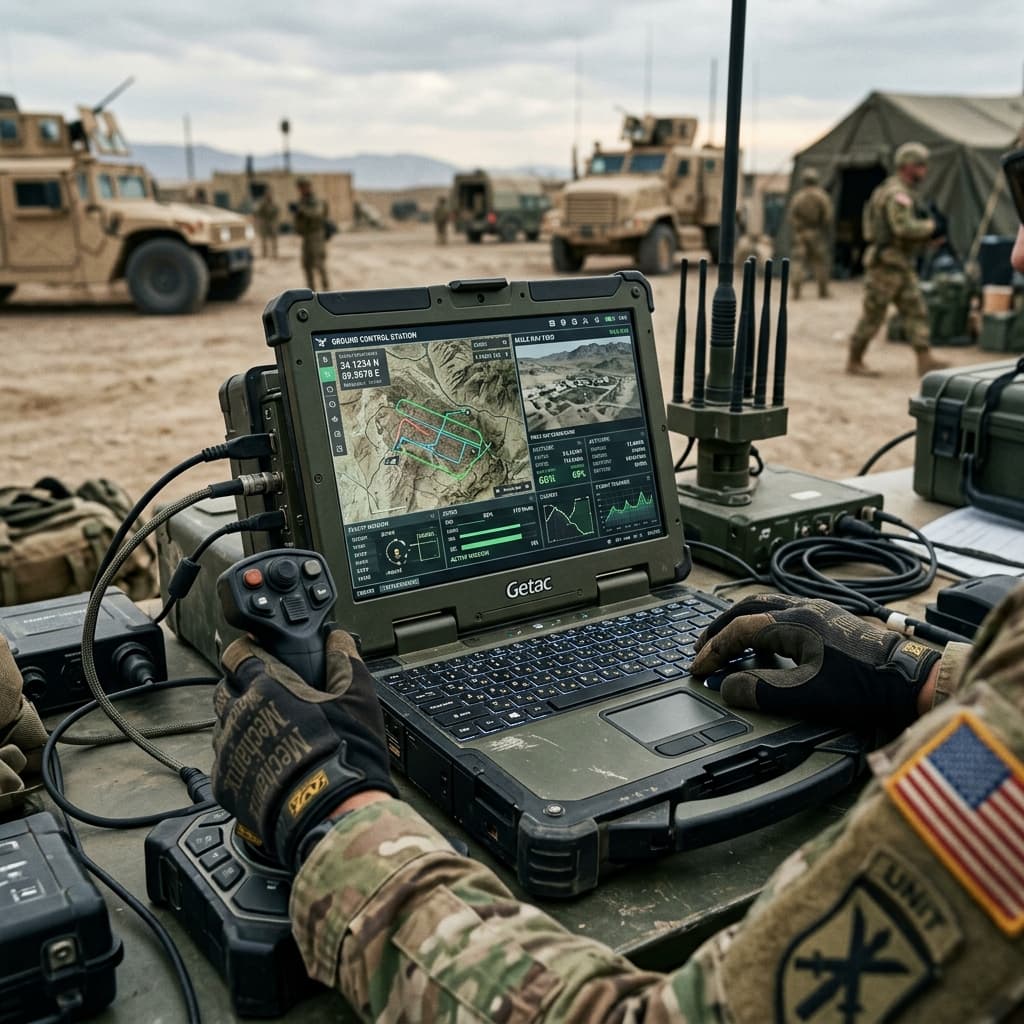
Redundancy architectures must be baked into the GCS networking topology itself. If the primary command console suffers a fatal blue screen, our multi-node GCS networks allow a secondary observation station to instantly seize primary flight authority without suffering a catastrophic link timeout.
Finally, the ingestion of dense payload maps and video streams requires extreme local CPU parallelization. We expertly balance the datalink bandwidth between critical C2 (Command and Control) packets and massive video feeds, actively ensuring that video rendering entirely runs on dedicated GPU hardware without ever lagging the primary flight telemetry loop.
Related areas in this practice
Absolute control where it counts
We mandate strict operational alignment forcefully connecting all ongoing software releases with core structural airworthiness and defined payload hardware configurations.
- Strict overarching telemetry schemas accompanied by granular version compatibility matrices.
- Intelligently redundant link communications strategies heavily defining specific degraded mode automation behaviors.
- Embedded simulation hooks natively allowing sophisticated offline crew qualification using active production hardware.
Mitigating cognitive overload
Operators managing complex autonomous fleets inherently suffer from rapid task saturation. We design UI strategies that prioritize decision critical telemetry while intentionally suppressing routine operational noise.
By implementing strict alert hierarchies, we ensure that operators are instantly notified of degrading battery health or severe unauthorized airspace incursions, without being distracted by minor signal fluctuations.
Ground Control Software FAQ
Resolving GCS integration challenges.

Talk with engineers who own the work
Request a technical pass on GCS integration: constraints, risks, and a practical next step with clear assumptions.