

Engineering
Maritime UAVs
Perform critical maritime surveillance, ship-boarding, and oceanic monitoring with UAVs engineered strictly to withstand aggressive saline environments.
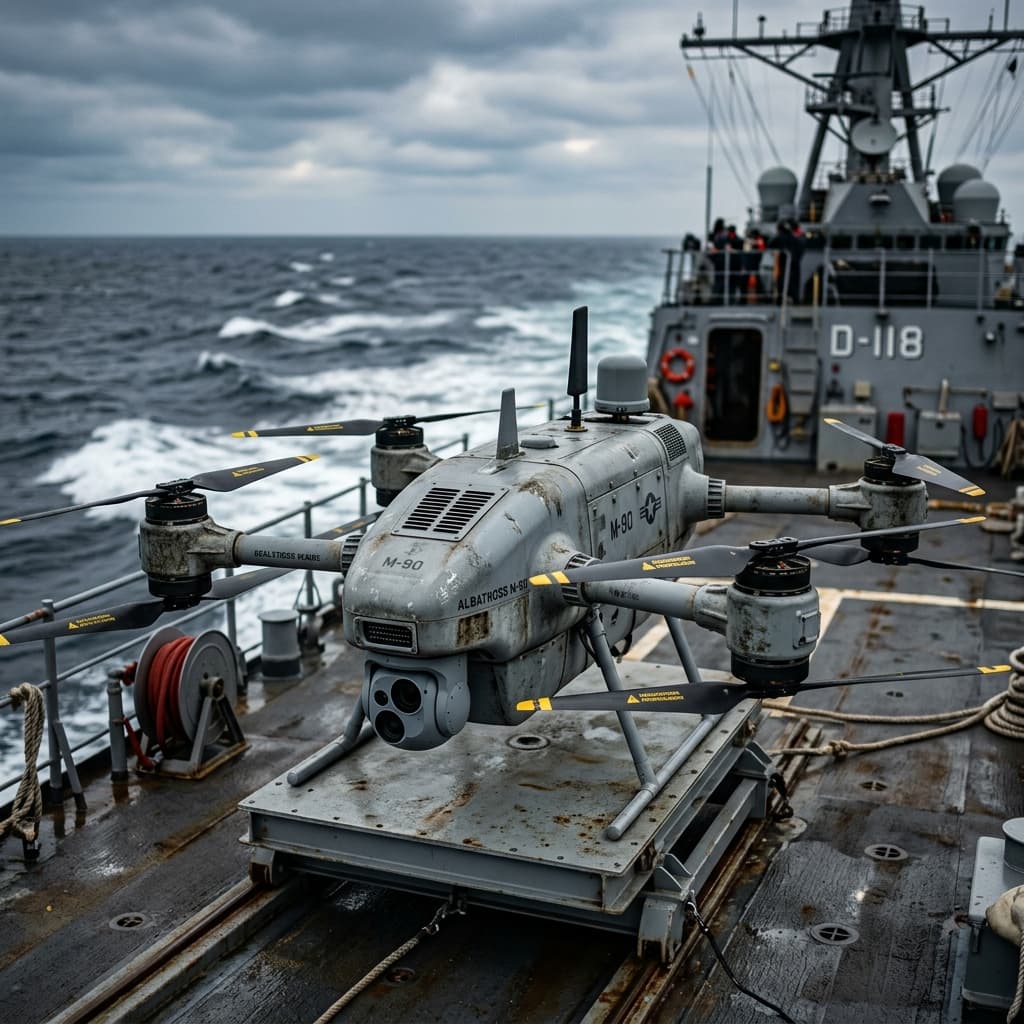
How we approach Maritime UAVs
Naval deployments introduce severe corrosive and aerodynamic challenges. Our maritime UAVs are engineered with conformal coatings, fully sealed propulsion units, and buoyant carbon-composite hulls designed specifically to mitigate salt ingress. A standard terrestrial drone will catastrophically short-circuit within hours when exposed to heavy oceanic salt spray; our platforms thrive in it.
Magnetic interference poses a massive threat to maritime navigation. Massive steel vessel hulls entirely confuse standard flight controller compasses. We engineer highly specialized multi-band GNSS antennas integrated closely with complex inertial measurement units (IMUs) that allow the drone to initialize and safely launch completely independent of localized magnetic distortion.
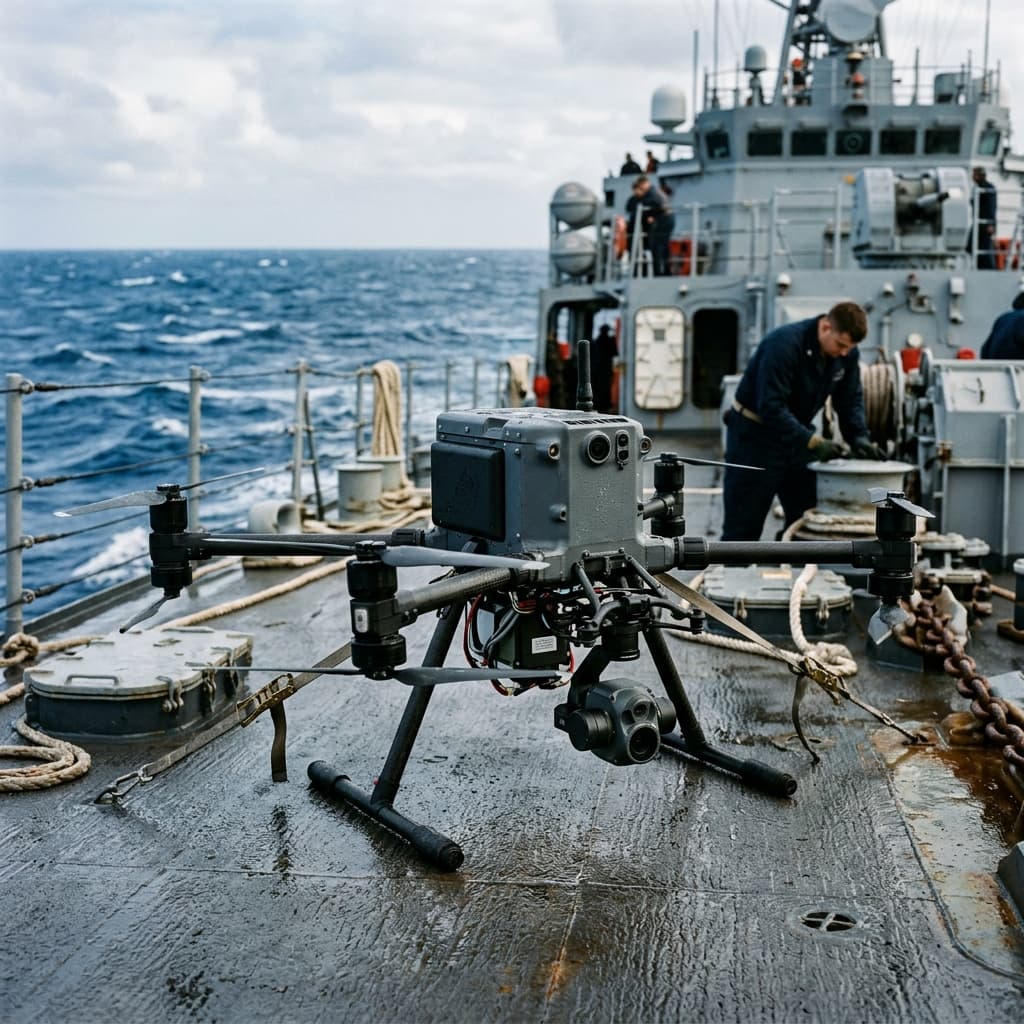
Equipped to launch and recover from dynamic pitching vessel decks, these platforms operate independently to project naval awareness, executing search and rescue (SAR) and hostile boarding intelligence sweeps prior to manned deployment. Recovering a drone onto a heaving deck in heavy swells is extraordinarily dangerous.
To solve the recovery problem, we implement incredibly rapid, localized computer vision targeting. The drone visually identifies specialized high-contrast landing pads painted on the vessel, aggressively calculating the ship's roll, pitch, and heave in real-time. The platform then executes a localized 'pounce' maneuver, forcefully dropping onto the deck precisely as the swell peaks.
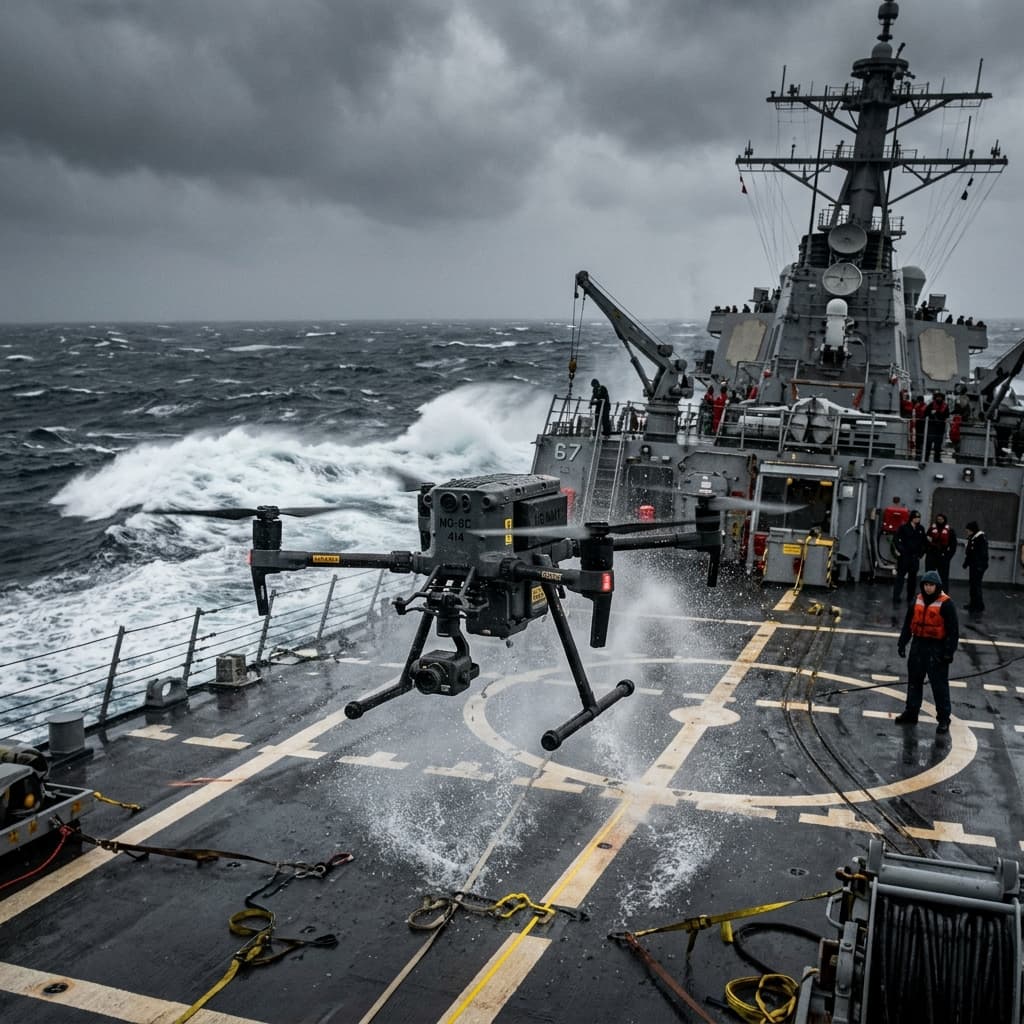
Water resistance must extend entirely to the battery swap architectures. We design highly specialized, watertight battery bays with military-grade IP67 locking mechanisms. A deck operator can safely hot-swap a wet battery pack in a driving rainstorm without ever exposing the sensitive internal avionics to the elements.
Ultimately, deploying a maritime UAV drastically expands a vessel's tactical horizon. By pushing a rugged optical and radar node ten miles ahead of the ship, naval commanders secure the critical early warning minutes required to effectively counter asymmetric fast-attack craft or coordinate extremely precise over-the-horizon troop insertions.

Related areas in this practice
Saline-Hardened Aerial Superiority
Maritime operations tolerate extremely low margins for failure. We integrate aggressive dynamic recovery software logic to synchronize with shifting vessel positioning.
- IP67 and MIL-STD certified water-resistant enclosures and protected internal architectures.
- Magnetic interference mitigation for operating safely inside dense naval metallic structures.
- Emergency maritime flotation profiles enabling safe water recovery without catastrophic payload loss.

Talk with engineers who own the work
Request a technical pass on Maritime UAVs: constraints, risks, and a practical next step with clear assumptions.