

Engineering
Swarm operations
Multiply operator effectiveness through resilient mesh networks and cooperative tactical autonomy protocols.
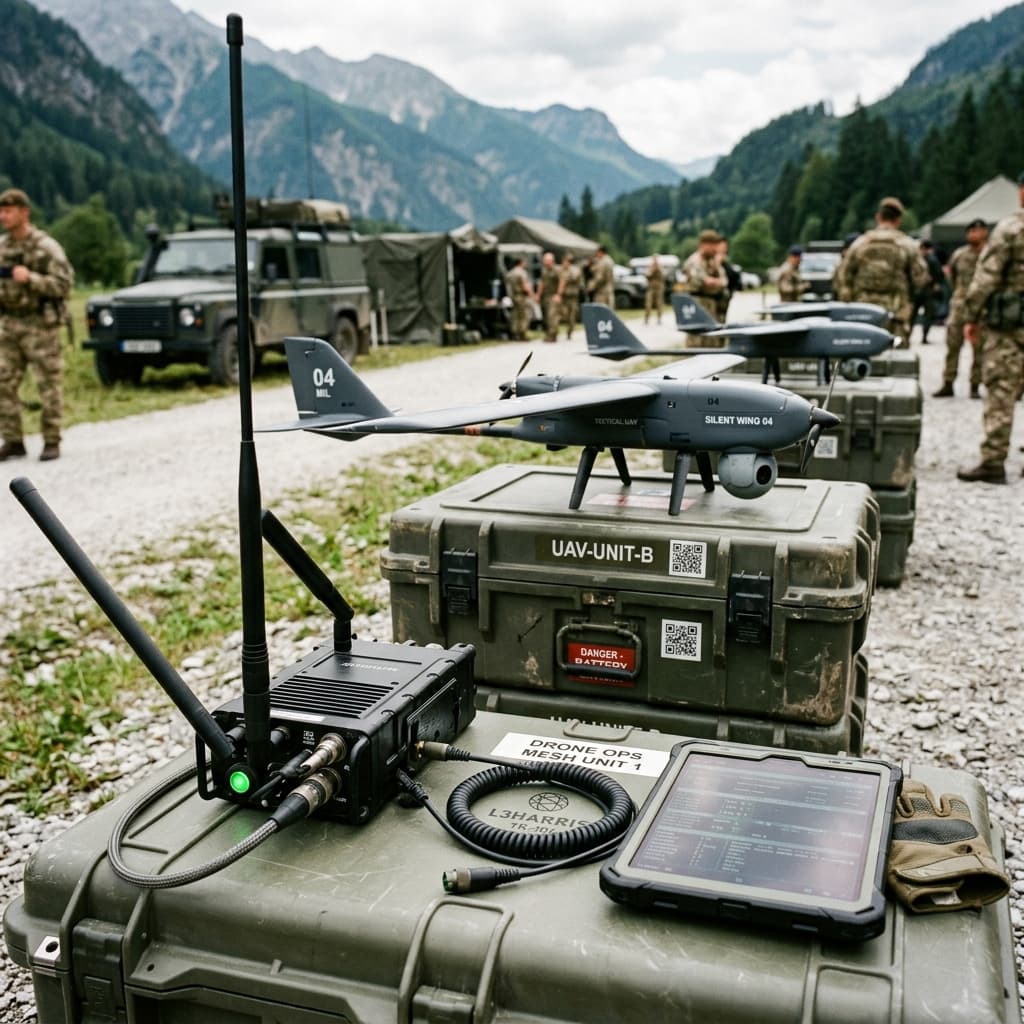
How we approach Swarm operations
Complex swarm operations permanently fundamentally shift the traditional operational paradigm moving completely away from simple one to one piloting entirely toward one to many massive orchestration. By decoupling the operator from direct stick-and-rudder control, we allow a single commander to direct hundreds of assets based entirely on high-level operational intent.
We flawlessly implement the heavily encrypted mesh networking and vastly cooperative local autonomy mathematically required to actually make autonomous tactical swarms a highly reliable battlefield asset rather than an unpredictable novelty. The networking topology must actively heal itself when individual nodes are predictably lost to enemy fire.
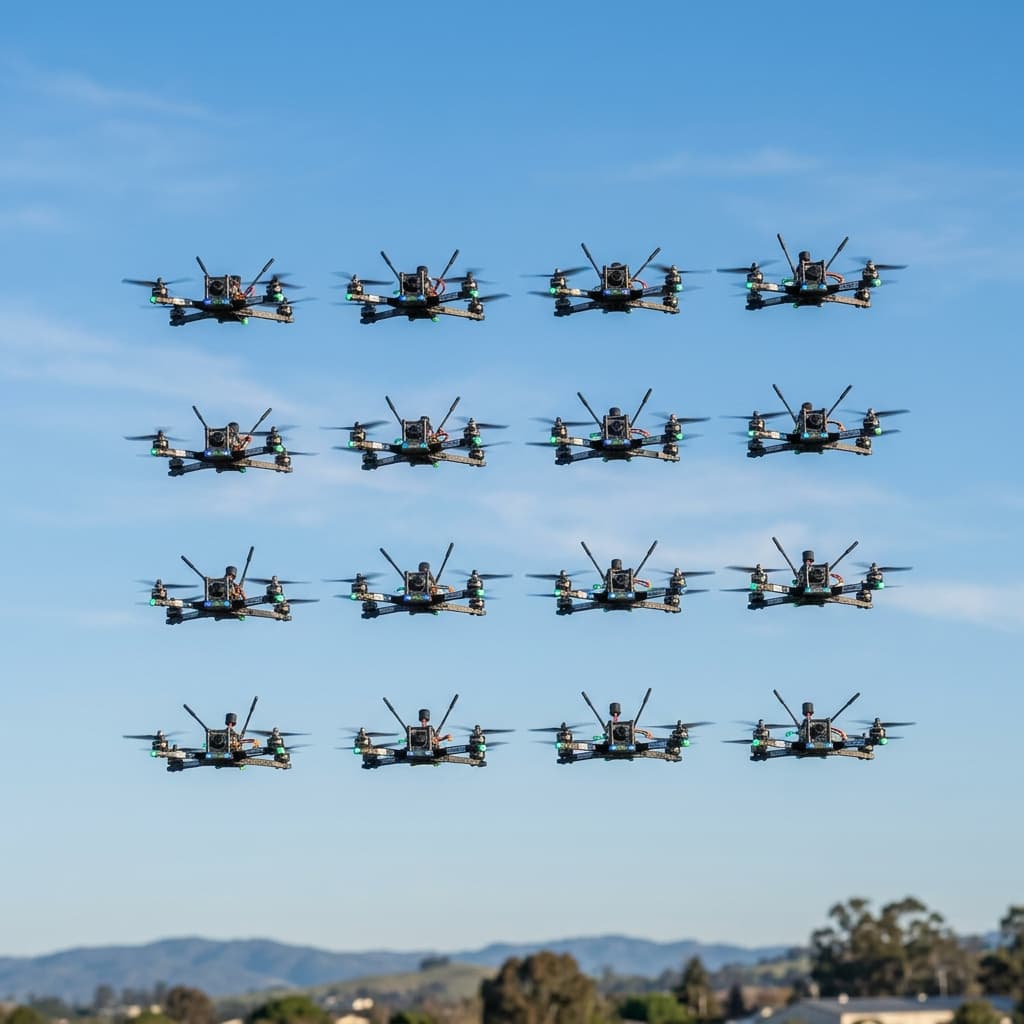
Deeply decentralized structural control means absolutely no single point of overall failure exists. We cleanly integrate powerful distributed algorithms dedicated for cooperative complex search operations, moving perimeter defense grids, and highly synchronized tactical strikes entirely boasting robust mathematical anti collision guarantees.
Maintaining swarm coherence in a GPS-denied environment is an immense engineering challenge. Instead of relying on vulnerable satellite signals, we outfit each drone with ultra-wideband (UWB) transceivers and optical odometry. The swarm continuously calculates its collective geometric shape by measuring the relative distance and bearing to neighboring drones.

Machine communication natively existing within the active swarm cluster must necessarily be incredibly low latency and fundamentally resilient. We thoroughly design and strictly validate robust RF architectures allowing ongoing instantaneous decentralized physical task allocation reliably even right when numerous individual communication nodes simultaneously abruptly drop out of the immediate sky.
Ultimately, deploying a swarm requires redefining human-machine interface (HMI) design. Operators do not manage individual battery levels; they define a search perimeter and assign a threat threshold. The swarm's internal logic autonomously determines which specific drones peel off to investigate a thermal anomaly, ensuring the commander remains focused purely on tactical strategy.

Related areas in this practice
Flawless multi agent tactical coordination
We actively definitively push operational engineering teams deeply beyond relying on scripted unchangeable light shows and seamlessly into establishing truly dynamic unpredictable tactical swarm autonomy.
- Advanced highly optimized mesh networking entirely customized specifically for ultra low latency physical node to node tactical communications.
- Highly simplified human to swarm user interface systems fundamentally designed primarily to absolutely prevent devastating operator cognitive overload.
- Stringent irrefutable mathematical validation heavily demonstrating completely safe emergent intelligent behaviors including fail safe autonomous geographic dispersion logic.
Guaranteed collision avoidance
When a dozen drones simultaneously violently react tracking a single hostile incoming target, horrific cascading midair localized collisions rapidly become an extremely mathematically probable statistical outcome.
We completely eliminate this terrible risk by rigorously structuring explicit hierarchical localized kinematic deconfliction models. Individual swarm entities simultaneously instantly negotiate strict volumetric boundaries directly between themselves utilizing microsecond speeds, totally preventing the swarm itself from accidentally imploding during incredibly tight complex pursuit maneuvers.

Talk with engineers who own the work
Request a technical pass on Swarm operations: constraints, risks, and a practical next step with clear assumptions.