



Managing EMI in Multirotors
How high current ESCs impact magnetometer health and what mitigation techniques work best.
Read ArticleEngineering
Balance hover performance, vibration, and power timelines for precision work close to structures and terrain.

Multirotor platforms excel at precision hover and confined spaces but demand careful attention to vibration, EMI, and thermal rise at high thrust. We align motor and prop selections with frame stiffness and payload isolation. Optimizing this triad ensures maximum mission time without risking structural integrity or sensor fidelity during intense climbing phases.
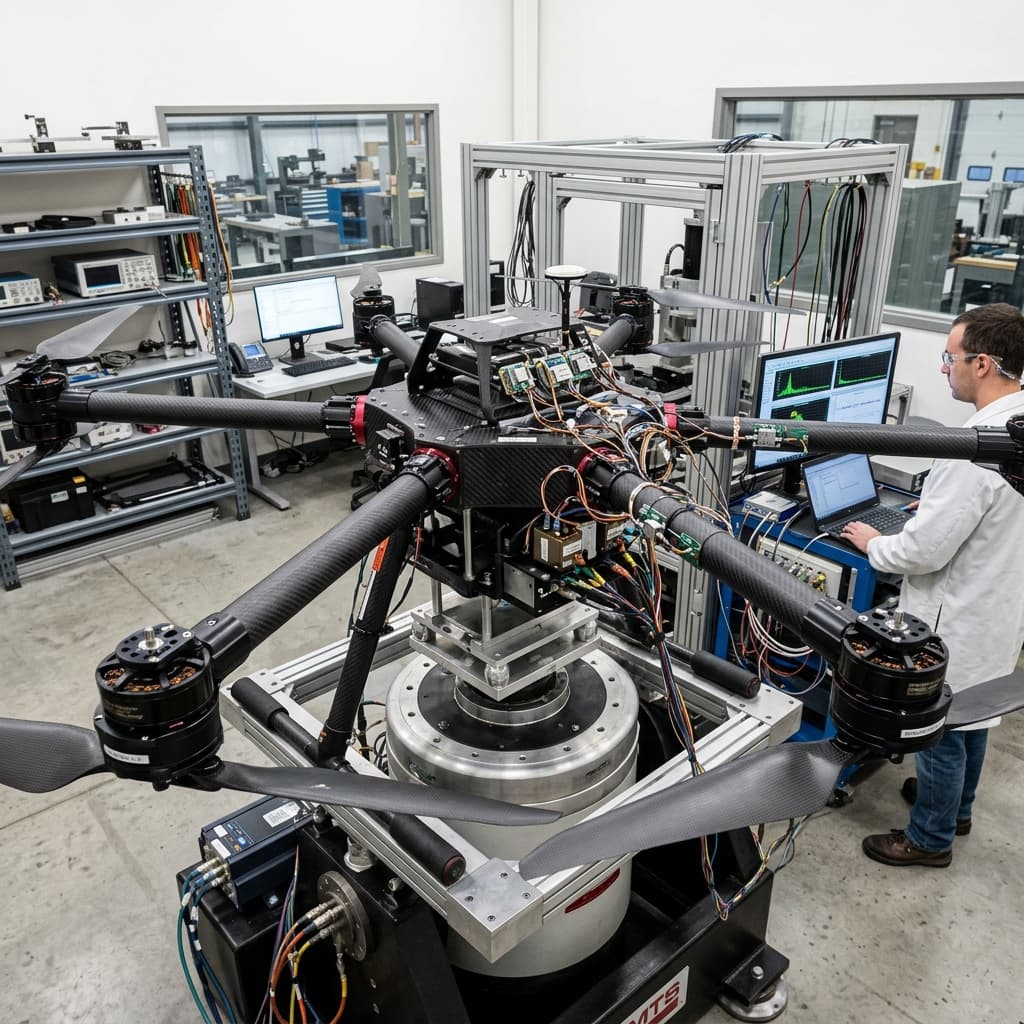
Vibration isolation is often the difference between a pristine aerial dataset and unusable imagery. We employ advanced modal analysis to design damping solutions that specifically target the operating frequency ranges of the selected propulsion systems, securing payloads against high-frequency resonance.
Battery C rates, state of health tracking, and charging infrastructure are part of the system, not an afterthought, especially for high frequency operations. We test thermal equilibrium under peak load to prevent brownouts in critical phases. Continuous telemetry monitoring of individual cell voltages and pack temperatures provides operators with real-time actionable insights.
Furthermore, electromagnetic interference from high-current ESCs and power distribution boards must be meticulously routed away from magnetometers and sensitive GPS receivers. Our baseline standard includes dedicated shielding and disciplined cable routing protocols that eliminate cross-talk and maintain navigational accuracy in GNSS-denied environments.
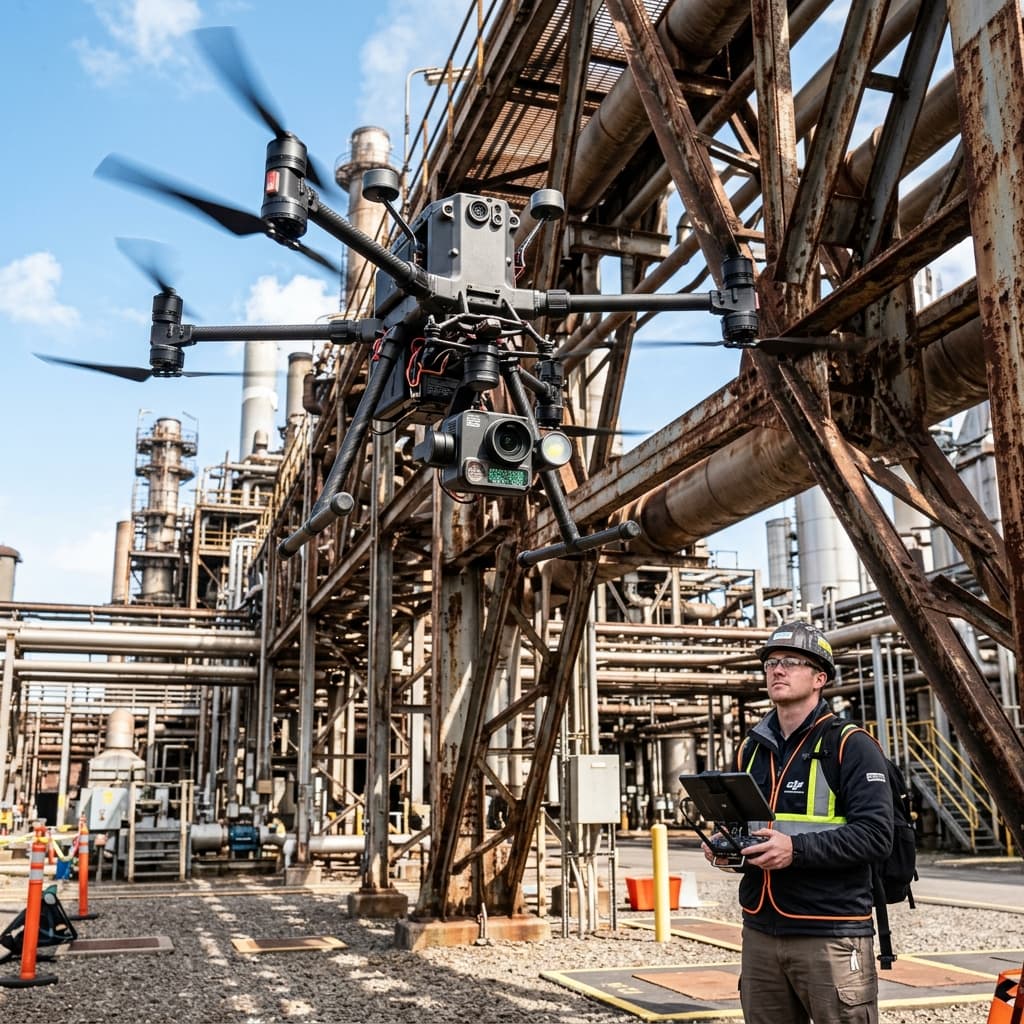
For inspection or cinematic workloads, we coordinate gimbal dynamics, obstacle sensing, and flight modes so operators can execute repeatable, high quality captures without wrestling the aircraft. This requires tight integration between the flight controller and the payload computer, ensuring synchronized data tagging and perfectly smooth control handoffs.
The final delivery includes completely mapped operational envelopes, clearly detailing the performance limits concerning wind gradients, DA (density altitude), and max payload scaling. Predictable behavior gives operators the necessary confidence to push the boundaries of operational utility while remaining firmly within established safety margins.
We treat propulsion and avionics as a coupled system because vibration and electrical noise propagate directly into sensors and datalinks.
High frequency motors can critically degrade IMU performance and optical image quality. We structure mechanical test campaigns to quantify isolation effectiveness and update maintenance guidance when propellers or dampers age.
We evaluate the resonance profile of the entire airframe to ensure that adding heavy payloads does not inadvertently tune the frame to the propulsion output, causing catastrophic sensor drift.
Learn more from our engineering teams on multirotor platforms.
How high current ESCs impact magnetometer health and what mitigation techniques work best.
Read ArticleRequest a technical pass on Multirotor: constraints, risks, and a practical next step with clear assumptions.