

Engineering
Controls
Synthesize chaotic environmental sensor data into smooth predictable motion profiles utilizing cutting edge adaptive feedback control loops.

How we approach Controls
Physical mechanical excellence remains useless without profound digital oversight. Our robotic control architectures bridge the gap between abstract human intent and absolute physical translation. Processing thousands of independent variables per millisecond these localized compute clusters solve inverse kinematic equations faster than natural biological reflexes calculating perfect trajectory paths.
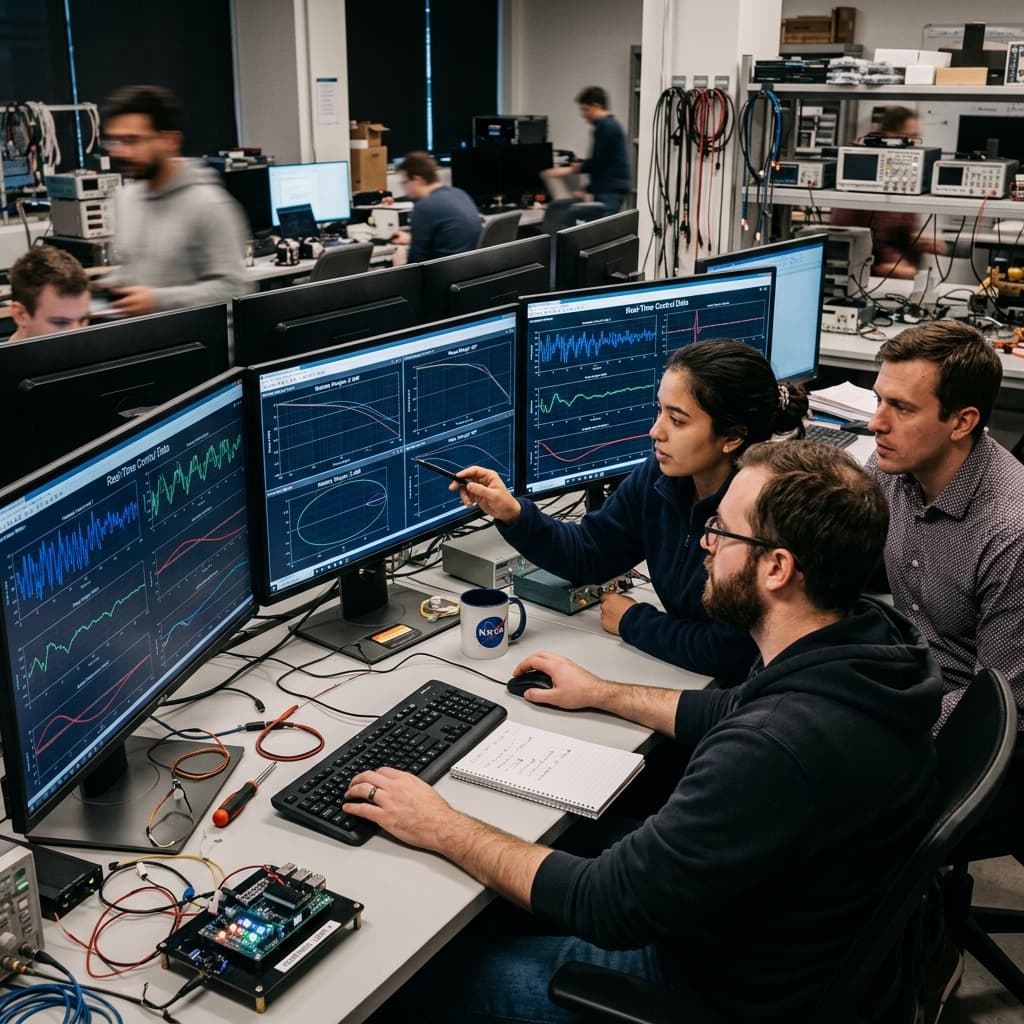
Standard deterministic logic fails within unpredictable physical workspaces. We implement advanced model predictive control algorithms allowing the robotic platform to anticipate complex impending physical disturbances. By simulating future physical states within brief localized time horizons the controller outputs preemptive counter torque commands maintaining strict positional compliance.
Latency separates functional autonomy from catastrophic collision. Our core real time operating systems bypass traditional kernel layers communicating directly with hardware motor drivers over specialized synchronized ethernet protocols. This creates an deterministic microsecond jitter environment ensuring absolute precision across complex multi axis interpolation maneuvers.
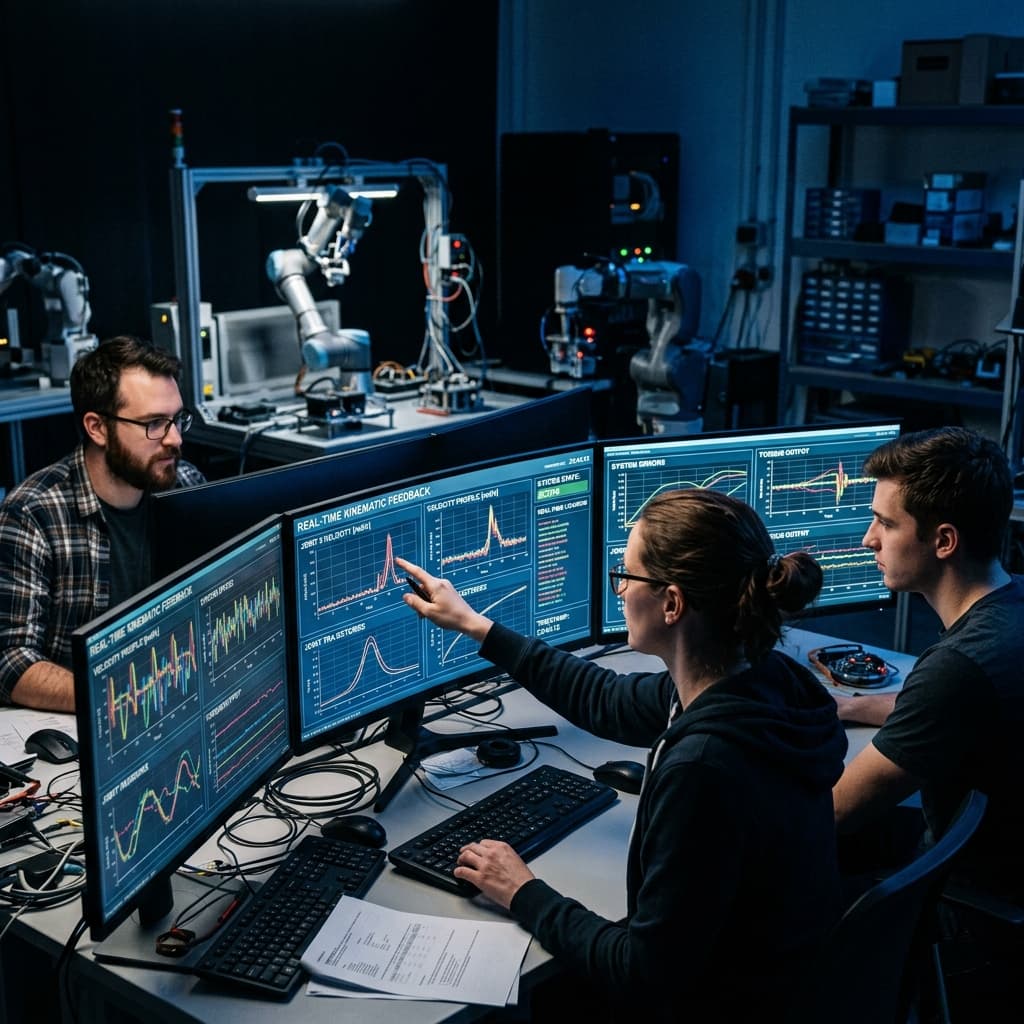
Human oversight requires intuitive translation mechanisms. We construct complex teleoperation rigs translating subtle biological wrist articulation into massive hydraulic power shifts. Utilizing bidirectional haptic feedback motors the human operator physically feels external payload weight and rigid structural resistance through their remote control interface.
Distributed control logic protects massive industrial swarm operations. Instead of relying upon vulnerable centralized mainframes entire fleets process collision avoidance parameters locally at the edge. Shared mesh intelligence guarantees the overall swarm completes its primary objective even if individual robotic units experience localized catastrophic failures.

Related areas in this practice
Governing absolute physical output
Taming tremendous kinetic energy necessitates specialized silicon architectures executing flawless mathematical logic isolated from atmospheric interruption.
- Custom field programmable gate arrays processing parallel encoder telemetry bypassing sequential CPU bottlenecks.
- Redundant safety watchdog processors monitoring primary navigation loops triggering immediate hardware stops during logic anomalies.
- Adaptive gain scheduling automatically stiffening joint resistance upon detecting massive external payload acquisitions.

Talk with engineers who own the work
Request a technical pass on Controls: constraints, risks, and a practical next step with clear assumptions.