

Engineering
Flight operations
Crew models, procedures, and maintenance triggers that turn airworthiness into routine execution.

How we approach Flight operations
Solid flight operations methodologies successfully turn standard structural airworthiness into seamlessly reliable routine execution. This covers crew qualifications, detailed airspace coordination models, strictly governed atmospheric weather limits, and routine maintenance releases. Ignoring any of these operational pillars immediately strips away the inherent safety benefits of even the most over-engineered airframe.
We help diligently build operational roles, explicit communications structures, and safety escalation procedures totally consistent with your specific aircraft class. Operating a sub-2kg quadcopter naturally demands fundamentally different crew dynamics than managing a 100kg VTOL platform, and our frameworks rigidly reflect this scalar reality.
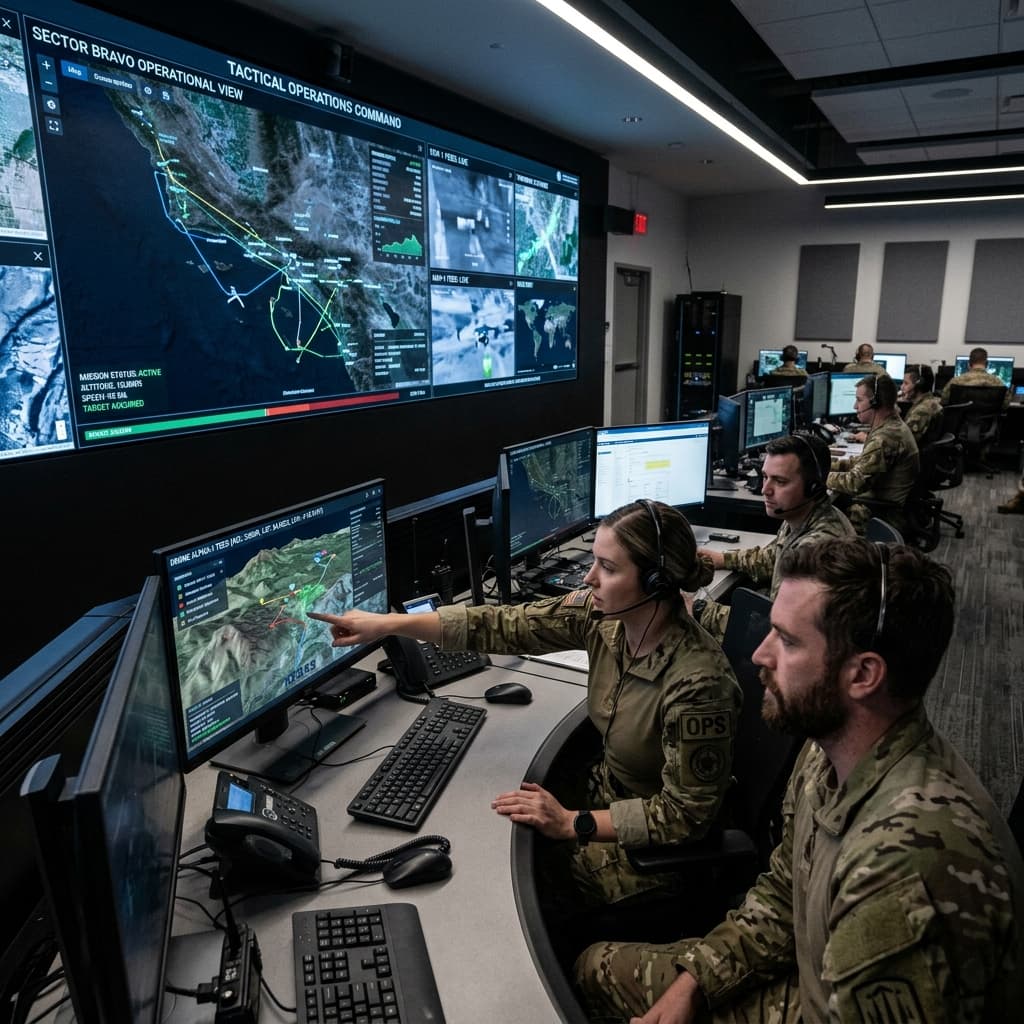
Targeted localized checklists and preflight briefings realistically reflect actual documented platform failure modes and unique site hazards rather than leaning on overly generic industry templates. A checklist should forcefully interrogate exact known vulnerabilities, prompting the pilot to scrutinize specific hinges, latches, or cooling vents before applying power.
Furthermore, the concept of Crew Resource Management (CRM) - historically perfected in manned aviation - must be perfectly translated into the unmanned domain. We train pilot-in-command (PIC) and visual observer (VO) pairs to utilize closed-loop communication protocols, guaranteeing that altitude directives and traffic callouts are audibly acknowledged and instantly acted upon.
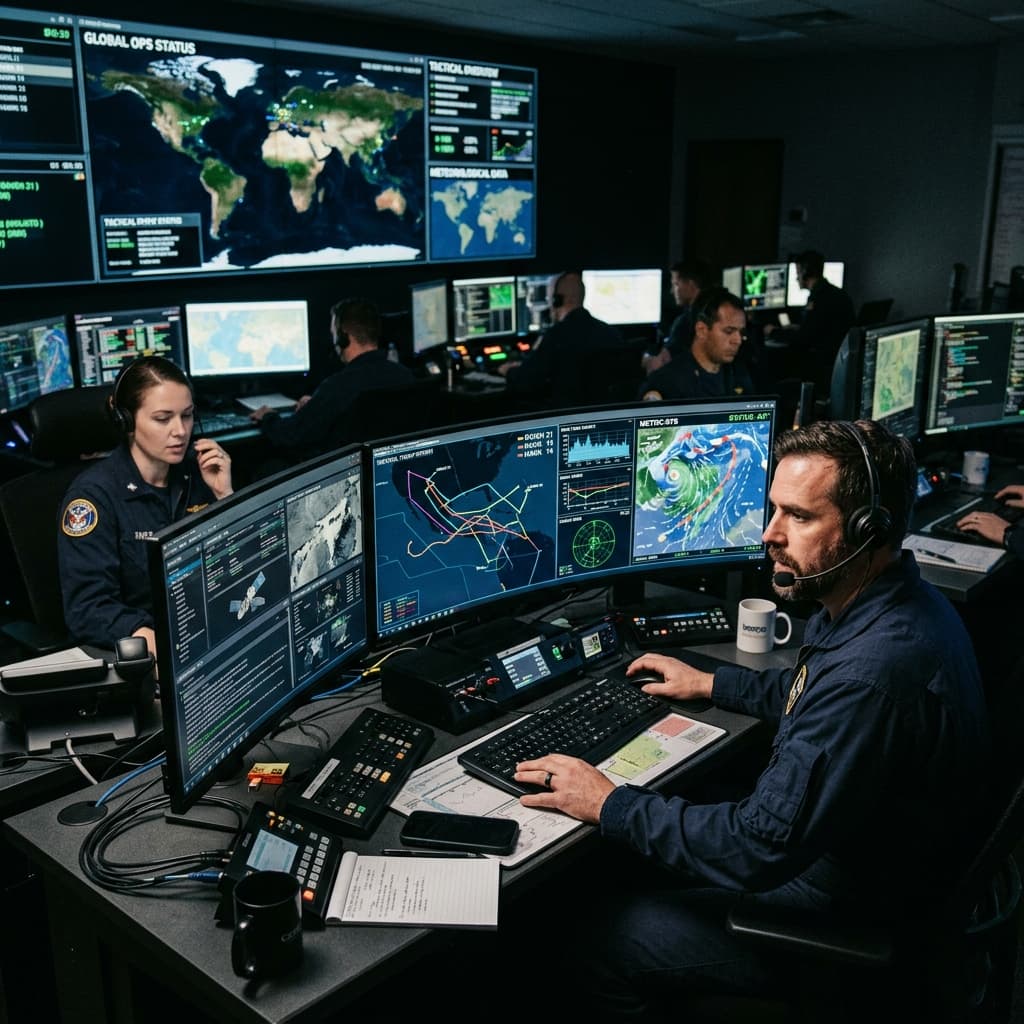
During the execution phase, the management of localized airspace becomes intensely critical. We integrate dynamic NOTAM tracking and live ADSB-in feeds directly into the standard operating procedure rhythm. Crews are meticulously trained on exactly how to gracefully deconflict with unexpected low-altitude manned aviation, decisively prioritizing airspace safety over mission completion.
Post-flight, our methodology places massive emphasis on the debriefing cycle and meticulous logbook hygiene. We explicitly mandate that all anomalous behaviors - from a slightly degraded battery cell to a minor yaw drift - are officially recorded, actively feeding predictive maintenance loops before they degrade into hard hardware failures.

Related areas in this practice
Absolute operational discipline
Procedural architectures are treated as heavily regulated living documents inextricably tied directly to measured fleet performance metrics and cumulative incident learning curves.
- Comprehensive crew resource management patterns customized for single and multi person tactical teams.
- Proactive airspace and localized NOTAM navigation workflows finely tuned to your operational geography.
- Predictive maintenance trigger loops derived continuously from tracked flight hours, battery cycles, and empirically observed airframe anomalies.
Incident management culture
Every hardware irregularity provides an opportunity to improve fleet reliability. We implement no blame reporting frameworks that encourage operators to document subtle anomalies before they degenerate into massive mechanical failures.
Our standardized data collection processes ensure that log files, telemetry metadata, and physical maintenance observations are captured identically across every geographical operations hub.
Standing up reliable operations
Baseline Procedures
Draft precise concept of operations architectures and action checklists extracted directly from proven physical aircraft limitations.
Field Rehearsal
Execute rigorous tabletop simulations and actively supervised mock flights featuring explicit pass and fail criteria.
Continuous Improvement
Integrate powerful active feedback loops harvesting data from daily flight logs, logged incidents, and ongoing configuration changes.

Talk with engineers who own the work
Request a technical pass on Flight operations: constraints, risks, and a practical next step with clear assumptions.