

Engineering
Space Capsule Recovery
Guarantee perfectly stable soft landing ocean or ground recovery profiles for high mass orbital human capsules and cargo spaceflight platforms.
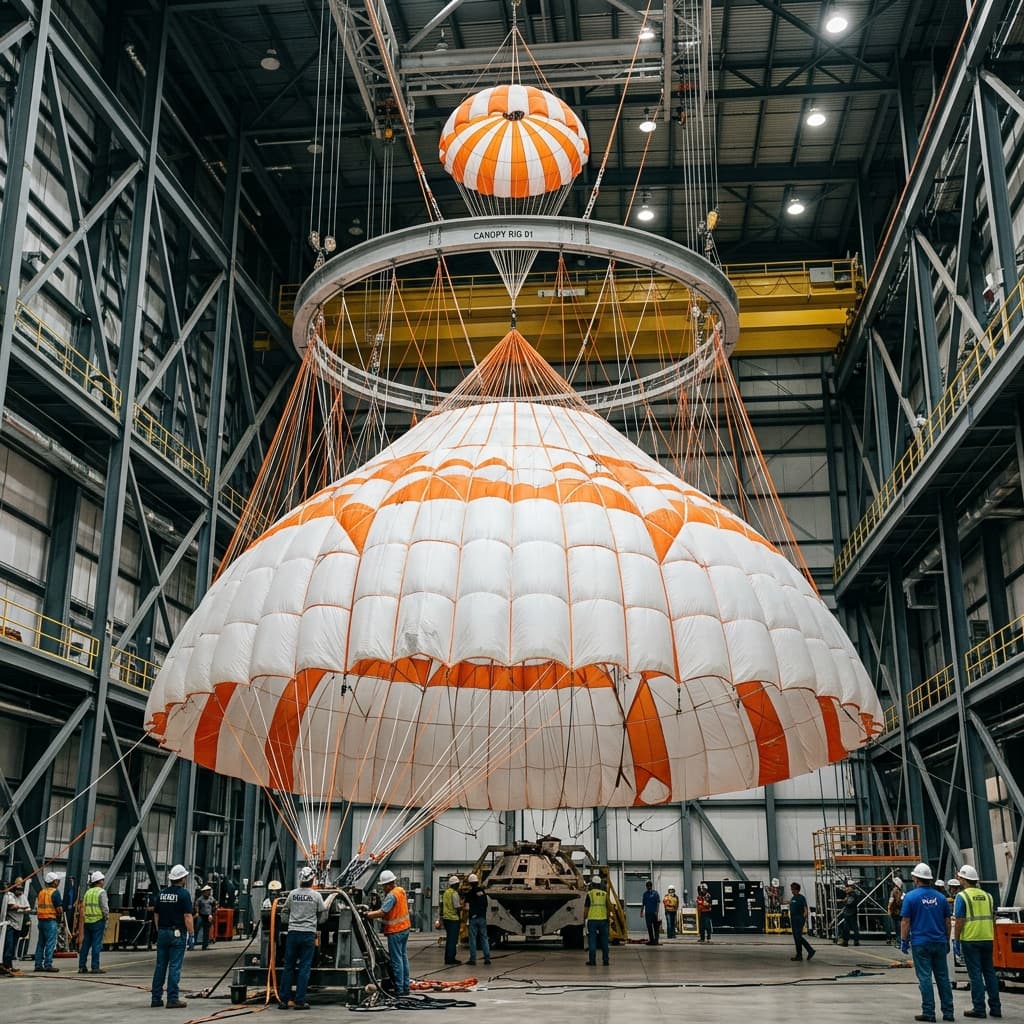
How we approach Space Capsule Recovery
Atmospheric re entry generates immense thermal shock and violent chaotic hypersonic airflow. Our spaceflight recovery architectures feature synchronized parachute clusters meticulously scaled to decelerate multi ton space modules.
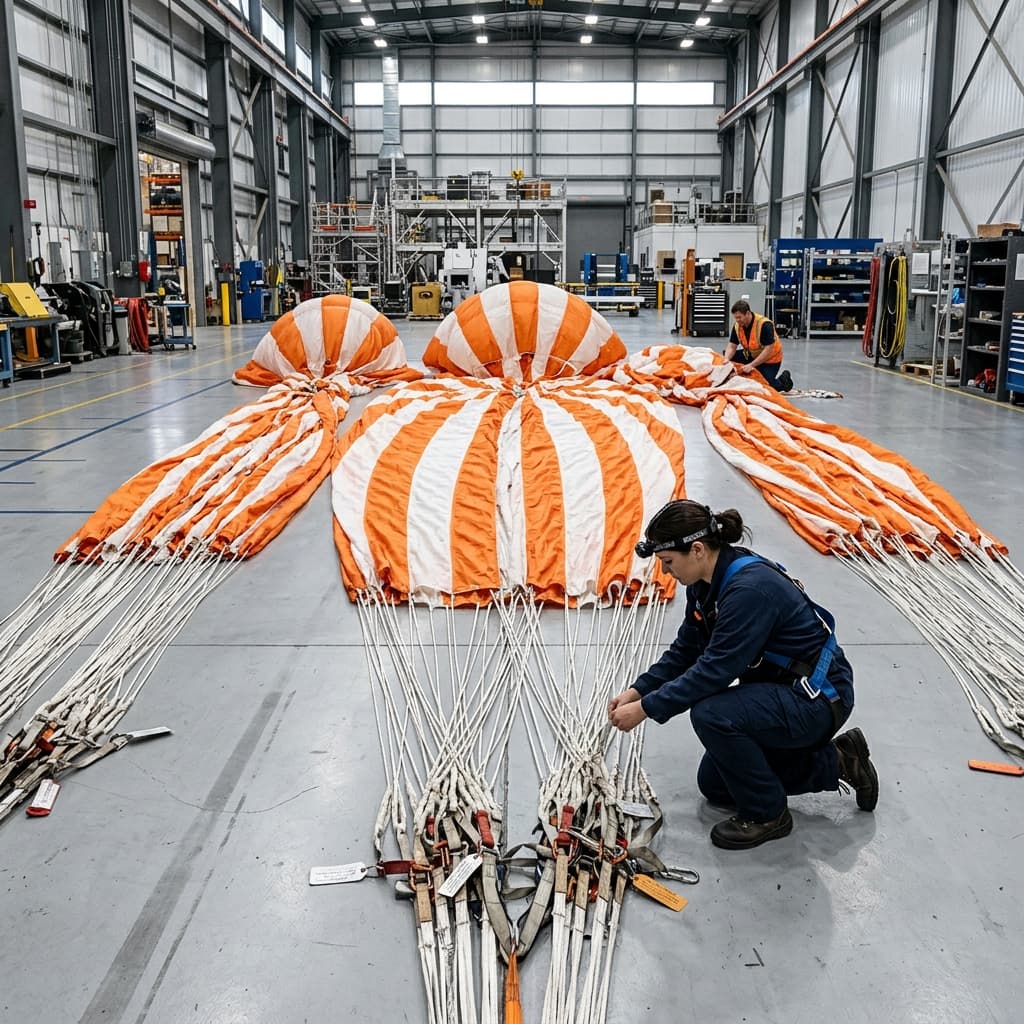
Advanced mortar deployed drogue systems stabilize the spinning capsule trajectory before initiating the massive primary drag phase. This layered sequence guarantees safe structural limits remain intact during the transition from transonic to subsonic flight envelopes.

Specialized heat resistant textiles shield the structural rigging from residual re entry plasma wash. Complex mechanical load limiters distribute the massive opening forces symmetrical protecting the delicate internal human life support infrastructure.

Related areas in this practice
Engineering reliable orbital assurances
We rely on supercomputers simulating complex planetary atmospheric densities to scale total canopy surface area requirements against final capsule target mass.
- Integrated ballistic mortar systems guaranteeing flawless drogue extraction regardless of unpredictable severe capsule spin parameters.
- Complex synchronized main canopy clustering offering critical redundant mechanical fail safes.
- Chemically treated high tensile Kevlar ribbons mitigating extreme thermal exposure during hypersonic deployment stages.

Talk with engineers who own the work
Request a technical pass on Space Capsule Recovery: constraints, risks, and a practical next step with clear assumptions.