

Engineering
Cargo recovery
Sustain rapid momentum loss across extreme multi canopy aerodynamic lifting bodies to deliver heavy armored platforms safely into austere combat environments.

How we approach Cargo recovery
Heavy tactical logistics demand enormous aerodynamic drag profiles. Lowering main battle tanks or expeditionary hospital platforms requires massive interlocking canopy clusters capable of generating unprecedented deceleration geometry.
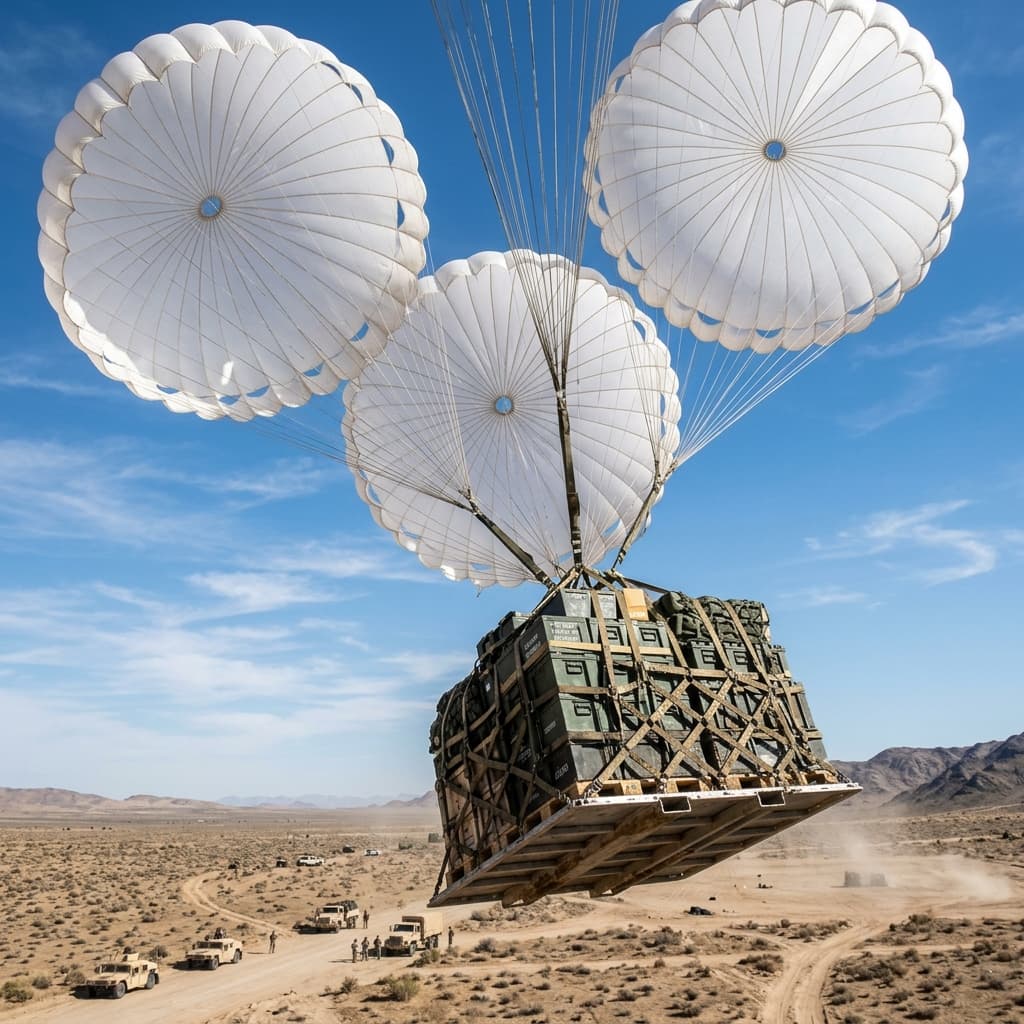
We engineer proprietary clustered parachute systems synchronizing the inflation rates of numerous colossal fabric domes. This precise timing prevents asymmetrical loading that could flip heavy payloads during the critical terminal descent phase.
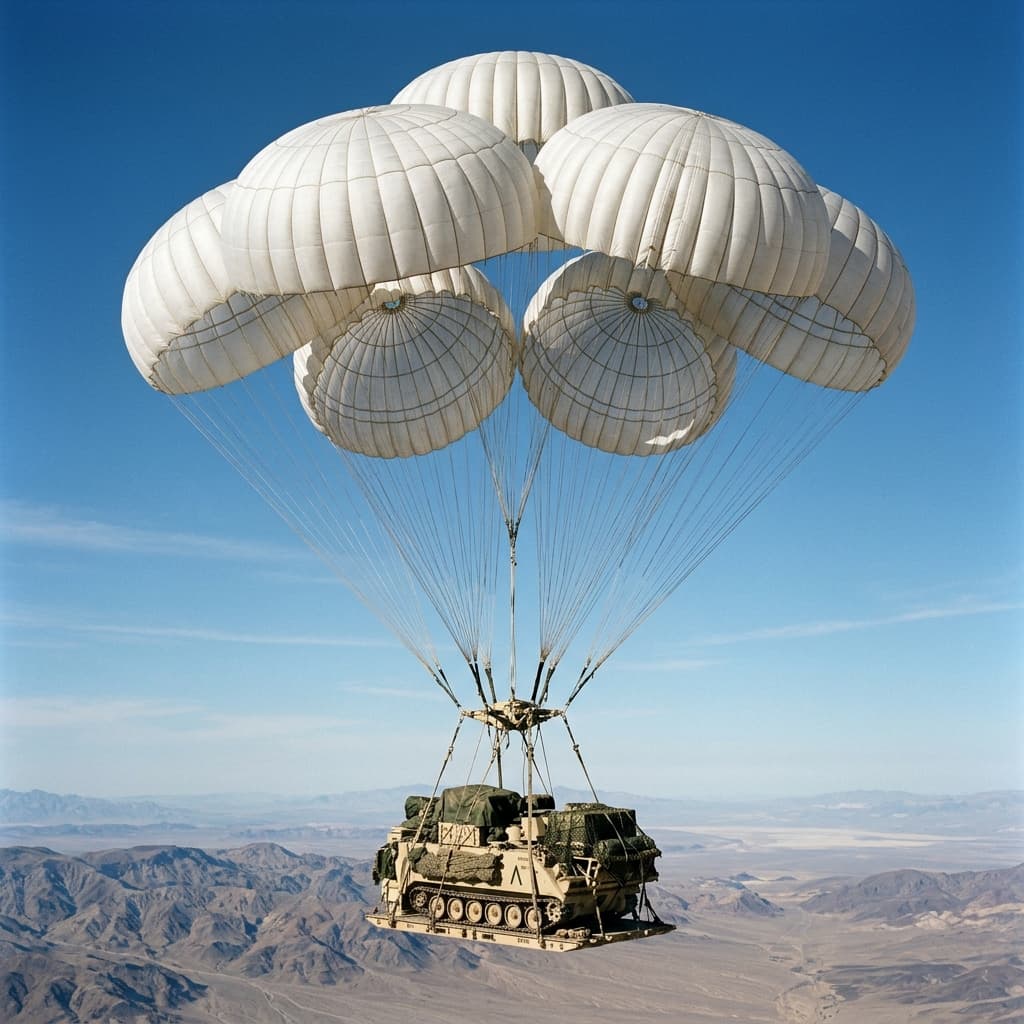
Complex physical load limiters and advanced slider technologies ensure these massive structures open symmetrically. Symmetrical aerodynamic capture guarantees the lowest possible descent velocity protecting the fragile modular electronics nested inside the falling vehicles.

Related areas in this practice
Engineering massive synchronized deceleration
Delivering dense heavy equipment safely to the ground relies upon predictable repeatable mechanical drag generation.
- Symmetrical cluster inflation algorithms mapped into mechanical sliders preventing dangerous parachute line inversions.
- High tenacity textile weaving resisting extreme inflation shear forces while maintaining an overall lightweight packable envelope.
- Integrated ground release systems severing the canopy lines upon impact to prevent surface wind dragging.

Talk with engineers who own the work
Request a technical pass on Cargo recovery: constraints, risks, and a practical next step with clear assumptions.