

Engineering
Loitering munitions
Integrate secure arming mechanisms, precise terminal guidance, and abort reliability for next-generation strike systems.
How we approach Loitering munitions
Developing and deeply integrating loitering munitions forcefully introduces completely unique software safety routines, irreversible arming logic, and terminal guidance stability challenges. Unlike reusable ISR platforms, a loitering munition represents a one-way terminal mission where software unreliability rapidly translates into unacceptable collateral risk.
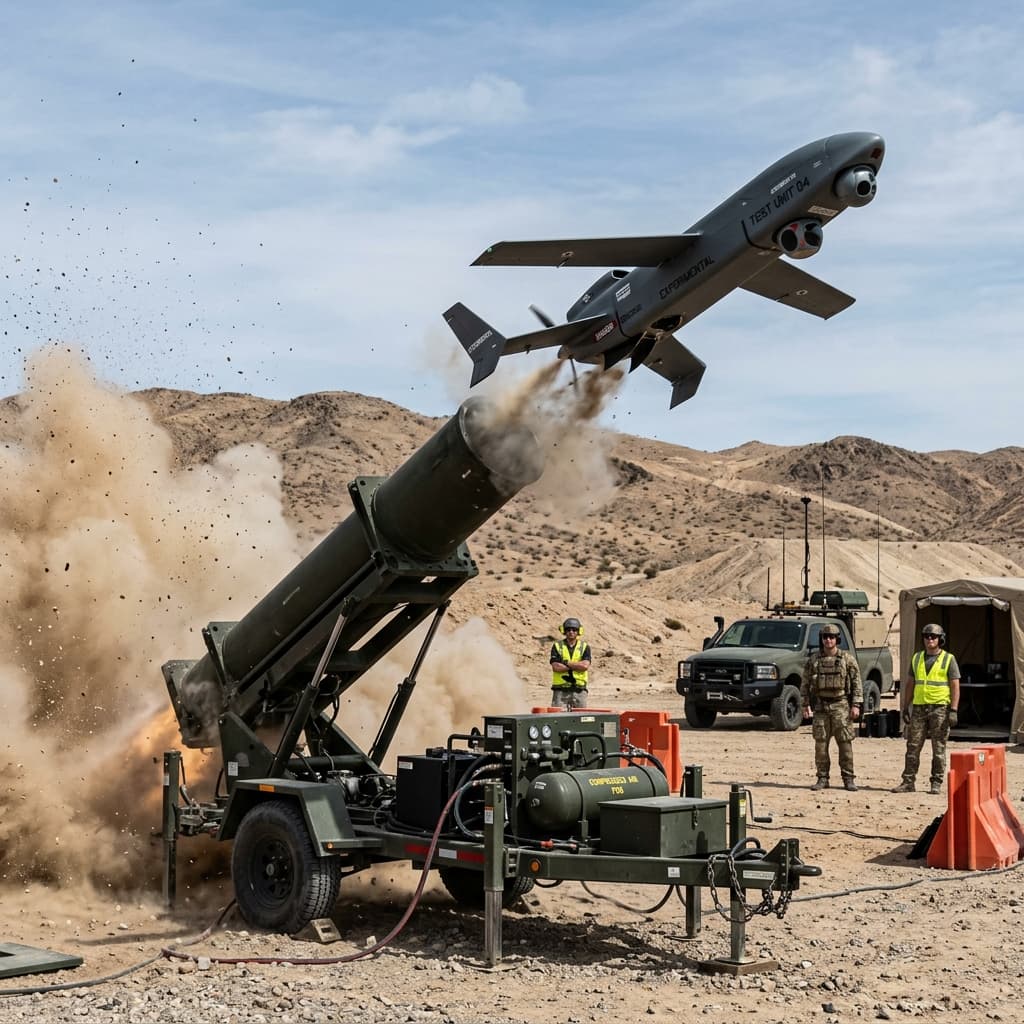
Flight controllers must powerfully handle massive instant center of gravity shifts precisely upon mechanized deployment, successfully maintaining incredibly positive aerodynamic control straight through chaotic terminal dive maneuvers. We exhaustively validate fuzing matrices, electronic abort mechanisms, and optical guidance loops.
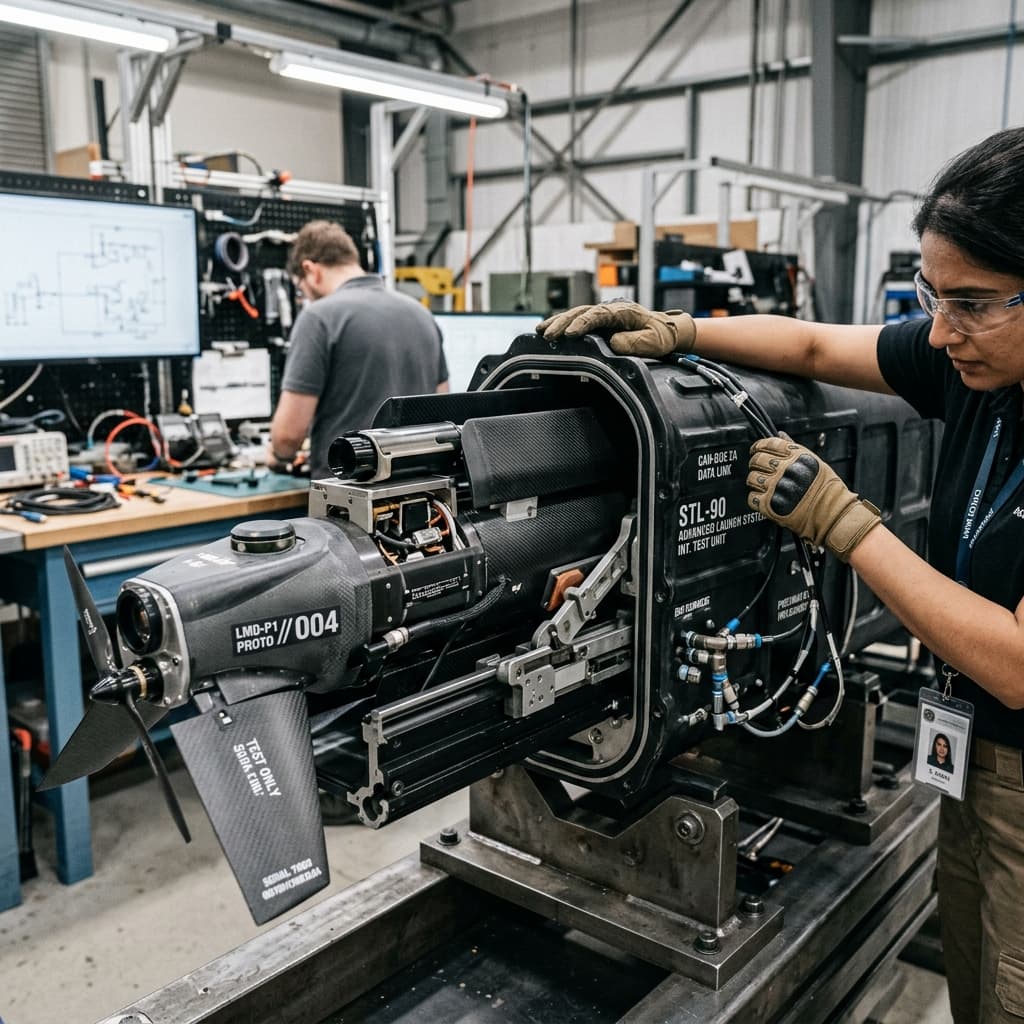
The engineering of safe-and-arm devices (SADs) forms the core of our munition integration architecture. We physically isolate the fuzing arming circuits from the primary flight controller bus, ensuring that a software glitch cannot prematurely detonate the warhead while the platform is still orbiting friendly airspace.
Optical terminal guidance remains arguably the most punishing aerodynamic phase. Once the munition locks onto a fast-moving target and initiates a steep, high-G dive, the airframe must actively counteract immense lateral wind shear without losing camera track. We meticulously tune the PID loops specifically for these chaotic terminal velocities.

All internal engineering documentation closely aligns specifically with stringent military standard safety and arming requirements, decisively providing the irrefutable evidence completely necessary for obtaining live fire range approvals and securing intense military procurement evaluations.
Furthermore, the capacity to abort a strike in the final seconds is a critical moral and operational requirement. We engineer incredibly robust 'wave-off' algorithms that instantly disarm the payload and aggressively pull the airframe out of its terminal dive, actively returning it to a safe loiter altitude to await further command authorization.

Related areas in this practice
Lethality inherently paired with strict safety discipline
Executing a precision strike inherently relies on flawlessly deterministic software behavior, especially extremely critical during final abort triggers or catastrophic loss of link scenarios.
- Unfailing fail safe logic rigorously dictating automatic safe return routing or immediate localized self destruct algorithms.
- Incredibly high speed localized terminal guidance and independent optical target tracking control loops.
- Flawless mechanical and software integration of strictly certified electronic safe and arm devices directly communicating with the core flight controllers.
Validating terminal guidance algorithms
The moments right before striking a fast moving target induce extreme structural stress and drastically alter aerodynamic envelopes. We utilize advanced Hardware In The Loop simulators explicitly injecting thousands of chaotic variables including extreme unexpected winds and erratic target maneuverability.
This relentless digital verification process absolutely guarantees that the flight controller will seamlessly execute the tracking strike even under devastating environmental duress, all well before expensive live fire physical testing officially begins.

Talk with engineers who own the work
Request a technical pass on Loitering munitions: constraints, risks, and a practical next step with clear assumptions.