



We mandate joint design reviews early in the process, establish shared SIL test environments, and enforce clear defect triage workflows so engineering accountability remains highly visible.
Engineering
Payload integration
Mechanical, electrical, and software interfaces that stay coherent through bench, ground, and flight.

How we approach Payload integration
Payload integration is where many UAV programs stall: connectors, harness routing, EMI, and software drivers must perfectly align with mass and center of gravity constraints. We draft interface control documents and bench plans long before flight exposure. This upfront discipline ensures that mechanical interference and electrical mismatches are caught on paper, not on the flightline when schedules are critical.
The physical integration process demands microscopic attention to detail. We mandate custom strain relief for all delicate harness connections, ensuring that intense aerodynamic vibrations during flight do not cause catastrophic connector fatigue. We actively avoid generic cable ties and hastily routed looms, opting instead for bespoke, aerospace-grade cable management solutions.
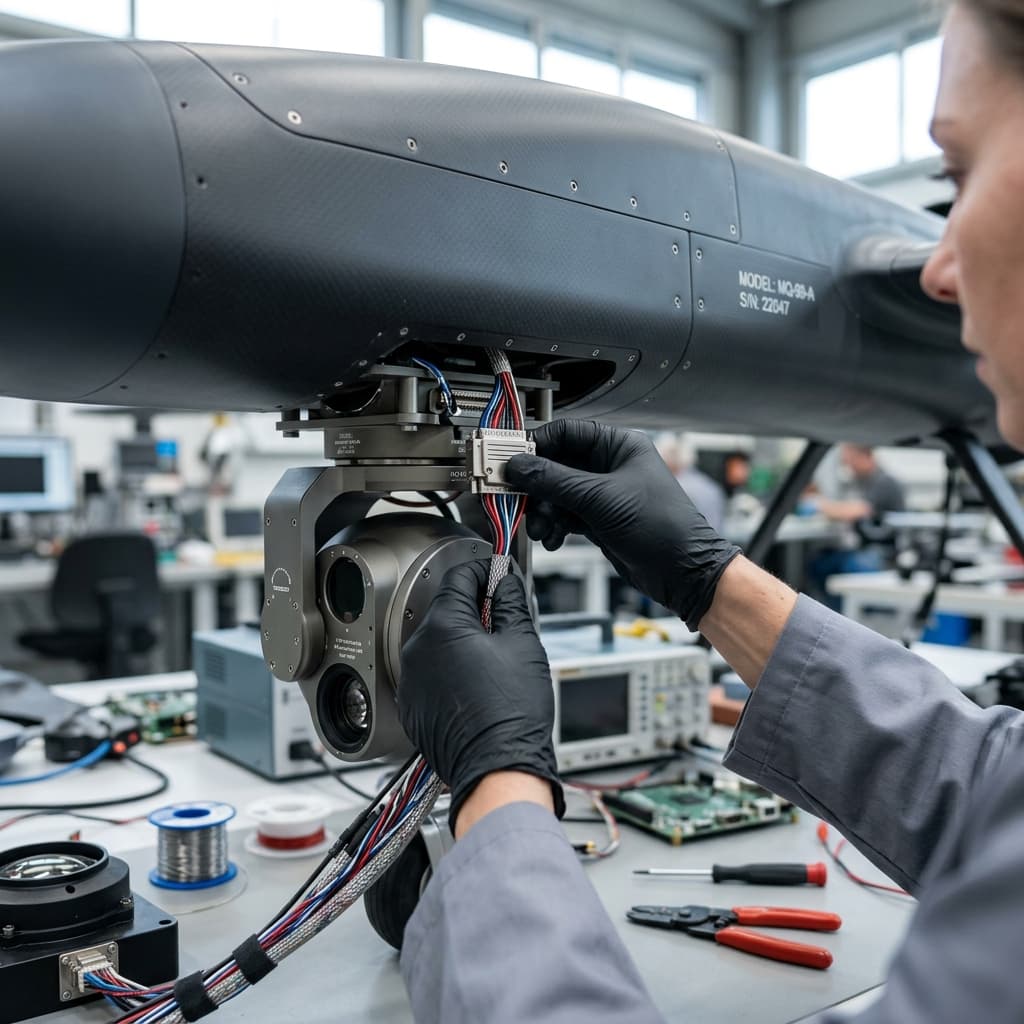
Power sequencing, inrush limit controls, and brownout recovery strategies are specified alongside mechanical mounts and shock isolation systems. Simply plugging a high-current sensor into the main power bus can instantly reboot a flight controller. We design and integrate intelligent power distribution boards that actively monitor and sequence power draw, isolating critical avionics from payload surges.
Thermal management is an equally vital component of integration. High-performance compute modules and multi-spectral sensors generate substantial localized heat. We engineer custom heat sinks and highly optimized airflow channels that forcibly extract this thermal load from the tightly packed fuselage, preventing premature thermal throttling during sustained operations.
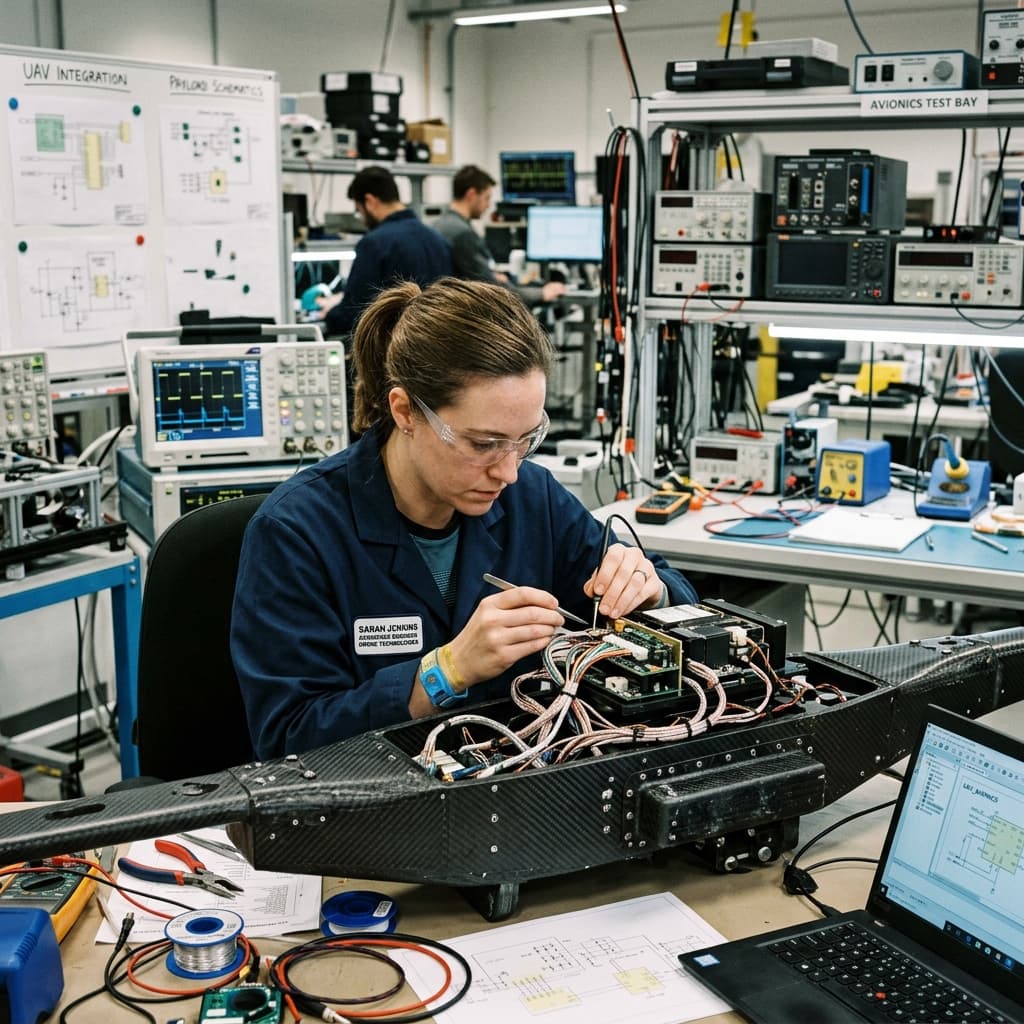
For modular payload ecosystems, we define latching mechanics, electrical alignment pins, and automated configuration reporting so ground crews can swap highly sensitive cameras safely under time pressure. These physical and digital handshakes ensure that the autopilot immediately recognizes the new mass properties and adjusts its internal flight dynamics models instantaneously.
To guarantee field serviceability, we generate complete teardown instructions and precise torque specifications for every payload mounting screw. Our integration philosophy guarantees that field technicians possess exactly the right documentation to maintain or swap payloads in the mud, without ever needing deep engineering support.
Related areas in this practice
Interfaces you can maintain in the mud
Every payload gets a comprehensive bill of tests crossing bench, ground, and flight phases, maintaining clear vendor accountability for anomalies.
- Connector and harness components strictly derated per extreme vibration class.
- Software protocol versioning that perfectly matches hardware revisions deployed in the field.
- Thermal and EMI budgets fiercely managed and shared across disparate subsystem vendors.
Managing the electromagnetic environment
Modern EO sensors and LIDAR systems are intensely sensitive to conductive and radiated emissions. We analyze the routing of high voltage DC lines near delicate communications trunks, applying necessary shielding or twisted pair geometries to maintain maximum data integrity.
Rather than discovering EMI ghosts in the field, we perform rigorous anechoic chamber sweeps. If a vendor component is bleeding noise beyond its specified limits, we provide the empirical data to force immediate engineering corrections.
Payload Integration Logistics
Discipline for managing third party multi vendor payloads.
High frequency harmonics bypassing cheap isolators. We profile the specific frequencies generated by motor commutation and match custom dampeners perfectly.

Talk with engineers who own the work
Request a technical pass on Payload integration: constraints, risks, and a practical next step with clear assumptions.