



We run explicit models of your expected flight profiles against battery degradation curves and liquid fuel logistics to identify the breakeven point for your specific use cases.
Engineering
UAV platforms
Class down the right airframe family, energy architecture, and growth path before you lock suppliers or tooling.

How we approach UAV platforms
Choosing a UAV class is more than catalog shopping: runway or vertical footprint, energy storage, cooling, and modularity determine what payloads and datalinks you can grow into. We help you compare architectures against your mission timeline, supplier risk, and certification posture. It is critical to begin with a clear understanding of the operational environment and the specific constraints it imposes on your platform.
Trade studies capture explicit assumptions like headwind margins, reserve energy, EMI environments so platform decisions stay defensible when funding or requirements shift. We avoid generic assumptions that fail under field conditions. By incorporating real-world telemetry from legacy platforms, we build stochastic models that highlight the breaking points of different airframe classes before any metal is cut.
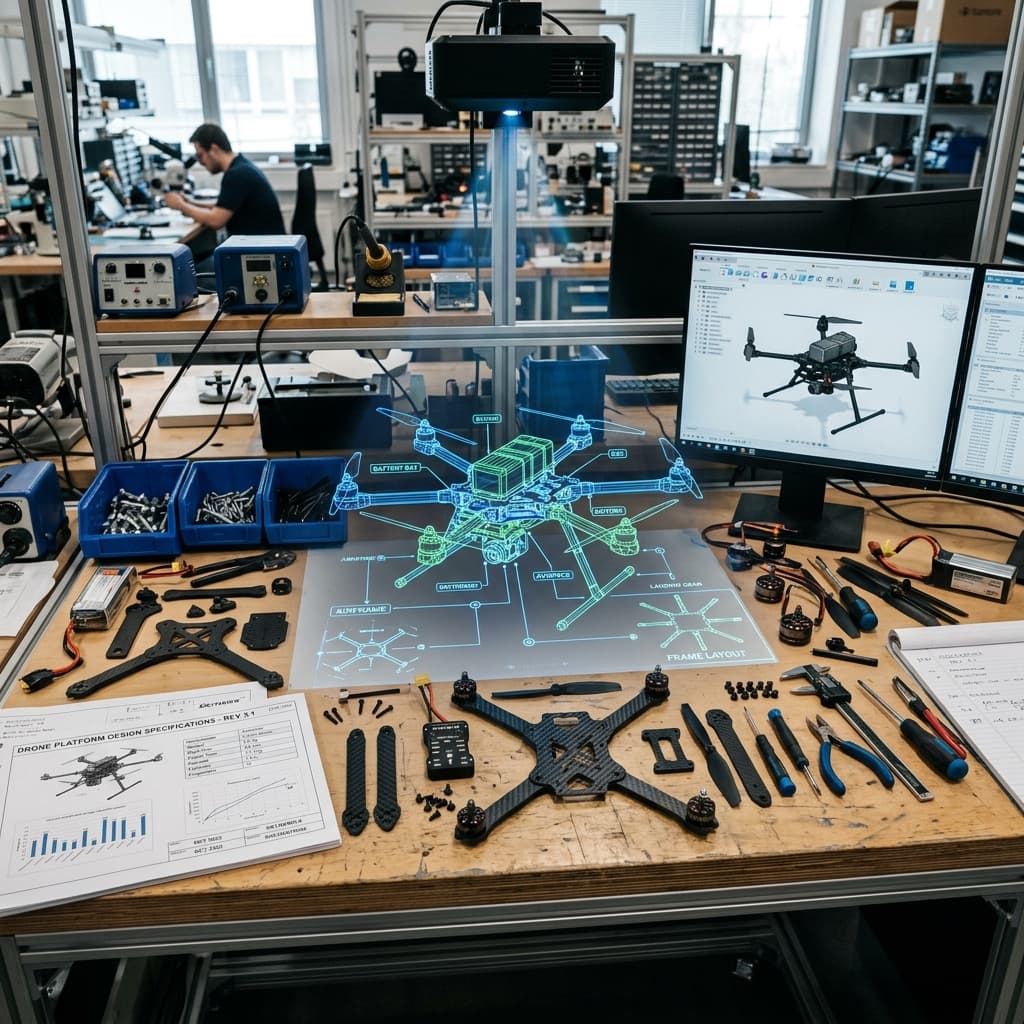
The engineering journey from a concept of operations to a fully certified platform is fraught with interdisciplinary challenges. Propulsion teams must coordinate closely with payload integrators to ensure that vibration characteristics do not compromise sensitive optics or communication arrays. This is where a rigorous systems engineering approach pays dividends, reducing late-stage integration conflicts.
To guarantee scalability, we establish early sizing baselines that factor in future capability spirals. Whether this means over-specifying a core power distribution board or designing flexible hardpoints on the main fuselage, the goal is to prevent costly redesigns when the mission inevitably expands. We also evaluate the manufacturability of the chosen class, ensuring that prototype techniques can smoothly transition to high-rate production.
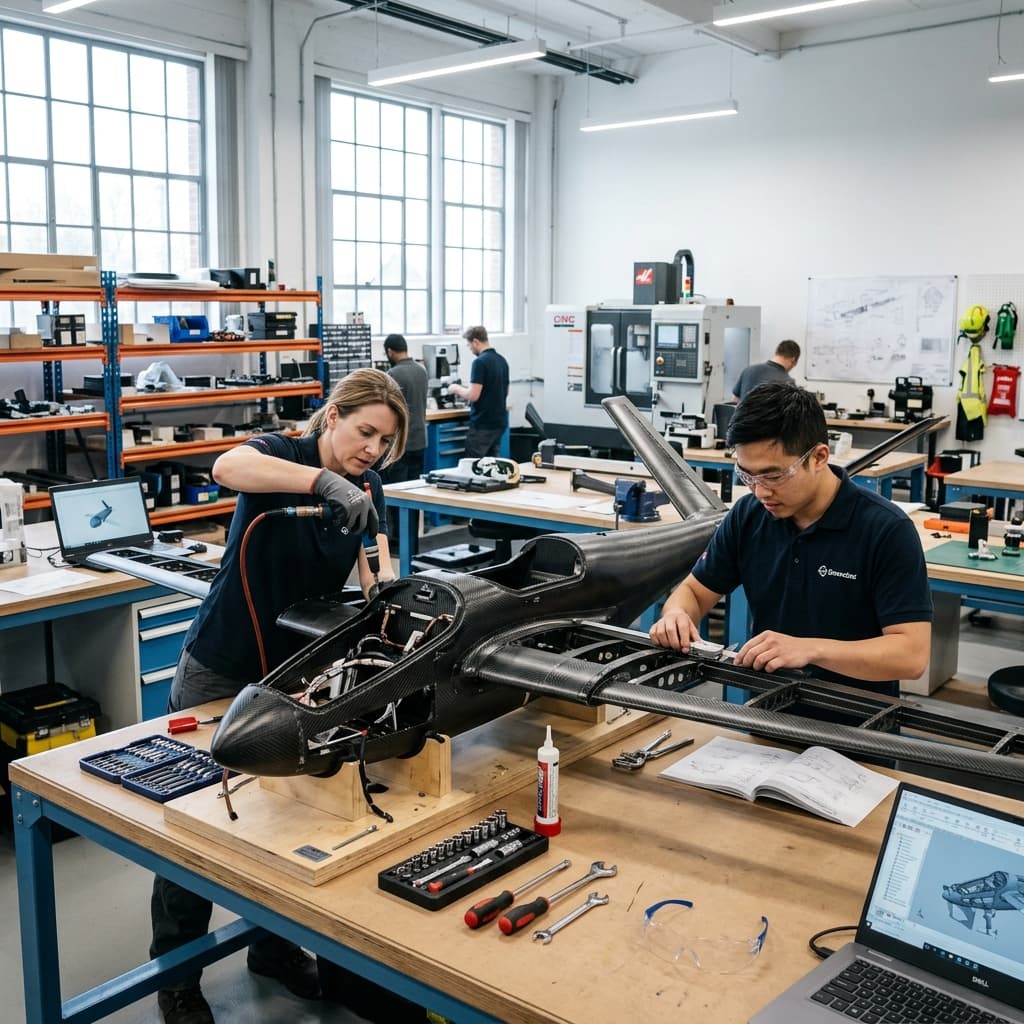
Furthermore, the selection of an energy architecture - whether purely electric, hybrid gas-electric, or hydrogen fuel cell - fundamentally dictates the operational logistics of the fleet. We run end-to-end simulations of the entire energy supply chain, from the generator on the ground to the motor on the aircraft, ensuring that the platform can actually be sustained in austere environments.
Deliverables often include concept of operations sketches, performance models, and a phased roadmap from demonstrator to operational fleet. Our teams prioritize modular payload integration from day one, ensuring your platform scales as your mission evolves. Every phase of this roadmap is gated by measurable engineering artifacts, ensuring absolute transparency and traceability for compliance and certification authorities.
Related areas in this practice
Platform decisions that survive scrutiny
We anchor on measurable envelopes and operational constraints, not brochure claims. We trace payload mass and power limits directly to platform aerodynamics.
- Comparable figures of merit across candidate architectures.
- Interface placeholders for payload, power, and communications growth.
- Verification hooks that map to your downstream qualification plan.
- Detailed thermal and structural margin analysis.
Sizing for the mission you actually fly
Platform sizing ties together aerodynamics, propulsion, and energy storage. We keep contingency and degradation explicit including hot days, aging batteries, and worn propellers so operators see realistic endurance instead of best case demos.
Through hardware in the loop simulation and early aerodynamic benchmarking, we establish clear thresholds for subsystem weight limits. This discipline ensures that adding complex mission compute units or heavy optical relays does not force a complete redesign in later stages.
Navigating regulatory boundaries
Regulatory acceptance begins with platform architecture. Choosing the right redundant architectures for avionics and propulsion allows you to build a persuasive safety case for operations over populated areas or beyond visual line of sight.
We help our clients translate complex civil aviation guidelines into concrete engineering requirements, ensuring every component selected contributes positively to the final certification audits.
Platform Strategy FAQ
Answers to critical platform planning questions.
Yes. We focus on identifying single points of failure and manufacturability bottlenecks in early prototypes to clear a path toward scalable production lines.
How we structure a platform study
Capture constraints
Regulatory context, geography, crew model, and payload class.
Model scenarios
Energy, thermal, and link budgets against mission segments.
Lock interfaces
Mechanical hard points, electrical budgets, and software API boundaries.
Validate components
Rigorous bench testing of critical subsystems before final assembly.
Deepen Your Platform Expertise
Explore specific subpages and implementation strategies related to UAV architectures.
Battery Cycle Optimization
Detailed breakdown of Lithium Ion degradation under heavy hover and sprint profiles, mapping strategies for fleet logistics.
Read StrategyComposite Structure Manufacturing
An evaluation of carbon fiber layups versus injection molded composites for mass production of group 2 platforms.
View Process

Talk with engineers who own the work
Request a technical pass on UAV platforms: constraints, risks, and a practical next step with clear assumptions.