

Engineering
Logistics payloads
Release mechanisms, route risk, and contingency behaviors appropriate to delivery-class operations.

How we approach Logistics payloads
Delivery class payloads dramatically introduce heavy mechanical release mechanisms, dynamic package restraints, and highly complex emergency drop scenarios that must flawlessly coexist with standard airworthiness standards. Unlike fixed sensors, moving cargo fundamentally changes the platform's aerodynamic profile mid-flight, demanding immense structural and control resilience.
We meticulously analyze dynamic weight and balance permutations systematically stretching across the entire flight mission, defining proactive failsafe behaviors designed specifically for dealing with stuck mechanical releases or unintended partial drops. A jammed latch carrying a heavy asymmetric load can doom a multirotor in seconds; our flight controllers are tuned to respond instantly with aggressive counter-thrust to maintain attitude.
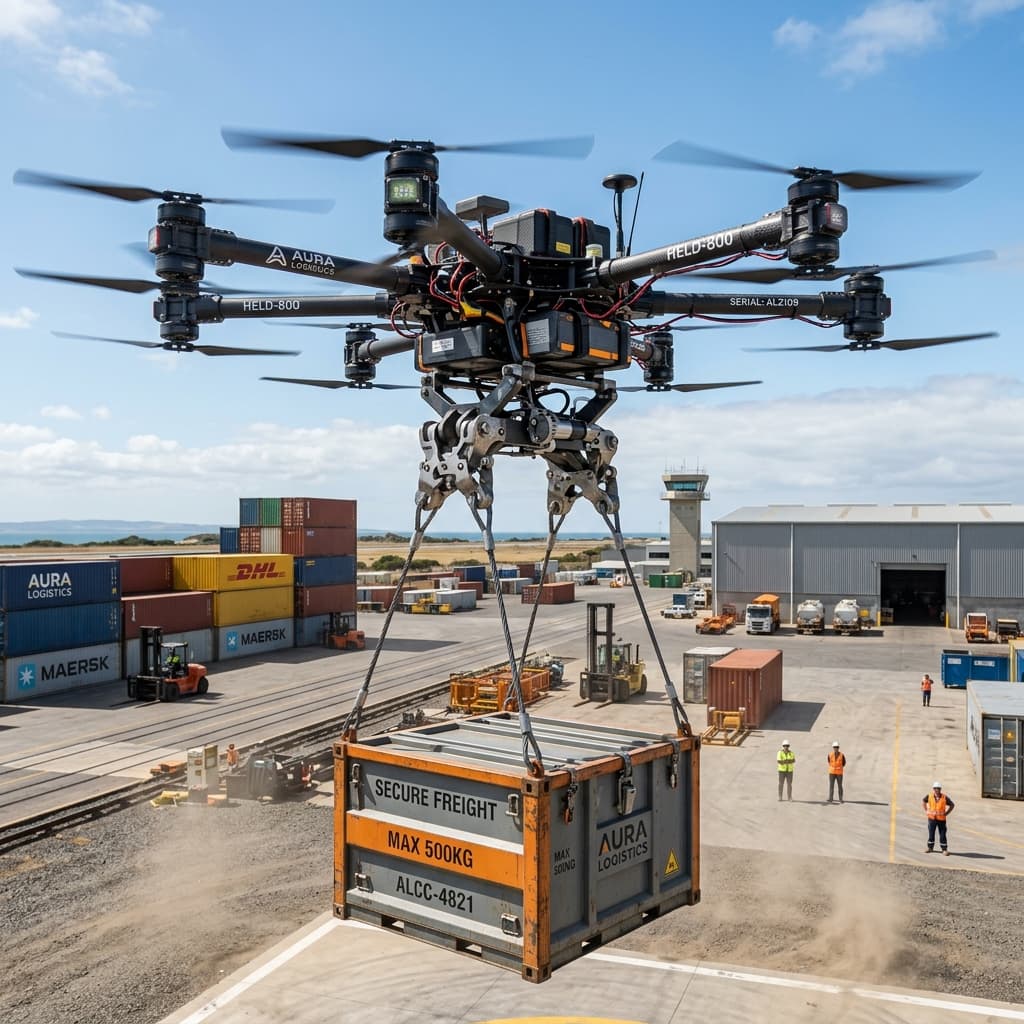
The mechanical design of the release mechanism itself must survive thousands of actuation cycles while enduring high-frequency vibrations and severe environmental fouling. We employ redundant servo actuators linked to independent power rails, ensuring that a single electrical fault never results in a hung payload.
Sway stabilization is another critical engineering pillar. Suspended cargo behaves like a pendulum, actively fighting the drone's maneuverability. We develop tailored slung-load dampening algorithms that read IMU telemetry and apply micro-adjustments to the flight path, absorbing the kinetic energy of the swinging mass before it amplifies catastrophically.
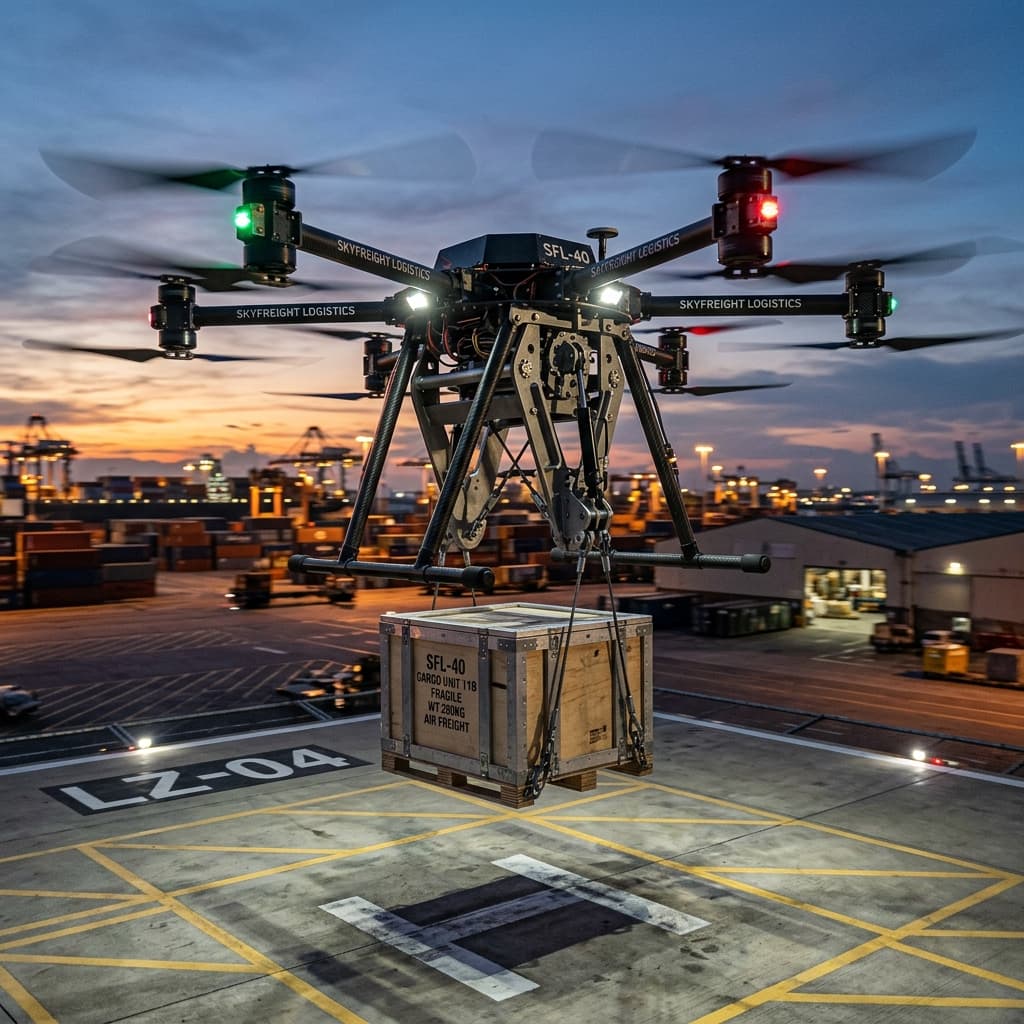
In depth route risk assessments carefully evaluate active population exposure models, shifting weather limitations, and reliable alternate landing sites mapped explicitly to foundational concept of operations logic and crew training syllabi. A precise route keeps both the aircraft and the ground environment mathematically safe.
Finally, the integration of intelligent cargo pods - capable of monitoring internal package temperature, vibration limits, and precise drop location tracking - provides end-to-end chain of custody evidence for high-value logistics operations, from medical deliveries to tactical resupply. We securely bridge the drone's telemetry with terrestrial logistics dashboards.

Related areas in this practice
Prioritizing delivery safety
We adamantly treat unpredictable ground risk and physical package security as fundamental system requirements rather than treating them as mere secondary operational footnotes.
- Exhaustive release mechanism testing alongside rigorous lanyard and active latch qualification pathways.
- Explicit tactical contingency routing mapping lost link behaviors appropriate to specific over ground population risk models.
- Uncompromising cargo securement testing focused on surviving destructive turbulence and excessively hard aerodynamic maneuvering.
Managing center of gravity shifts
Immediately shedding fifty pounds of cargo creates a violent instantaneous uplift. We program specific feedforward control logic that anticipates this massive dynamic shift, gracefully altering rotor thrust precisely at the moment of electronic latch release.
We thoroughly profile pendular motion introduced by suspended sling loads. Aggressively dampening this swinging energy through active flight trajectory modifications prevents the load from structurally overcoming the primary flight controller.
Cargo testing progression
Static Bench Drops
Endurance testing electronic load releases with 200 percent maximum rated weights.
Tethered Load Dynamics
Profiling lateral swinging and resonance within a safely confined tethered volume.
Open Air Validation
Executing high speed transit drops and verifying failsafe payload jettison.

Talk with engineers who own the work
Request a technical pass on Logistics payloads: constraints, risks, and a practical next step with clear assumptions.