

Engineering
Ordnance recovery
Safeguard experimental military kinetic test platforms by integrating high strain drogue descent profiles optimized for massive local dynamic pressure.
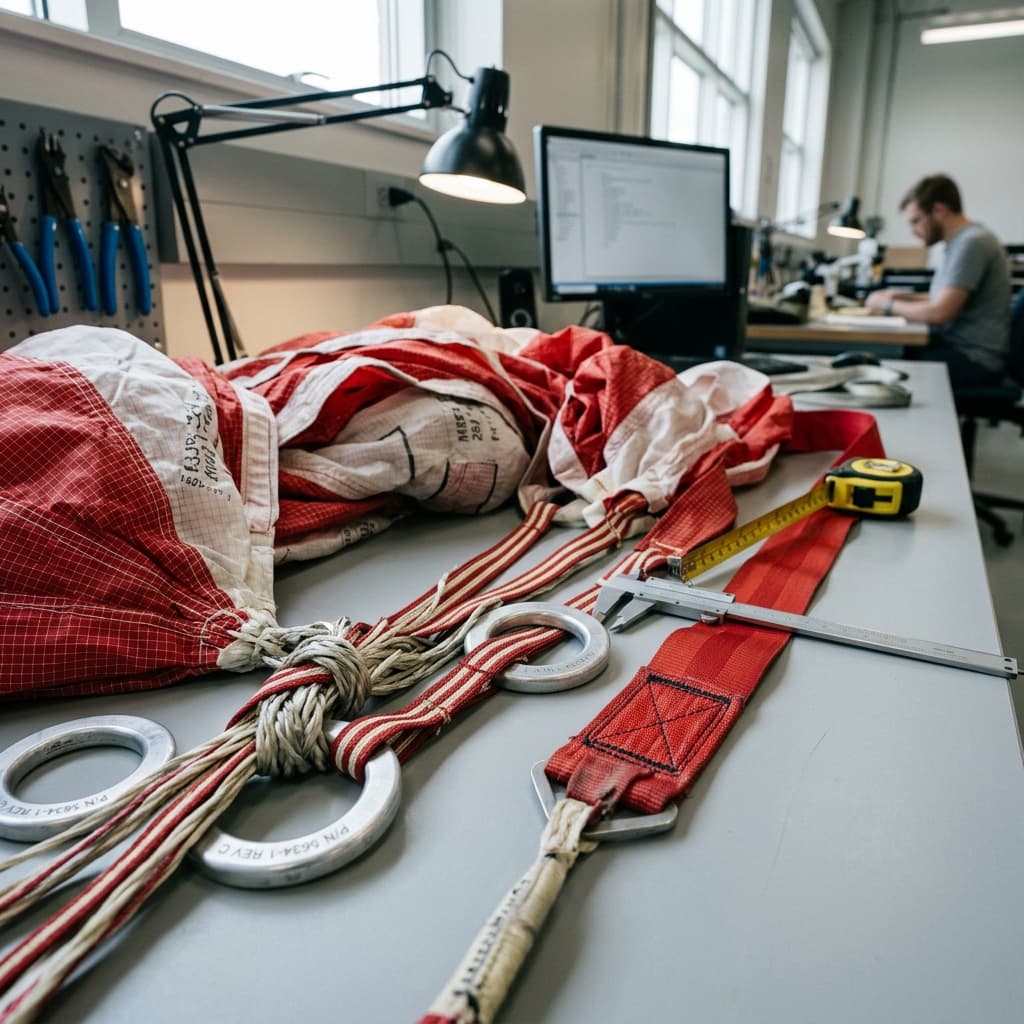
How we approach Ordnance recovery
Testing heavy inert munitions requires reliable airborne capture systems to preserve diagnostic telemetry data following atmospheric release. High velocity heavy payloads create severe initial shockloads capable of shredding conventional parachute geometry.
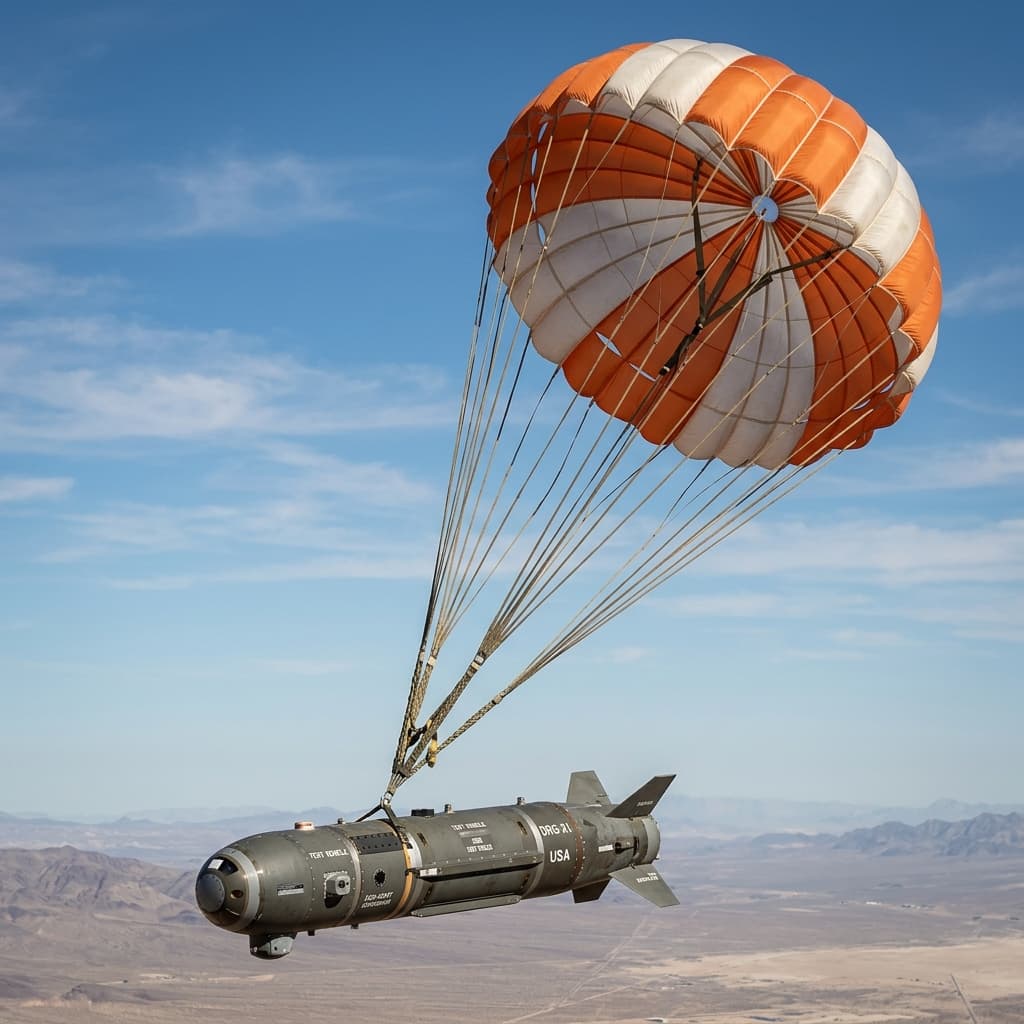
We construct specialized heavy ordnance recovery arrays using interlaced Kevlar ribbon architectures. The ribbon structure forces excess dynamic pressure to jet through deliberate gaps preventing destructive material blowout during supersonic staging phases.
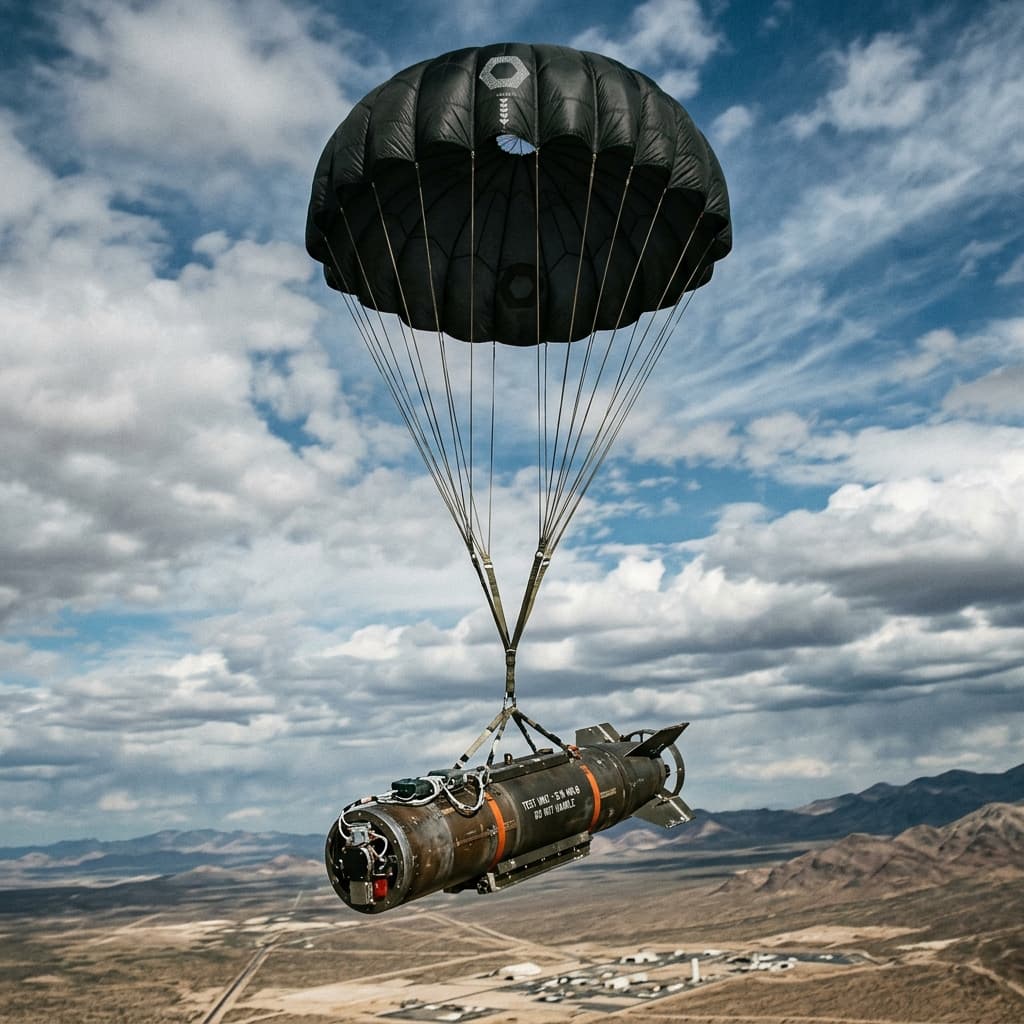
Multi stage sequences transfer load profiles from the initial high mach drogue anchors into immense main lifting canopies. This synchronized transition ensures massive inert bombs settle onto test ranges without destroying critical internal sensor systems.

Related areas in this practice
Preserving diagnostic hardware against kinetic friction
Extracting actionable data from experimental military drop tests demands absolute physical survival of the munition assembly upon terrain impact.
- Specialized conical ribbon parachute designs engineered explicitly for hyper velocity stabilization.
- Heavy duty attachment swivels neutralizing payload spin torque to prevent suspension line twisting arrays.
- Ablative packing textiles shielding delicate nylon structures from localized atmospheric thermal heating friction.

Talk with engineers who own the work
Request a technical pass on Ordnance recovery: constraints, risks, and a practical next step with clear assumptions.