



Yes, by utilizing thicker copper layers or specialized widened traces, we can route significant power.
Engineering
Flexible PCBs
Save weight and fit complex three-dimensional enclosures perfectly with highly reliable rigid-flex circuitry.
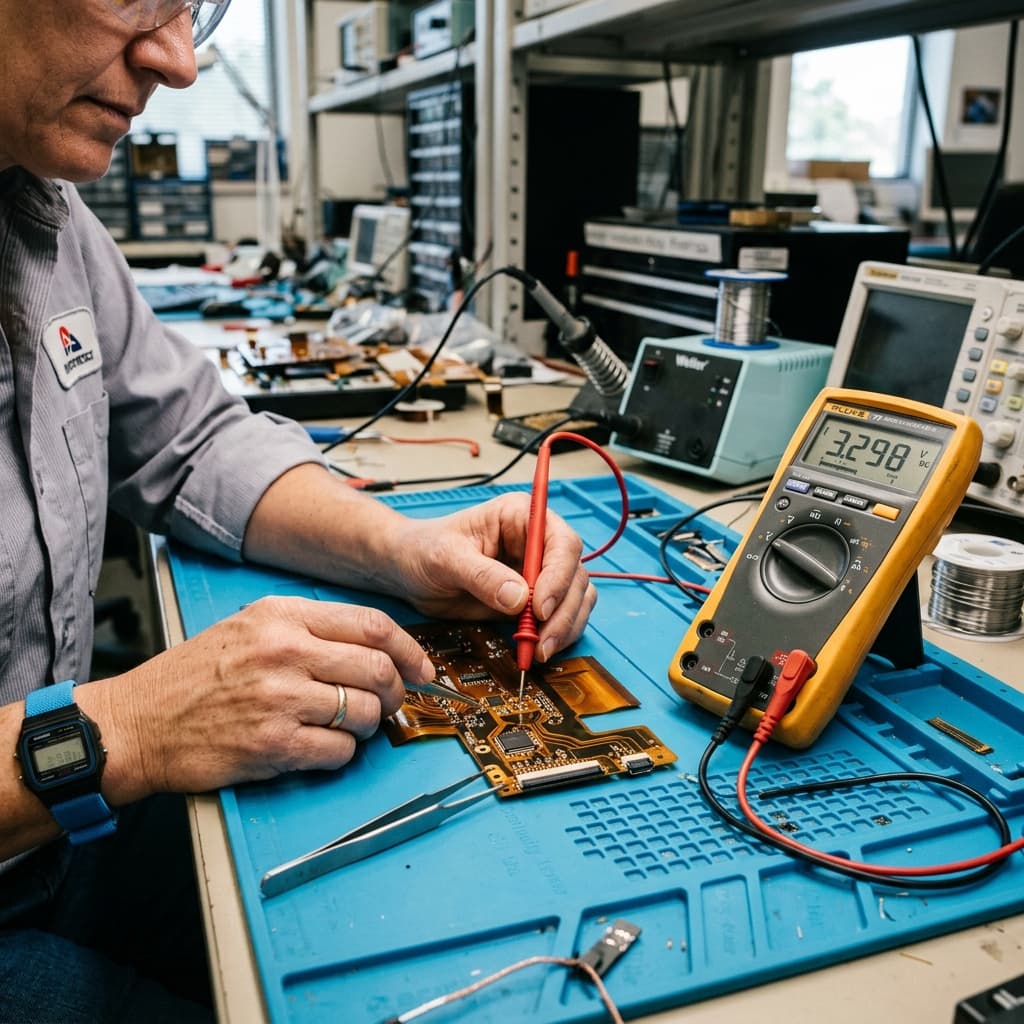
How we approach Flexible PCBs
In modern tactical hardware, physical space is at an absolute premium. Traditional rigid PCBs connected by bulky wiring harnesses waste volume and introduce points of failure. We design advanced rigid-flex PCB assemblies that fold into the exact contours of your mechanical enclosure.
Flexible circuits eliminate connectors, inherently reducing weight and increasing reliability under extreme vibration. We carefully calculate bend radii and trace routing to prevent dynamic stress fractures over the lifecycle of the product.
Our designs support dynamic wearable electronics, allowing sensors and antennas to conform comfortably to the human body for infantry applications, providing vital signs and situational awareness without encumbrance.
We manage the entire lifecycle, ensuring that the specific polyimide substrates and adhesives selected can withstand the thermal cycling and humidity required by military standards.
Related areas in this practice
Conformal Engineering
Stop designing your mechanics around your electronics. Flexible PCBs allow electronics to adapt to the ideal mechanical form.
- Elimination of wiring harnesses.
- High-density dynamic bending.
- Wearable sensor integration.
- Weight and volume reduction.
The Reliability of Flex
Connectors are the leading cause of failure in high-vibration environments. By replacing discrete wires with a single rigid-flex assembly, overall system Mean Time Between Failures (MTBF) skyrockets.
Flexible PCB FAQ
Benefits of conformal electronics.
Rigid-Flex Process
3D Modeling
Design the board layout natively in 3D CAD.
Bend Analysis
Calculate stress on copper traces at fold lines.
Prototyping
Verify form and fit before final assembly.

Talk with engineers who own the work
Request a technical pass on Flexible PCBs: constraints, risks, and a practical next step with clear assumptions.