



Our designs feature isolated chambers. If one beam is compromised, the others possess enough reserve strength to keep the shelter standing while a repair is made.
Engineering
Inflatable Structures
Eliminate complex metal framing with high-pressure inflatable shelters that erect themselves in minutes.
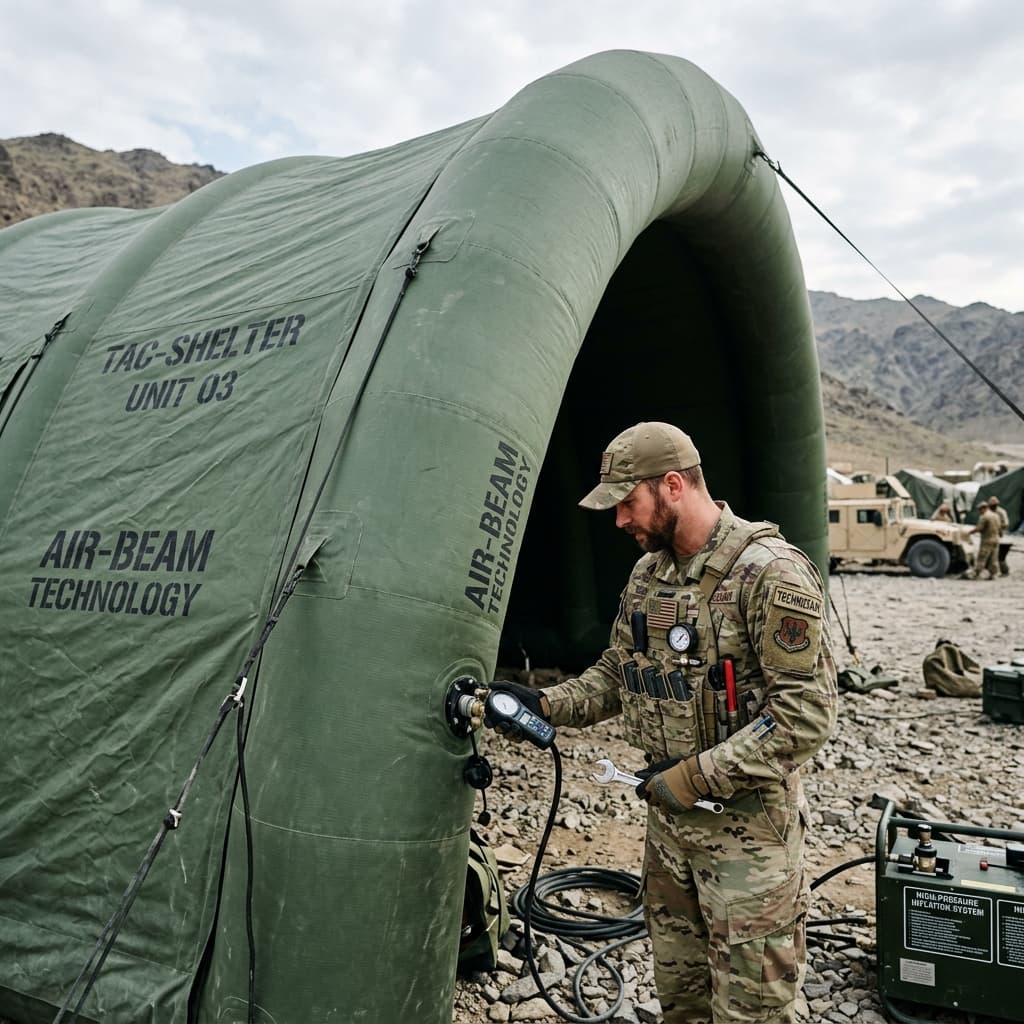
How we approach Inflatable Structures
Speed of deployment is often the defining factor in medical triage or rapid command post establishment. We design shelters utilizing high-pressure inflatable arches - often referred to as airbeams - that replace traditional, heavy aluminum framing.
These airbeams are constructed from advanced drop-stitch fabrics and heavy-duty polyurethanes, allowing them to be inflated to significant pressures. Once pressurized, they achieve the rigidity of metal but with a fraction of the weight, and they easily withstand severe snow loads and high winds.
To deploy, a single operator connects a compressor; the entire shelter, including the integrated floor and liner, stands itself up simultaneously. This eliminates the need for ladders, tools, or large assembly teams.
We integrate pressure-relief valves to manage thermal expansion during the day, and automatic top-off sensors that maintain structural rigidity even if a slow leak develops over a long deployment.
Instant Architecture
Airbeam technology radically reduces the physical exertion and time required to establish a secure footprint.
- High-pressure drop-stitch beams.
- Single-point automated inflation.
- Severe weather resistance.
- Zero-tool assembly.
The Physics of Airbeams
A properly engineered airbeam relies on extreme tensile strength in its outer sleeve. By containing the high internal air pressure tightly, the fabric becomes incredibly rigid, snapping back into shape even after blunt force impacts that would permanently bend a metal pole.
Inflatable Structures FAQ
Details on pneumatic framing.
Pneumatic Engineering
Arch Geometry
Design beams for optimal aerodynamic shed.
Fabric Welding
Utilize RF welding for impenetrable air seams.
Pressure Testing
Verify burst margins at high temperatures.

Talk with engineers who own the work
Request a technical pass on Inflatable Structures: constraints, risks, and a practical next step with clear assumptions.