Insights · Report · Drones · Apr 2026
An executive framework for evaluating Uncrewed Aerial Vehicle program maturity: progressing from isolated flight demonstrations to fully integrated, logistically supported fleet operations with predictable safety margins.
The engineering gap between a successful Uncrewed Aerial Vehicle (UAV) demonstration flight and a mature, persistently deployed intelligence collection program is colossal. Too often, defense and commercial integrators define readiness merely by the physical capability of the airframe to lift a specific payload payload matrix and fly a predetermined route in clear weather. This incredibly narrow definition of readiness invariably leads to catastrophic program failures when the system is transitioned to austere operational environments where maintenance logistics, spectrum interference, and operator fatigue dominate.
This technical brief established the Niyotek 2026 UAV Program Readiness Assessment Framework. It serves as a comprehensive maturity matrix designed for program managers and chief engineers. The framework deliberately moves away from pure aerodynamic performance metrics and heavily weights the organizational, logistical, and safety architectures that wrap around the physical drone hardware. True program readiness is defined by the resilience of the entire operational ecosystem, not just the thrust to weight ratio of the motors.
Level One readiness in our framework characterizes ad hoc operations. At this stage, flights are conducted exclusively by incredibly skilled test engineers. The hardware exists as a collection of custom prototype components with little standardized configuration control. Maintenance is reactive and relies heavily on engineering intuition rather than documented procedures. While valuable for initial aerodynamic validation, a Level One program possesses zero tactical utility because it cannot be handed over to a standard operator or scaled beyond a single test range.

Level Two readiness introduces configuration control but lacks logistical depth. The hardware has been solidified into a reproducible bill of materials. Operators can be trained to fly the system using standardized manuals. However, the program lacks a comprehensive failure mode analysis. If a motor burns out in the field, the replacement process is bespoke rather than systematized. The supply chain for spare parts is brittle, and the program relies entirely on vendor 'reach back' support for minor technical issues.
Level Three marks the transition to true tactical viability. At this tier, the UAV system is governed by aggressive configuration management. Every firmware update is fiercely controlled and regression tested before field deployment. The Ground Control Station (GCS) software has been subjected to rigorous human factors engineering to prevent operator cognitive overload. Most importantly, the program has developed distinct, data backed preventative maintenance intervals. Mechanics replace servos and wiring harnesses based on logged flight hours rather than waiting for an in flight failure.
Evaluating the RF spectrum management plan is a core pillar of Level Three readiness. An immature program relies on commercially available 2.4GHz bands and assumes a clean radio environment. A mature operational framework demands heavily encrypted, frequency hopping data links that have been specifically subjected to active electronic warfare (EW) jamming tests. The system must gracefully degrade and execute autonomous return to launch protocols when the primary control link is severed, rather than initiating a fly away event.
Level Four represents the pinnacle of programmatic maturity: fleet integration and continuous continuous continuous data fusion. The individual UAV is no longer treated as an isolated asset; it is a node in a broader informational network. The readiness assessment evaluates the automated data pipelines that funnel full motion video and telemetry from the drone securely into command and control software suites. Fleet readiness ensures that data gathered by asset Alpha is immediately actionable by the operator controlling asset Bravo miles away.
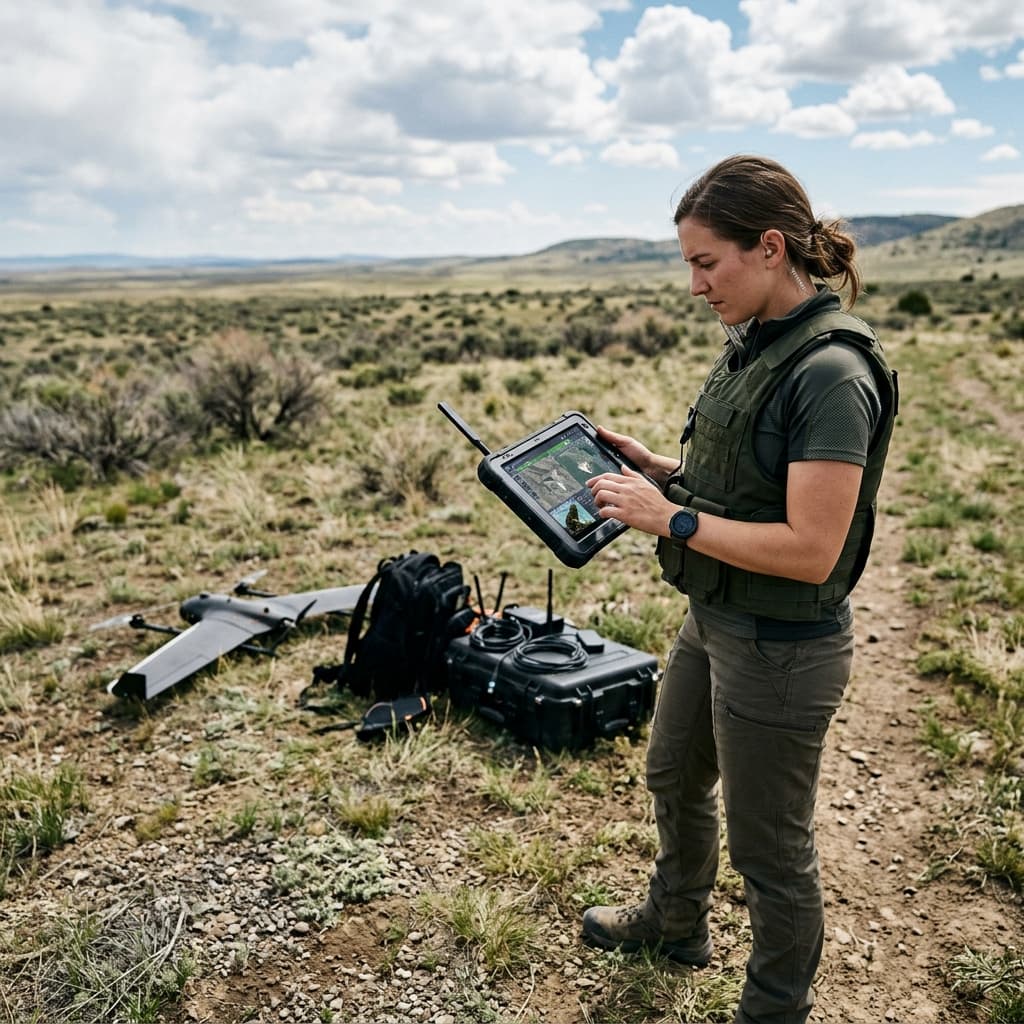
Logistical autonomy is the final test of a Level Four program. Can the deployed unit sustain operations for thirty days without direct factory intervention? This requires a ruggedized, deployable charging infrastructure constructed to withstand austere environments. It demands a robust field level maintenance kit that includes swap level components like entire motor booms rather than individual soldering components. The training pipeline must produce technicians capable of executing these swaps rapidly under severe stress.
Applying this readiness framework reveals uncomfortable truths. Many deeply funded hardware acquisition programs discover they are functionally stuck at Level Two despite possessing incredibly expensive carbon fiber airframes. They have neglected to fund the dull, unglamorous work of maintenance manual generation, supply chain securing, and rigorous software life cycle management. This framework forces those critical gaps into the harsh light of executive visibility.
The engineering mandate for 2026 is clear. Hardware is no longer the primary differentiator in the UAV market. The critical path to deployment is defined by the maturity of the surrounding program matrix. By aggressively utilizing this comprehensive readiness assessment framework, steering committees can accurately allocate funding toward resolving the hidden logistical and software vulnerabilities that truly constrain operational success.
We can present findings in a working session, map recommendations to your portfolio and risk register, and help you prioritize next steps with clear owners and timelines.