Insights · Report · Field Robotics · Apr 2026
Optimizing multi-modal Operator Control Units (OCUs): heavily reducing cognitive overload, integrating tactile haptic feedback, and establishing clear visual indicators of autonomous intent.
Operating a complex remote machine in a high-stress tactical environment rapidly exhausts the operator. Human-Machine Teaming (HMT) interfaces must be brutally optimized to reduce cognitive friction, presenting only highly curated, immediately actionable intelligence rather than flooding the screen with raw, unintelligible telemetry streams.
Haptic feedback restores critical intuition. When utilizing a deeply complex robotic manipulator arm to softly grasp a delicate object, relying simply on a 2D video feed is insufficient. Advanced controllers provide heavy physical resistance explicitly matching the exact grip force applied by the robotic claw, restoring the operator's crucial physical sense of touch.
Clear intent signaling builds crucial operational trust. When a robot autonomously decides to suddenly reverse direction to bypass an obstacle, the sudden movement can severely startle nearby friendly personnel. The robot must clearly advertise its upcoming autonomous intentions using bright directional audio or explicitly distinct LED warning indicators exactly before executing the maneuver.
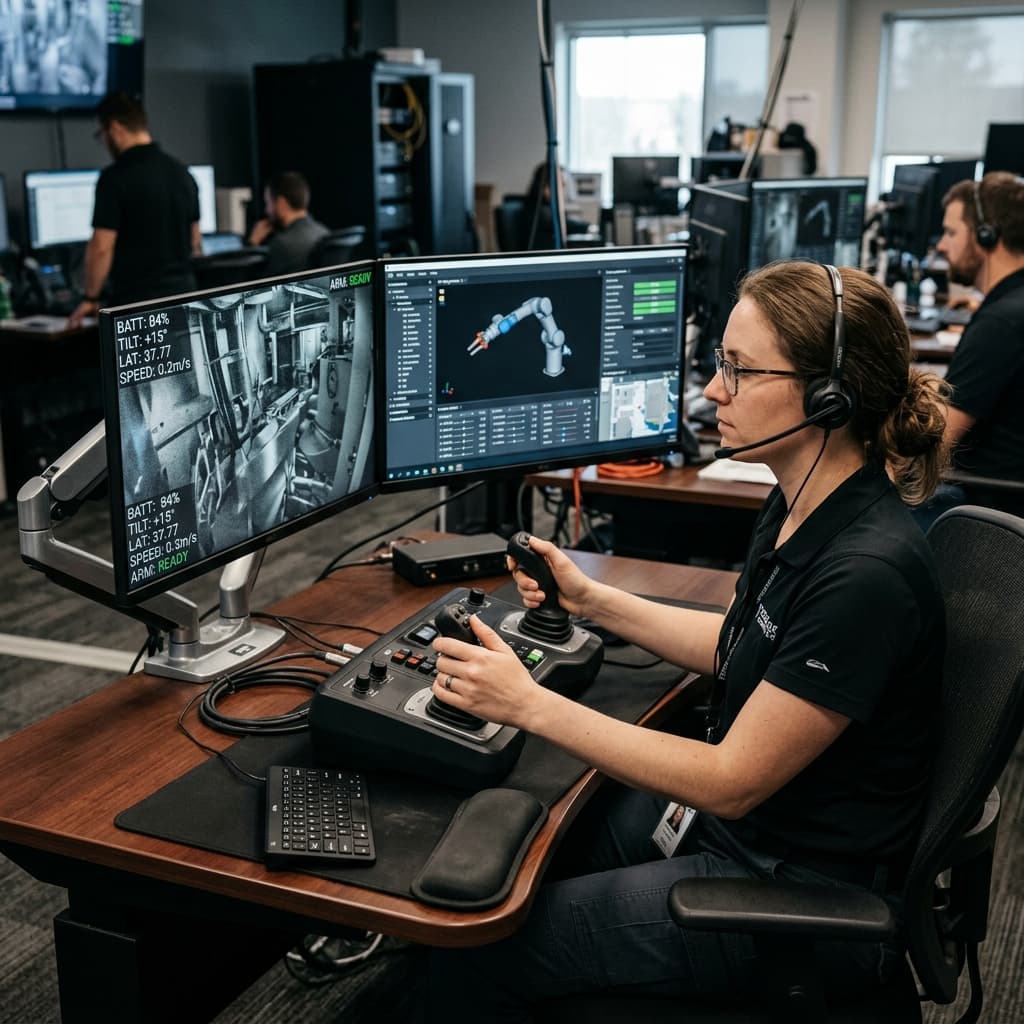
The ultimate objective of highly refined interface design is smoothly transitioning the operator's role from a heavily burdened remote driver into a high-level strategic mission supervisor.
We can present findings in a working session, map recommendations to your portfolio and risk register, and help you prioritize next steps with clear owners and timelines.