Insights · Report · Parachutes · Apr 2026
Standardizing the human element in parachute reliability: transitioning from oral tradition packing to highly constrained documentation, integrating tension boards, and implementing blind audit quality checks.
A brilliantly engineered parachute system boasting the finest zero porosity nylon and precisely verified tensile webbing is immediately reduced to a lethal hazard by a single incorrectly routed suspension line. The physical packing of the parachute determines whether a massive tangled knot deploys or a symmetric, survivable canopy blossoms. Recognizing this, military organizations treat the certification of parachute packers not as a rudimentary logistical skill, but as an aggressive, deeply scrutinized human reliability program. A packer wields direct, unmitigated influence over the survival rate of the final operator.
The historical reliance on 'oral tradition' packing techniques—where a senior rigger simply passes down idiosyncratic habits to a junior packer—is fundamentally obsolete. Modern certification demands absolute compliance with massive, highly rigid technical manuals. The process requires explicitly replacing unstructured packing habits with perfectly repeatable, deeply defined geometric folds. If the manual mandates three perfectly stacked S folds for the steering lines, a packer who casually throws in four folds because it 'looks neater' introduces a localized friction event that will inevitably snap lines during high speed deployment.
Tool calibration limits human error in the loft. A complex high performance canopy cannot be aggressively forced into its tiny deployment bag barehanded without causing severe fabric abrasion. Packers rely entirely on heavy packing fid, specialized tension plates, and precise pull up cords. The certification program must rigorously train packers to use these heavily specialized tools safely without accidentally leaving a heavy metallic tool nested deep inside the folded nylon, a catastrophic error resulting in fatal deployment failure.
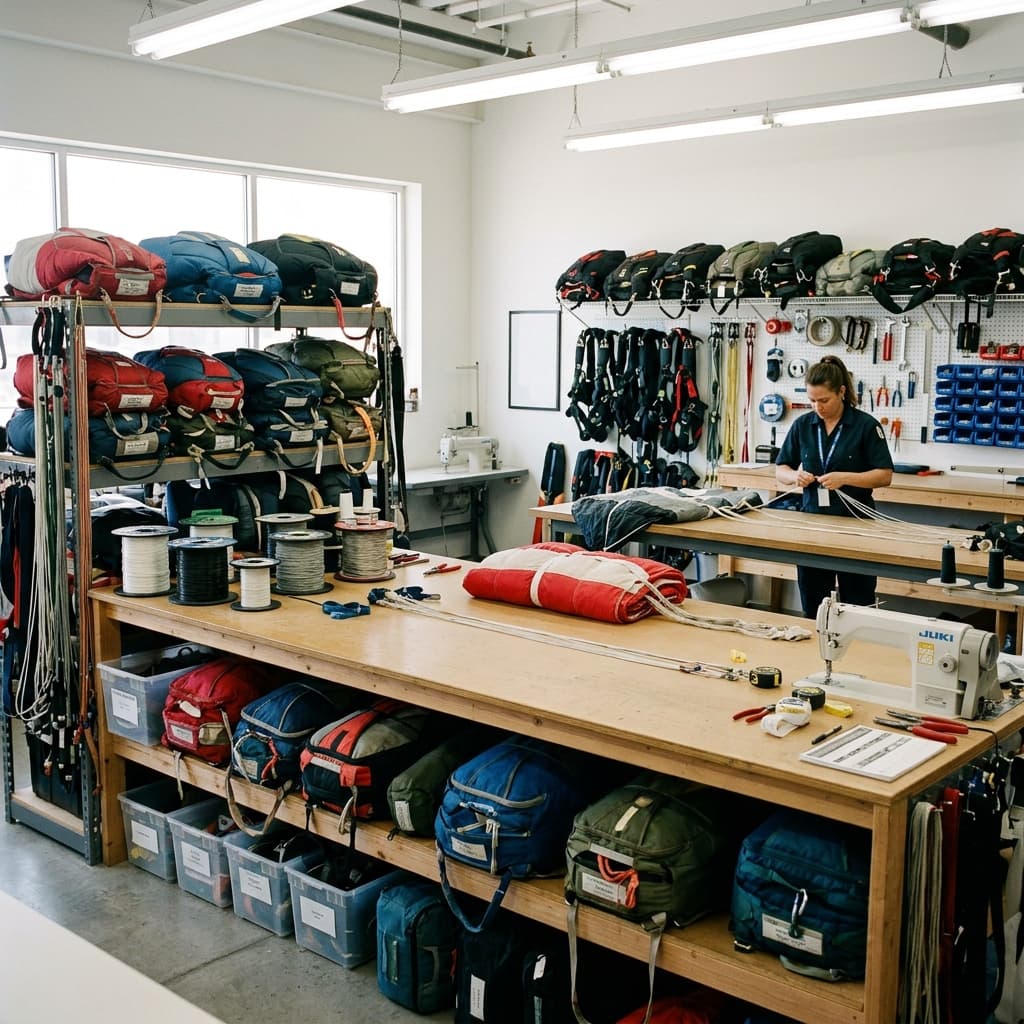
The 'blind check' standard forms the unyielding core of the certification process. A junior trainee cannot simply pack a parachute and hand it to a jumper. At multiple highly specific 'hold points' during the packing sequence—such as immediately after flaking the canopy or routing the deployment bag—the packer must step back. A fully certified master rigger then physically inspects the work, aggressively searching for tension imbalances or twisted risers. If the work passes, the rigger signs off in ink, assuming shared legal liability for the survival of the jumper.
Reserve parachute packing exists in an entirely elevated regulatory domain. Packing a massive primary canopy is demanding; packing the critical, life saving reserve canopy requires obsessive precision. Master riggers tasked with reserve repacks are subjected to brutal, continuous recertification cadences. They must possess a deep forensic understanding of how specific fabrics age, how specialized spring loaded pilot chutes degrade, and how to spot microscopic corrosion on massive heavy duty steel extraction hardware prior to completing the complex seal matrix.
Digital tracking eliminates the ambiguity of physical logbooks. The 2026 paradigm utilizes massive, encrypted databases recording every single action performed in the loft. Every parachute canopy, harness, and Automatic Activation Device (AAD) is tagged with a unique identifier. The database records exactly which certified packer folded the rig, the exact ambient humidity of the loft that day, and the specific rigger who counter signed the hold points. This massive data footprint guarantees absolute traceability if an anomaly occurs on the drop zone.
The certification program aggressively emphasizes forensic un packing. Riggers are heavily tested not just on assembling a secure pack job, but on flawlessly disassembling an already packed rig. They are presented with a tangled, fully complex deployment failure retrieved from a test dummy and are aggressively graded on their ability to analytically reverse engineer the knotted nightmare to definitively pinpoint the precise human error that initiated the malfunction.
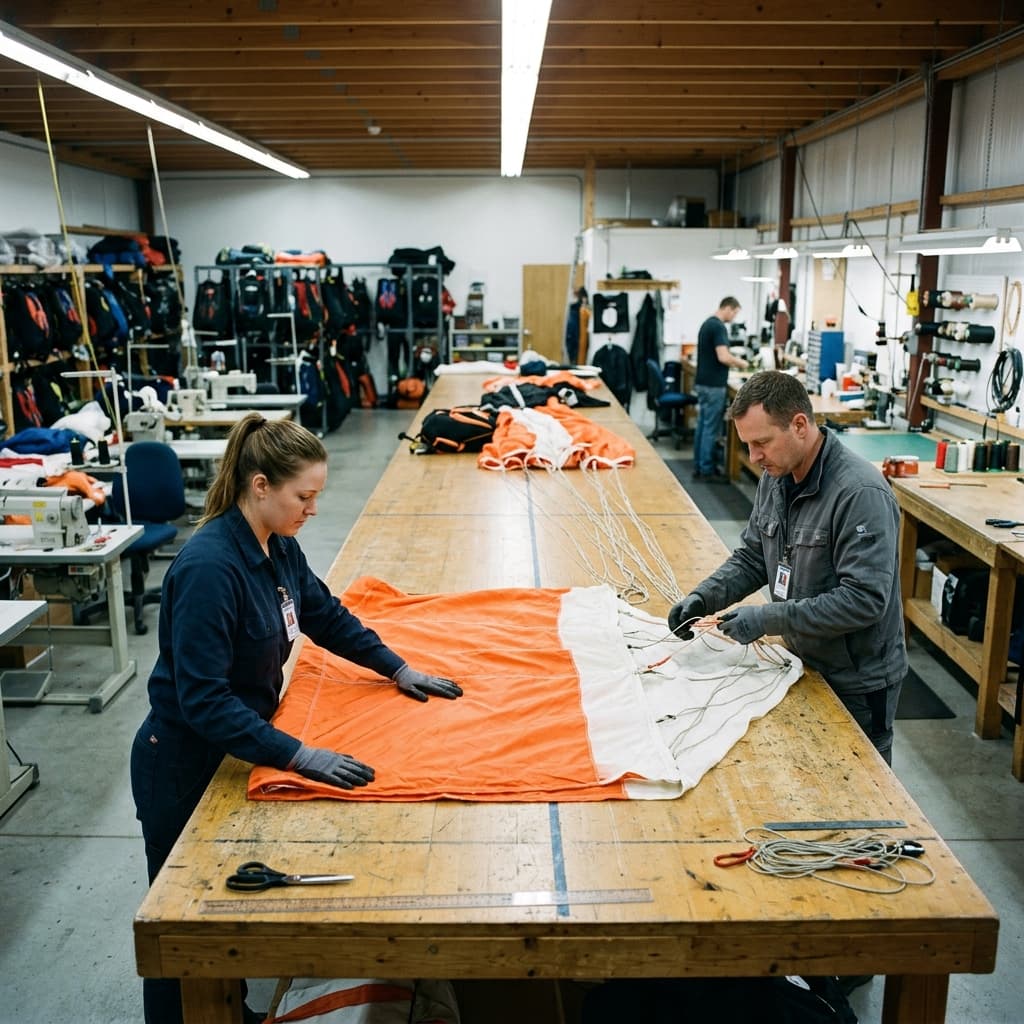
Ultimately, graduating from a rigorous military packing program does not grant flexibility; it demands absolute, boring, rote compliance. By eliminating creativity on the packing table, the certification process guarantees identical, utterly predictable deployments thousands of feet above the drop zone.
We can present findings in a working session, map recommendations to your portfolio and risk register, and help you prioritize next steps with clear owners and timelines.