Insights · Report · Parachutes · Apr 2026
Securing the delicate survival supply chain: mitigating aggressive nylon degradation in high-humidity depots, standardizing massive cargo transport racks, and establishing strict tracking databases.
A brilliantly engineered and flawlessly packed parachute system represents a considerable operational investment. However, this entire investment is entirely negated if the deeply fragile nylon and highly sensitive electronic activation devices are aggressively stored in a damp depot, rotting away months before deployment. Organizing the vast logistics footprint of massive cargo drops and tactical troop deployments requires profoundly recognizing that packed parachutes are structurally unstable, highly degradable life support mechanisms demanding strict, unyielding environmental controls.
Humidity is the absolute relentless enemy of packed nylon. When a parachute is heavily compressed into a tight deployment bag, any ambient moisture trapped inside the weave violently transforms into aggressive mold and severe mildew. This biological growth inherently breaks down the polymer chains of the suspension fabric, entirely destroying its tensile strength. A canopy stored in an unconditioned, sweltering warehouse will aggressively fail a mandatory pull test within twelve months. Logistics depots handling heavy parachute components strictly mandate aggressive, continuously running HVAC systems providing deep dehumidification.
Ultraviolet light degradation requires specialized aggressive transit casing. Leaving a perfectly packed parachute sitting fully exposed on an incredibly hot tarmac for three days prior to a massive tactical jump is utterly indefensible. Standard logistics protocol requires all heavy parachute assemblies to be fully encapsulated in heavy duty, deeply opaque UV resistant transit bags immediately upon departing the strictly controlled rigging loft. Transport planes and shipping containers must absolutely prevent direct sunlight from passively baking the highly sensitive ZP nylon coatings.

The physical transit of heavy assembled rigs demands incredibly specific handling protocols. A fully packed, multi canopy cargo system weighs several hundred pounds. If a forklift operator recklessly slams a massive wooden pallet carrying rigged parachutes against a metal bulkhead, the massive blunt force trauma can violently crush internal AAD control boxes, bend critical release pins, or severely deform the heavy metal extraction hardware. Specialized, custom built deep racking systems physically isolate adjacent packed rigs from aggressive compressive transit loads.
Digital serial tracking absolutely defines structural readiness. Managing ten thousand deployed tactical canopies globally requires moving aggressively away from easily destroyed manual paper logbooks. Modern depots heavily rely on ruggedized barcode and deep RFID scanning. Whenever a heavy rig moves from the loft to a storage rack, or from a rack to an active aircraft, the central tracking database is instantly updated. This explicitly ensures that no rig accidentally exceeds its rigid mandatory repack date while silently sitting forgotten at the back of a vast staging hangar.
Fleet wide maintenance and mandatory component upgrades demand flawless logistical visibility. If a massive safety bulletin suddenly grounds a specific batch of heavy duty harness rings due to microscopic metallurgical defects, the tracking database must instantly identify exactly which hundred rigs are compromised across global deployments. The logistics network must seamlessly initiate a massive recall, securely transport the affected systems back to the central loft, and instantly requisition proper replacements without deeply stalling the deployment timeline.
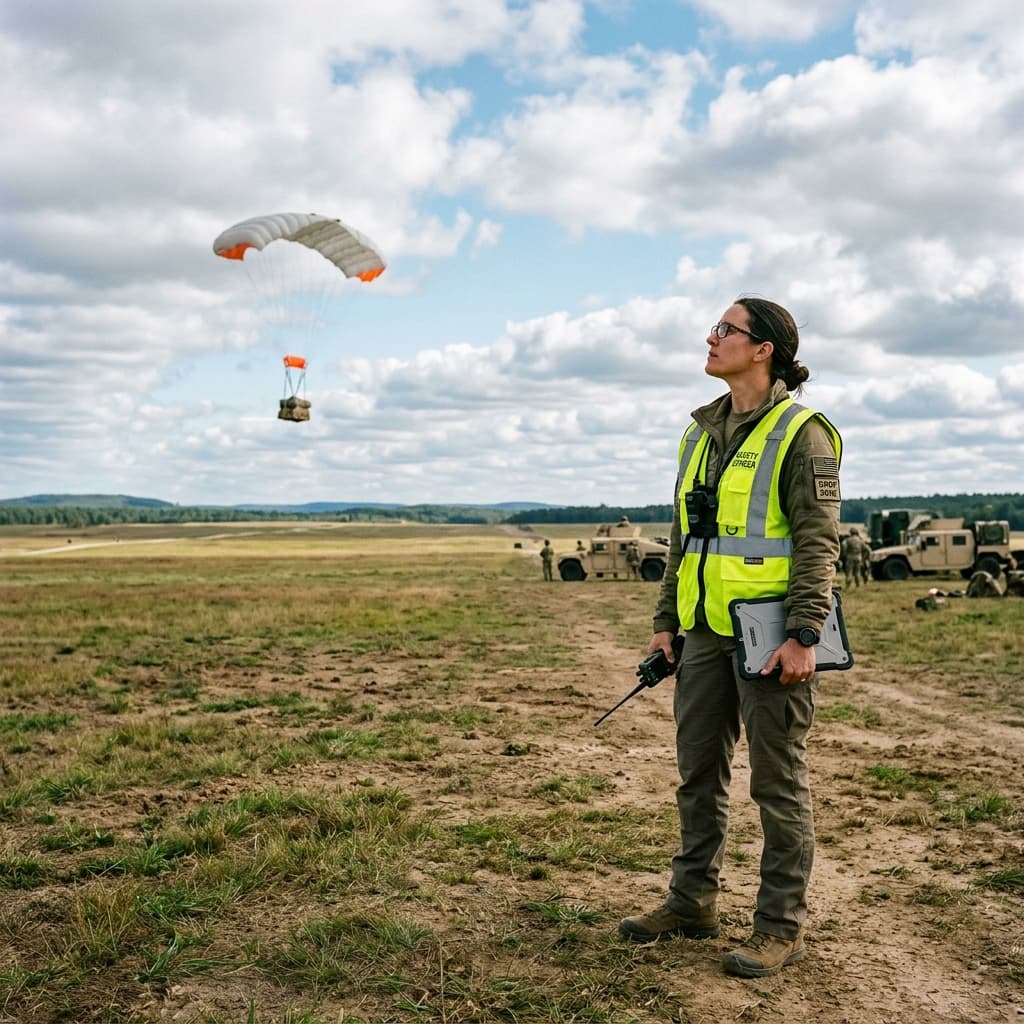
The recovery protocol completes the deeply critical logistics cycle. After a massive airdrop, thousands of square feet of highly expensive nylon are left hopelessly tangled in muddy, heavily abrasive drop zones. If not aggressively recovered, vigorously shaken out, completely dried, and meticulously transported back to the loft within severe timelines, the heavily soiled canopies will rot rapidly. Advanced parachute logistics heavily resource rapid field recovery tactical strike teams directly integrated on the drop zone.
Ultimately, robust parachute logistics refuses to view transport as merely moving a box. It is the highly disciplined practice of extending incredibly tight, deeply sterile laboratory parameters directly into the chaotic operational field, explicitly ensuring every deployment is backed by uncompromised structural integrity.
We can present findings in a working session, map recommendations to your portfolio and risk register, and help you prioritize next steps with clear owners and timelines.