Insights · Report · Drones · Apr 2026
Transitioning from tactical sorties to persistent overwatch: engineering the shift toward hybrid powertrains, managing thermal stress over extreme durations, and implementing pilot fatigue mitigation protocols.
Tactical multirotor drones flying thirty minute sorties provide immediate, localized intelligence. However, border security, maritime patrol, and linear infrastructure inspection require persistent overwatch. Transitioning a UAV program into long endurance operations—flights lasting from several hours to multiple days—is not simply a matter of adding a larger battery. It requires a fundamental paradigm shift in propulsion engineering, thermal architecture, and human factors management. A program designed around short sprint missions will collapse operationally and mechanically when pushed into continuous multi hour orbits.
Propulsion architecture is the primary bottleneck for endurance. Pure electric multirotors are bounded by the low specific energy density of lithium ion batteries. To achieve flight times exceeding two hours, the airframe must transition to a highly aerodynamically efficient fixed wing or VTOL (Vertical Take Off and Landing) configuration. For true long endurance (twelve to twenty four hours), pure electric power fails entirely. The platform must incorporate hybrid gasoline electric generators or advanced hydrogen fuel cell technology. Integrating combustible fuels introduces massive vibration, complex fluid logistics, and severe mechanical failure modes alien to pure electric drone operators.
Thermal saturation becomes the dominant mechanical threat during long endurance flights. A high performance computer vision payload drawing forty watts may survive a thirty minute flight relying solely on the thermal mass of its aluminum chassis to absorb the heat. However, if that identical payload is flown for ten hours under a blazing desert sun, thermal saturation inevitably occurs. Without meticulously designed passive conduction pathways or active liquid cooling loops rejecting heat to the slipstream, the core processors will thermal throttle, crashing the autonomous navigation algorithms mid flight.
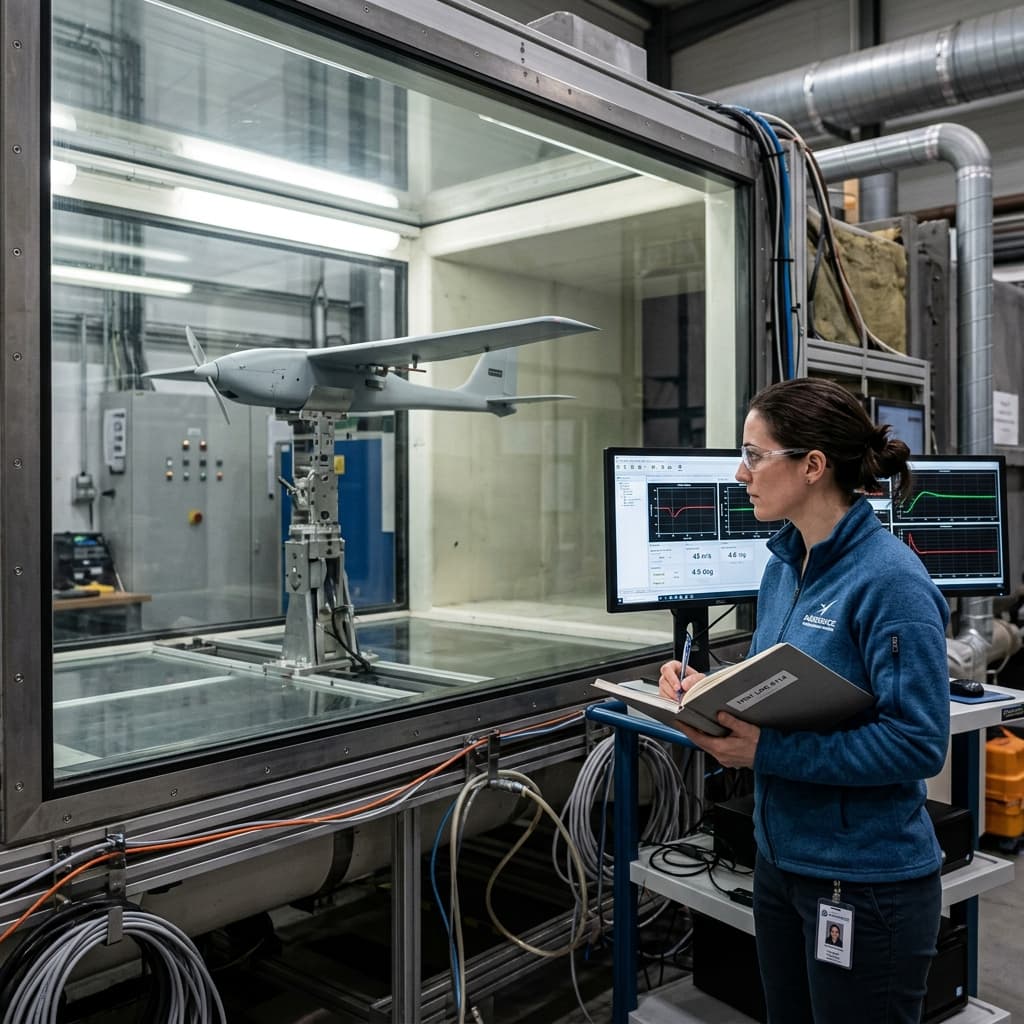
Vibration fatigue over massive time scales destroys electronics. A gasoline powered hybrid engine generates continuous, low frequency mechanical oscillation. Over a twenty hour flight, this vibration cycles hundreds of thousands of times. If the avionics bays and payload gimbals are not mounted on highly tuned wire rope isolators, the mechanical resonance will relentlessly slowly fracture solder joints, strip the threads off mounting screws, and eventually snap rigid wiring harnesses. Long endurance qualification mandates extreme vibration shake table testing to prove the airframe can survive thousands of operational hours without structural fatigue.
Communications architecture must transition to Beyond Visual Line of Sight (BVLOS) SATCOM (Satellite Communications). A long endurance drone invariably flies out of range of ground based RF antennas. Relying on massive networks of ground relay towers is logistically impossible over oceans or deep wilderness. Integrating a lightweight, dynamically stabilized SATCOM dish onto the airframe is mandatory. This introduces crushing bandwidth constraints; satellite data links are expensive and incredibly slow compared to local Wi Fi, forcing the drone to process high definition video locally and transmit only highly compressed, low frame rate intelligence over the horizon.
Operator fatigue is the most insidious risk in persistent overwatch. Staring at an unchanging, compressed infrared video feed of an empty ocean for eight straight hours induces severe cognitive numbness. The operator's reaction time plummets, and they will likely miss the fleeting tactical event the drone was launched to monitor. Long endurance HMI (Human Machine Interface) requires integrating aggressive computer vision alerts. The autonomy engine must actively watch the video stream and trigger an inescapable audible and visual alarm on the console, shaking the operator awake only when a relevant anomaly is detected.
Shift rotation protocols must be rigorously established. Flying a twenty four hour mission requires a minimum of three distinct pilot shifts. The handover procedure cannot be an informal chat. The outgoing pilot must utilize a rigid, checklist driven briefing to seamlessly transfer situational awareness—including current telemetry anomalies, weather vectors, and payload status—to the incoming pilot without interrupting the continuous observation of the target.

Weather resilience ceases to be an option. A thirty minute tactical drone can simply land if a sudden thunderstorm rolls in. A long endurance asset three hundred miles out over the ocean cannot outrun weather. The airframe must be engineered to punch straight through icing conditions, severe turbulence, and torrential rain. This mandates the integration of active leading edge de icing boots, sealed waterproof electronics bays, and deeply robust autonomous flight controllers capable of fighting severe unpredicted downdrafts.
Ultimately, successfully executing a long endurance UAV program moves the operational challenge from the realm of the RC hobbyist firmly into the domain of professional aviation. It demands rigid maintenance schedules, sophisticated hybrid drivetrains, and a massive organizational structure wholly dedicated to supporting the unblinking eye in the sky.
We can present findings in a working session, map recommendations to your portfolio and risk register, and help you prioritize next steps with clear owners and timelines.