Insights · Report · Rugged Hardware · Apr 2026
Establishing rigorous validation matrices for deploying complex tactical systems: defining clear boundary limits, accelerating age testing, and automating regression analysis arrays.
A completed hardware prototype represents only the very beginning of the engineering journey. Before mass production or tactical deployment, the system must survive comprehensive test coverage matrices. Haphazardly subjecting a new piece of hardware to generic vibration profiles or simple power cycling fails to expose the complex, intertwined critical edge case failures.
Highly Accelerated Life Testing (HALT) aggressively pushes hardware specifically to its breaking point. Unlike standard qualification that merely confirms passing a baseline, HALT constantly ramps up temperature and vibration simultaneously until the unit physically fractures or electronically crashes. This process rapidly explicitly identifies the precise weakest link in the design architecture.
Regression testing automation is fundamental during rapid iterative software updates. Whenever a new firmware patch is flashed to the rugged field computer, massive scripts automate checking every single hardware interface. The script actively powers cycles external antennas, queries sensor endpoints, and verifies that the new software patch did not accidentally disable a critical analog input.
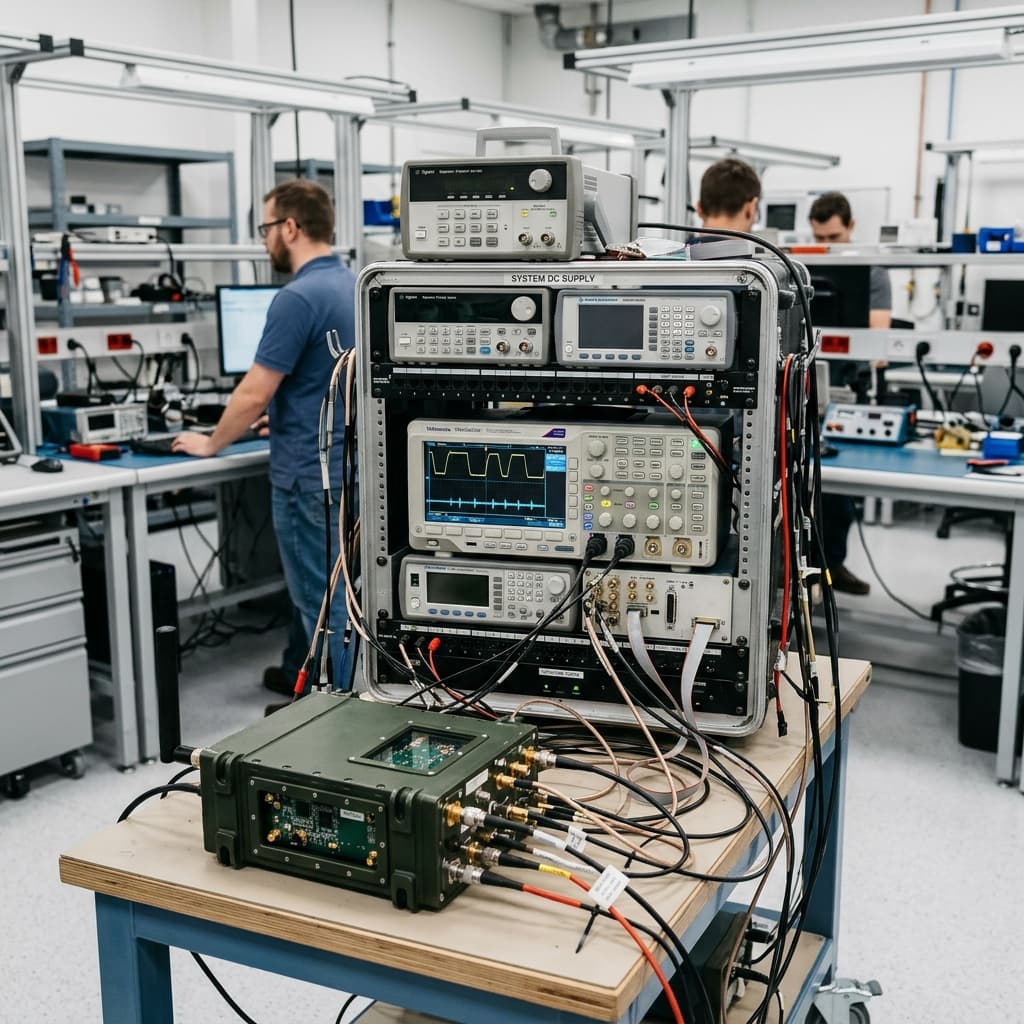
The test coverage brief documents the absolute boundaries of tactical confidence. When a field commander views the evidence package, they require the mathematical certainty that their equipment was explicitly tested against the exact chaotic shock, severe temperature, and aggressive dirty power parameters they will encounter on the impending deployment.
We can present findings in a working session, map recommendations to your portfolio and risk register, and help you prioritize next steps with clear owners and timelines.