Insights · Report · Rugged Hardware · Apr 2026
Securing the tactical edge: preventing physical tampering, implementing encrypted boot sequences, and hardening communication ports on field deployed hardware.
Deploying a rugged computer into a hostile environment exposes it not only to harsh weather but to active physical tampering. Traditional cybersecurity assumes a server resides in a secure data center behind locked doors. Field hardware cybersecurity must assume the adversary has prolonged, unrestricted physical access to the device.
Hardware root of trust is essential. If a rugged device is captured, an adversary will attempt to extract its storage drives to reverse engineer operational data. The system must utilize dedicated cryptographic processors (TPMs) to encrypt the hard drives, ensuring the data is fundamentally unreadable if the specific drive is removed from the host motherboard.
Secure boot protocols prevent firmware poisoning. If a malicious operative attempts to flash compromised firmware onto a drone flight controller via a USB port, the hardware must actively reject it. Secure boot ensures the hardware will only load an operating system mathematically signed by the original manufacturer, protecting the integrity of the device upon start up.
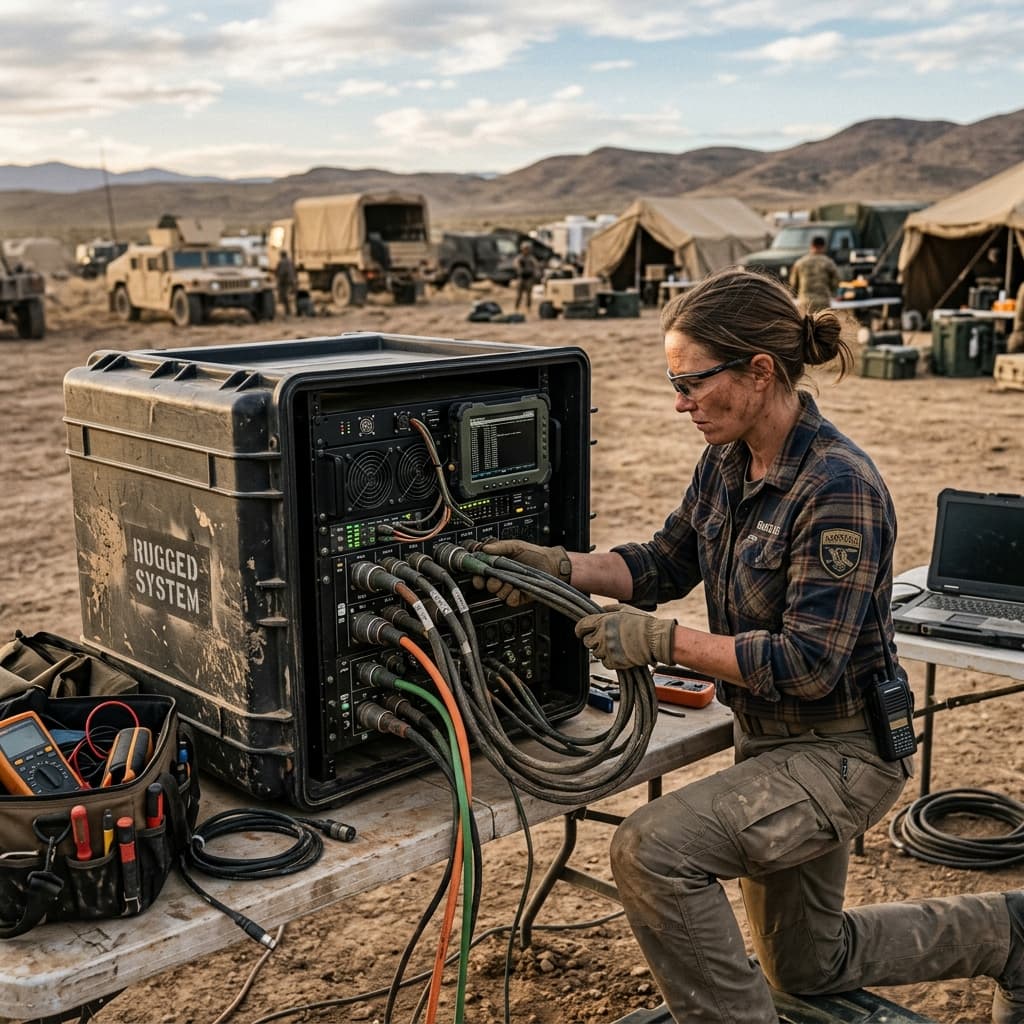
Physical port security mitigates side-channel attacks. A rugged tablet with an exposed, unencrypted USB maintenance port is highly vulnerable. Field hardware must physically cap and electronically disable all unused data ports. Furthermore, chassis intrusion switches can be implemented to automatically wipe cryptographic keys if the metal shell is forcibly opened.
We can present findings in a working session, map recommendations to your portfolio and risk register, and help you prioritize next steps with clear owners and timelines.