Insights · Report · Drones · Apr 2026
Engineering the integration of advanced multi sensor payloads: assessing mechanical limits, thermal management in high density gimbals, and establishing rapid field swapping qualification criteria.
The value of an uncrewed aerial system is defined entirely by the data its payload collects. A flawlessly flying airframe is useless if the high resolution thermal camera mounted beneath it succumbs to severe vibration, overheats in direct sunlight, or fails to synchronize its telemetry with the primary flight computer. Qualifying a complex multi sensor payload—often combining electro optical (EO), infrared (IR), and laser rangefinders into a single tight housing—requires a brutal gauntlet of environmental and electrical verification testing prior to field deployment.
Mechanical isolation forms the baseline of payload qualification. A drone frame is incredibly noisy, transmitting severe high frequency vibration from the spinning propellers straight into the chassis. If this kinetic energy propagates uninterrupted into a high magnification optical sensor, the resulting video feed will be entirely distorted by the 'jello effect' (rolling shutter distortion), rendering distant target identification impossible. Payload integration demands highly tuned elastomeric or wire rope dampers specifically chosen to filter out the distinct resonant frequencies generated by the specific drone's motor arrays.
Thermal management within dense payload gimbals presents a contradictory engineering challenge. The core objective is packing massive processing power and multiple heat generating sensors into the smallest, most aerodynamically slick sphere possible to minimize drag. However, encapsulating these components destroys natural convection cooling. A payload that runs perfectly bare on an engineer's desk will rapidly hit thermal saturation when sealed inside an IP67 rated aluminum and glass gimbal housing baking in the midday sun. Qualification requires rigorous thermal chamber testing to verify internal heat pipes and conductive chassis pathways can reject the heavy computational load to the surrounding airflow.
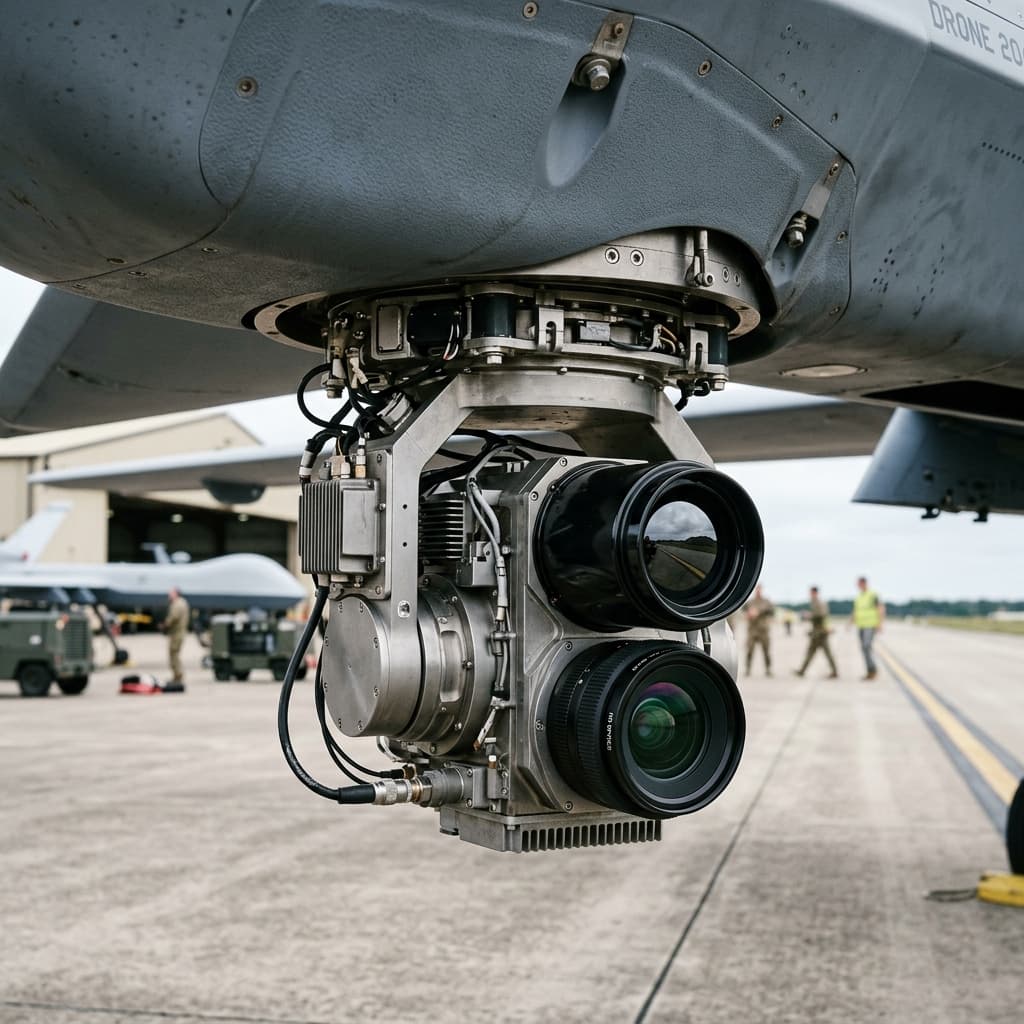
Electromagnetic interference (EMI) is drastically amplified when integrating third party payloads. A commercial LiDAR sensor may function beautifully in isolation but radiate massive amounts of high frequency noise. Once bolted mere inches below the drone's primary GNSS antenna, that localized noise can completely jam the GPS signal, causing a catastrophic loss of navigation. Payload qualification mandates placing the integrated system in an anechoic chamber to measure emitted noise profiles and ensure the new sensor package does not electronically deafen the host aircraft.
Electrical interface standardizations dictate the speed of tactical deployment. Field operations cannot tolerate bespoke, fragile wiring harnesses that require ten minutes to meticulously align and screw together. A modern qualified payload must utilize ruggedized, blind mate connectors. The mechanical locking collar and the electrical pins must engage simultaneously with a definitive click. This allows an operator in poor lighting conditions to confidently hot swap a daylight camera for a thermal package without powering down the primary flight systems.
Software abstraction is the invisible barrier to rapid integration. If a drone's operating system requires a massive core firmware rewrite to recognize a new gas spectrometer payload, the system lacks tactical flexibility. Advanced integration architectures employ middleware protocols (such as ROS 2 or MAVLink overlays) that act as universally recognized translation layers. A qualified payload announces its capabilities to the host machine upon connection, automatically requesting the exact voltage it requires and publishing its data stream in a pre approved, standardized packet structure.
Center of Gravity (CG) limitations impose strict operational envelopes. An airframe may mathematically be capable of lifting ten kilograms, but if the integrated camera gimbal protrudes too far forward on the nose, it severely shifts the aircraft's CG out of bounds. The rear motors will be forced to run at maximum RPM just to maintain a level hover, drastically slashing flight time and leaving zero dynamic thrust reserve to battle sudden crosswinds. Payload qualification must precisely document not just total weight, but exact moment arms and the acceptable payload mounting volumes.
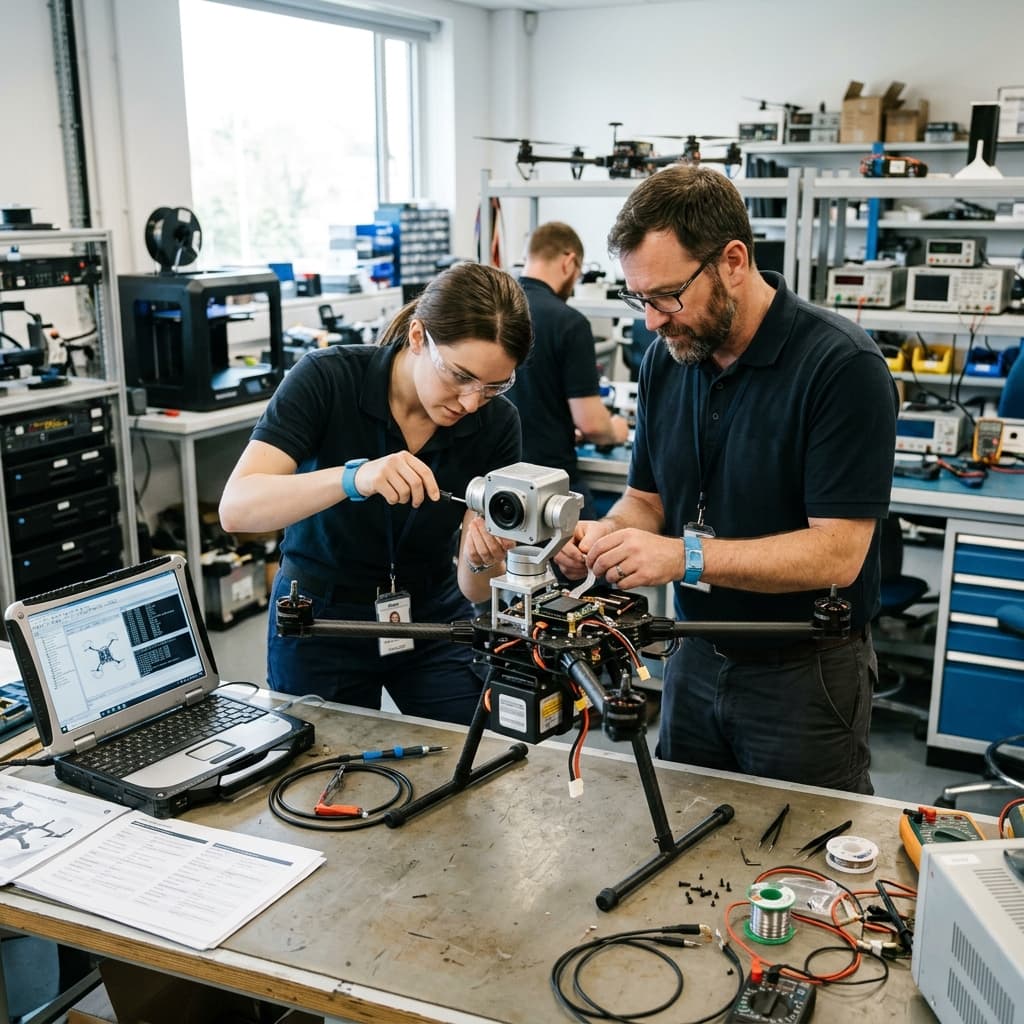
Environmental sealing integrity must be proven, not assumed. A gimbal designed for maritime operations must survive aggressive salt fog testing and driving rain without the internal camera lenses fogging. The weakest points are inevitably the continuous rotation joints that allow the camera to pan limitlessly. These joints rely on complex slip rings to pass power and data while spinning, sealed by specialized dynamic O rings. Sand and salt grit will quickly destroy these dynamic seals if the mechanical tolerances are inadequate.
Ultimately, a drone payload qualification brief serves as the uncompromising contract between the airframe manufacturer and the sensor provider. By rigorously defining the exact thermal, vibrational, and electrical boundaries the payload must survive, program managers guarantee that the eye in the sky remains sharp and focused regardless of the chaos executing below it.
We can present findings in a working session, map recommendations to your portfolio and risk register, and help you prioritize next steps with clear owners and timelines.