Insights · Report · Parachutes · Apr 2026
Evaluating the exact trade-offs of next-generation canopy fabrics: assessing zero-porosity nylon against highly breathable ripstop weaves, managing UV degradation, and optimizing the critical weight-to-drag ratios.
At a macro level, parachute design appears to be an exercise solely in geometry and structural suspension. In rigorous engineering reality, the precise chemical composition, exact weaving structure, and specific porosity of the canopy fabric define the ultimate success or failure of the entire deceleration system. Selecting the exact fabric for a 2026 tactical canopy requires brutal mathematical tradeoffs. The lightest fabric will not survive a massive terminal opening shock, and the strongest, heaviest fabric will violently twist and burn the operator to death if mispacked. Fabric selection is never a compromise; it is an optimized solution.
Porosity—the defined measure of how much air a specific fabric weave allows to pass entirely through it—dictates the violent dynamics of the opening shock. High porosity fabrics (like legacy F-111 nylon) bleed significant air directly through their structure. This 'leakage' dramatically slows and softens the violent initial inflation, providing a deeply forgiving opening shock for heavily loaded jumpers. The severe penalty is that high porosity perfectly guarantees a much faster, less efficient overall descent rate because the canopy cannot capture and hold a solid mass of air.
Zero-porosity (ZP) fabrics represent the aggressive modern standard for high performance canopies. ZP nylon is heavily coated—typically with an ultra-thin layer of silicone or heavy polyurethane—to render the weave deeply airtight. A ZP canopy violently grabs the entire rushing air mass without leaking, resulting precisely in brilliant aerodynamic lift, incredibly flat glide ratios, and deeply efficient descent profiles. However, this zero leakage profile translates to an incredibly sharp, brutally fast opening shock that demands highly complex, massive slider reefing systems to prevent the immediate destruction of the canopy under heavy dynamic loading.
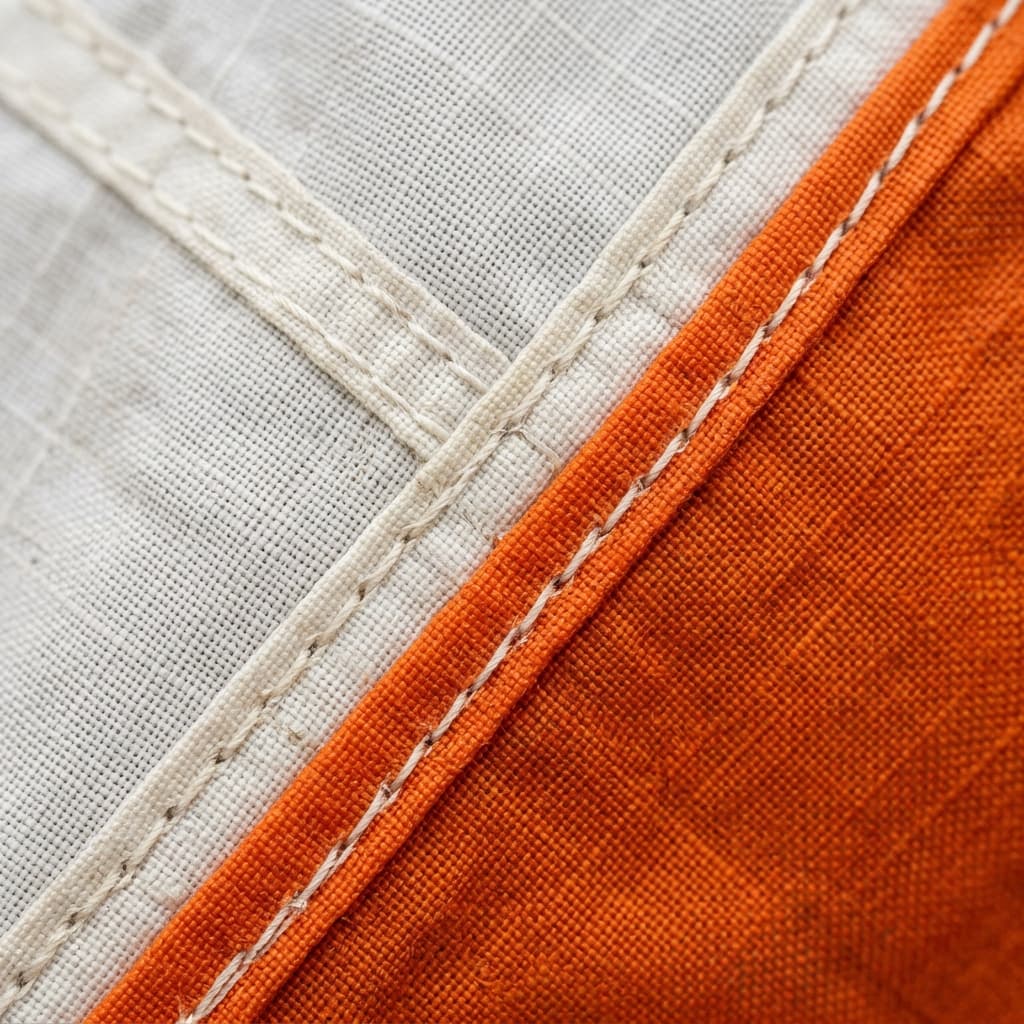
The 'Ripstop' weaving architecture is an utterly non-negotiable requirement across all modern tactical fabrics. Utilizing standard woven nylon guarantees that a tiny microscopic puncture will instantly propagate violently into a massive structural failure as the canopy inflates under stress. Ripstop fabric interweaves thick, heavy duty reinforcement threads directly into the primary nylon at regular geometric intervals. If a severe snag or burn punctures the fabric, the localized tear aggressively strikes the thick grid thread and halts, preventing the catastrophic loss of the entire panel.
Ultraviolet (UV) degradation aggressively dictates the service lifespan of all canopy architectures. Nylon is highly susceptible to massive photodegradation. Prolonged exposure to intense high altitude sunlight causes the long nylon polymer chains to physically break down, rendering the brilliantly colored canopy fabric brittle and dangerously weak. A canopy that perfectly passes a destructive tensile test at the factory may silently fail an identical test after a year of aggressive field exposure. Extensive UV retardant coatings add significant heavy weight that must be brutally balanced against the required operational longevity.
Friction and precise packing volume define the logistical footprint. Heavily coated ZP fabrics are frequently exceptionally slippery and incredibly stiff, making them brutally difficult to pack smoothly into an extremely dense deployment bag without trapping massive pockets of air. A poorly packed, deeply rigid ZP canopy will inevitably result in violent, asymmetrical deployments. Extremely lightweight, softer uncoated fabrics compress beautifully into tiny volumes but suffer massively from severe friction burns (canopy abrasion) when heavily packed suspension lines whip violently against the soft nylon during high speed deployment.
Material selection for massive heavy cargo airdrops drastically diverges from personnel systems. When dropping a massive tank, achieving a graceful, steerable glide slope is irrelevant. The focus is purely on massive, brute force aerodynamic drag and cheap, heavy duty materials. Cargo systems frequently favor highly porous, rugged cotton duck canvasses or vastly thicker, deeply robust nylons stitched into massive circular geometries specifically designed to decelerate brutal tonnages without immediately detonating under stress.
Material science continuously promises exotic solutions like pure Kevlar or heavy Vectran weaves. While their absolute tensile strength is magnificent, their severe lack of necessary elasticity translates to opening shocks that will brutally destroy the suspended payload. Ultimately, the meticulous selection of modern coated nylon, highly tailored for the precise porosity requirement of the specific mission profile, remains the absolute foundation of survivable aerospace deceleration.
We can present findings in a working session, map recommendations to your portfolio and risk register, and help you prioritize next steps with clear owners and timelines.