Insights · Report · Drones · Apr 2026
Scaling drone energy management beyond the single asset: designing ruggedized charging infrastructure, enforcing fleet wide cycling protocols, and mitigating the immense fire risk of bulk lithium ion transport.
Managing a single high capacity lithium ion battery for a tactical drone is a minor inconvenience. Managing a fleet of twenty drones, each demanding continuous operational uptime, transforms battery handling into a massive, highly dangerous logistical bottleneck. A fleet operating continuously requires a massive battery inventory, aggressive charging cycles, and physical transport of hundreds of pounds of volatile chemistry. An improvised approach to fleet battery logistics guarantees catastrophic fires and drastically shortened battery lifespans, ultimately grinding the entire UAV program to a halt.
The charging infrastructure dictates the operational tempo. Commercial, lightweight chargers are completely inadequate for sustained field operations. A field commander cannot rely on stringing dozens of fragile plastic chargers together on power strips exposed to dust and moisture. Fleet operations demand heavily ruggedized, massive multi bay charging transit cases. These cases must feature their own integrated HVAC systems to aggressively cool the batteries utilizing forced air while pushing maximum amperage. A rapidly charging lithium ion pack generates immense thermal load; failing to active cool the batteries during a rapid cycle destroys their internal chemistry within months.
Power budgeting for the base station is frequently overlooked until the generators fail. Rapidly charging twenty large drone batteries simultaneously requires thousands of watts of massive, spiky current draw. Plugging a ruggedized charging case into an unconditioned field generator will blow the breakers instantly or cause severe voltage sags that confuse the smart charging circuitry. The operational deployment plan must explicitly mandate the integration of heavily stabilized, high output generator systems utilizing robust power conditioning units dedicated solely to the UAV battery pipeline.
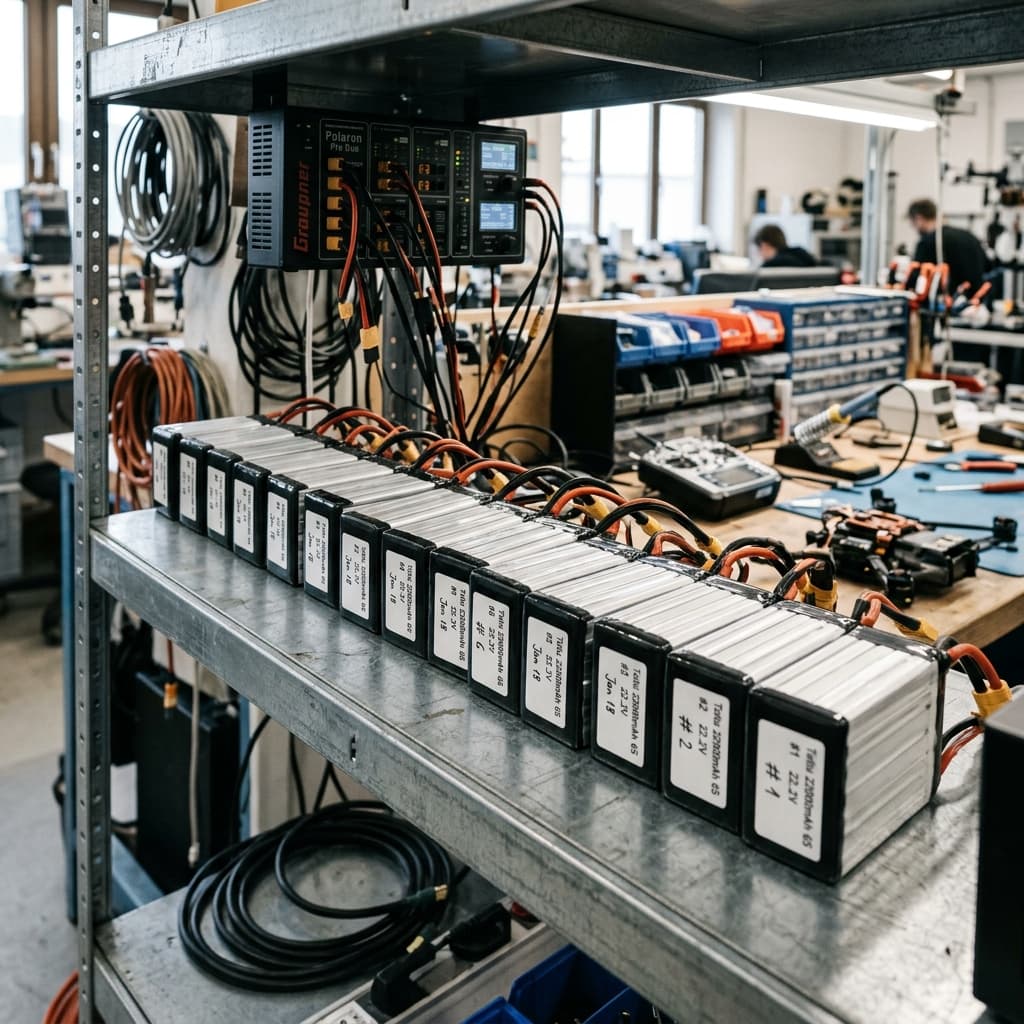
Fleet wide cycling protocols must be ruthlessly enforced. Lithium ion batteries degrade rapidly if left fully charged for extended periods, or if driven to complete depletion. If operators arbitrarily grab the nearest battery off the rack, some packs will cycle twice a day while others sit fully charged at the bottom of the pile, slowly degrading their internal resistance. Advanced fleet charging cases network together, reporting the exact cycle count, internal health, and optimal 'next to use' pack to the flight line manager via a digital dashboard, ensuring perfectly uniform wear across the entire expensive inventory.
Transportation regulations impose severe restrictions on bulk deployment. Lithium ion batteries possess incredibly high energy density. Hauling a pallet of massive drone batteries on a military transport aircraft or commercial airliner is heavily restricted due to the massive thermal runaway risk. The logistics plan must explicitly outline UN38.3 compliant shipping protocols, requiring highly specialized, fire containment transit cases that guarantee an explosion in one cell will not cascade through the pallet and destroy the host aircraft in flight.
Cold weather operations completely shatter battery logistics timelines. Deploying a drone fleet in sub zero temperatures requires fundamentally altering the charging paradigm. A lithium ion battery cannot be forcefully charged while frozen; attempting to do so causes irreversible lithium plating on the anode, instantly killing the pack. The fleet logistics plan must mandate heated battery deployment cases that actively hold the spare packs at 20°C until the exact moment they are locked into the drone airframe for flight.
Disposal and decommissioning of massive drone battery fleets present a massive financial and environmental liability. An end of life tactical battery still contains significant volatile energy and highly toxic chemicals. The logistical framework must not merely focus on deployment; it must explicitly map the reverse supply chain. Programs must contract specific hazmat recycling partners and mandate safe discharging procedures at the field level before the bloated, unstable batteries are shipped back to the depot.

Ultimately, treating drone batteries as disposable accessories is a financial luxury afforded only to hobbyists. In large scale tactical deployments, the battery fleet is a highly volatile, massively expensive asset class. Governing that asset class demands rigorous infrastructure design, unyielding operational discipline, and severe respect for the laws of thermodynamics.
We can present findings in a working session, map recommendations to your portfolio and risk register, and help you prioritize next steps with clear owners and timelines.