Insights · Report · Parachutes · Apr 2026
Enhancing the accuracy of unguided and guided heavy cargo dropping: modeling wind column drift, utilizing precision GPS release nodes, and analyzing the impact of asymmetrical cargo rigging.
Delivering multi ton cargo pallets perfectly onto a tiny tactical drop zone from an aircraft flying at 10,000 feet requires flawlessly solving a massive physics equation while in motion. An airdrop is not an instantaneous event; it is a chaotic, multi minute freefall through completely invisible, shifting columns of high velocity atmospheric wind. A minor miscalculation at the release altitude compounds exponentially over thousands of feet, resulting in critical supplies landing a mile off target, often entirely inaccessible or directly into hostile terrain. Improving airdrop precision requires attacking the aerodynamic variables brutally.
Modeling the wind column drift is the primary driver of accuracy. Historically, an aircraft loadmaster dropped an unguided heavy weight to gauge the wind drift visually before initiating the primary cargo drop. This archaic method is entirely superseded by digital Computed Air Release Point (CARP) systems. CARP algorithms aggressively ingest real time weather data, the precise weight of the rigged cargo, the known ballistic coefficient of the packed parachute, and aircraft velocity to automatically calculate the exact millisecond the pallet must roll off the ramp to counteract the massive crosswinds.
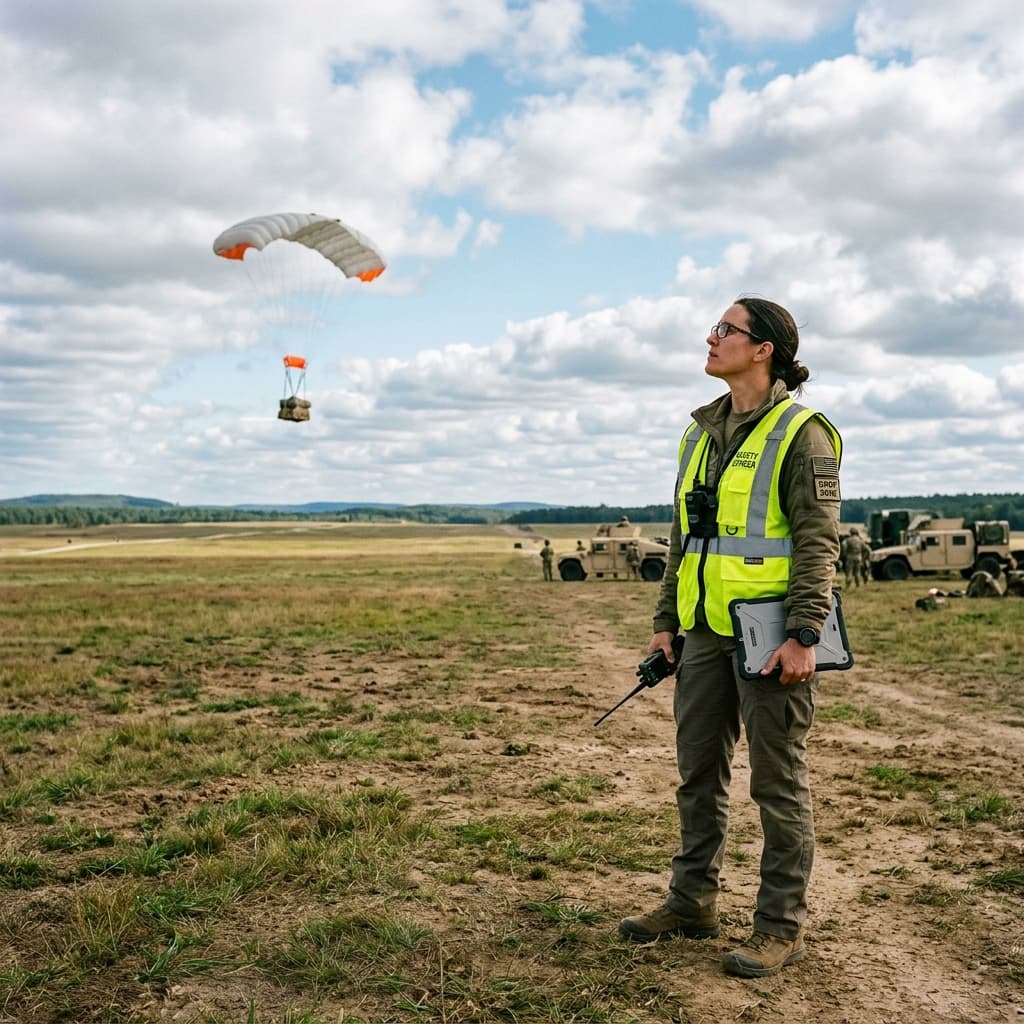
However, CARP systems fundamentally rely perfectly on accurate ground wind telemetry. A powerful crosswind at ground level that is not accurately fed into the aircraft's computer will blow a massive canopy completely off the drop zone in its final fifty feet of descent. Improving precision dictates deploying advanced, highly ruggedized, and rapidly deployable meteorological LiDAR sensors directly to the drop zone ahead of the mission to blast real time, highly accurate localized atmospheric profiles vertically into the receiving cargo aircraft.
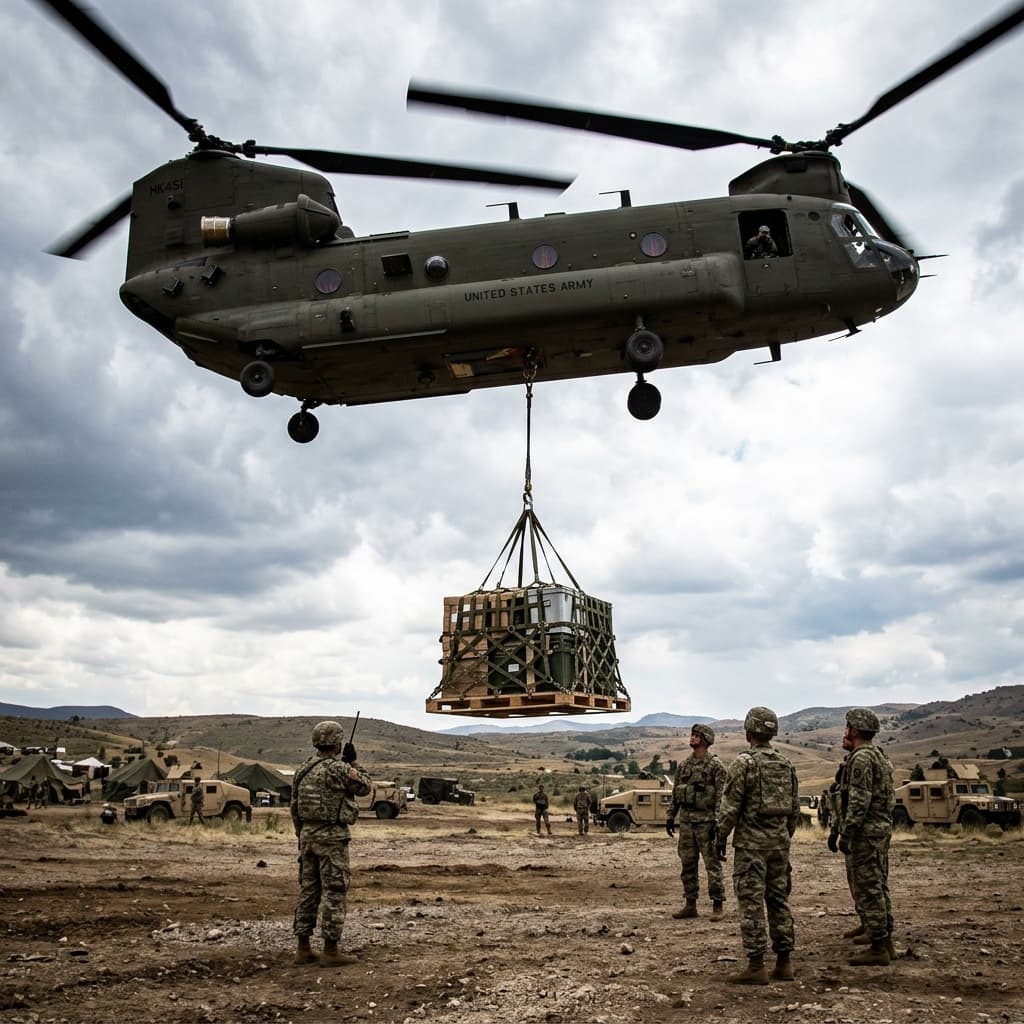
Guided cargo systems (JPADS) represent the ultimate, deeply expensive solution to extreme high altitude precision. Instead of relying solely on precise release timing to drift onto the target, JPADS equip massive cargo canopies with incredibly powerful robotic winches connected to the steering lines. These winches actively steer the heavy multi ton canopy down a GPS defined geometric glide slope, actively fighting thermal updrafts and completely overriding massive crosswinds to autonomously fly the cargo pallet directly to the pre programmed coordinates.
Rigging asymmetry completely destroys the aerodynamics of the drop. If a heavily loaded two ton pallet is rigged with its center of gravity slightly skewed, or if the multiple massive parachute risers are not precisely equal length, the cargo will not descend perfectly vertically under the canopy. It will develop a violent, unpredictable pendulum swing. This massive oscillation dramatically increases the rate of descent and utterly destroys any precision accuracy calculated by the release software. The precision program aggressively demands relentless, almost obsessive standardization of load balancing on the pre flight rigging floor.
Extraction parameters heavily dictate the massive initial trajectory. Cargo pallets do not simply fall out of airplanes; they are violently ripped out by smaller, specialized extraction parachutes trailing behind the massive aircraft. If the aircraft is pitching wildly during the extraction pulse, or if the heavy pallet jams momentarily on the massive roller rails during its exit, the entire mathematical CARP release equation is instantaneously invalidated. Establishing perfect, ultra smooth extraction mechanics is foundational.
The precision airdrop program is a relentless war against complex atmospheric variables. By aggressively fusing deeply localized real time weather telemetry with highly advanced release algorithms and obsessive rigging discipline, logisticians guarantee that high value assets land perfectly within the perimeter wire.
We can present findings in a working session, map recommendations to your portfolio and risk register, and help you prioritize next steps with clear owners and timelines.