Insights · Article · UAV Systems · Apr 2026
How to build and maintain a UAV component life management system for sustained programs: defining maintenance intervals, tracking flight hours and cycles, managing component traceability, and integrating maintenance data into mission authorization decisions.
Sustained UAV programs accumulate flight hours and component stress at a rate that overwhelms informal tracking methods within weeks of initial deployment. A spreadsheet that was adequate for tracking five batteries and three aircraft becomes a liability when the fleet grows to twenty aircraft with variable component configurations, rotating crew assignments, and maintenance actions performed in the field by multiple technicians. The point at which informal tracking produces a mission-authorization decision based on incorrect component history is the point at which a maintenance tracking system is no longer optional.
Component life management starts with defining what constitutes a component for tracking purposes. Not every part on the aircraft needs individual tracking. The components that justify individual tracking are those whose failure has safety consequences and whose failure probability increases with accumulated usage or calendar time. In UAV programs, this typically includes motors and their bearings, propellers, electronic speed controllers, batteries, airframe structural members, and safety-critical fasteners. Components that are consumable or that fail randomly without usage-dependent degradation, such as O-rings, cable ties, and adhesives, are tracked at a fleet level rather than individually.
Maintenance intervals should be derived from the component manufacturer's data, supplemented by field data from the specific program. Manufacturer intervals are specified for nominal operating conditions and represent a conservative starting point. Programs that operate in dusty, humid, or high-vibration environments may find that component condition degrades faster than the nominal interval predicts. Field data collection, including periodic bearing noise measurements, ESC temperature logging, and motor resistance measurements, provides leading indicators that allow the maintenance interval to be adjusted based on actual degradation rates rather than nominal assumptions.
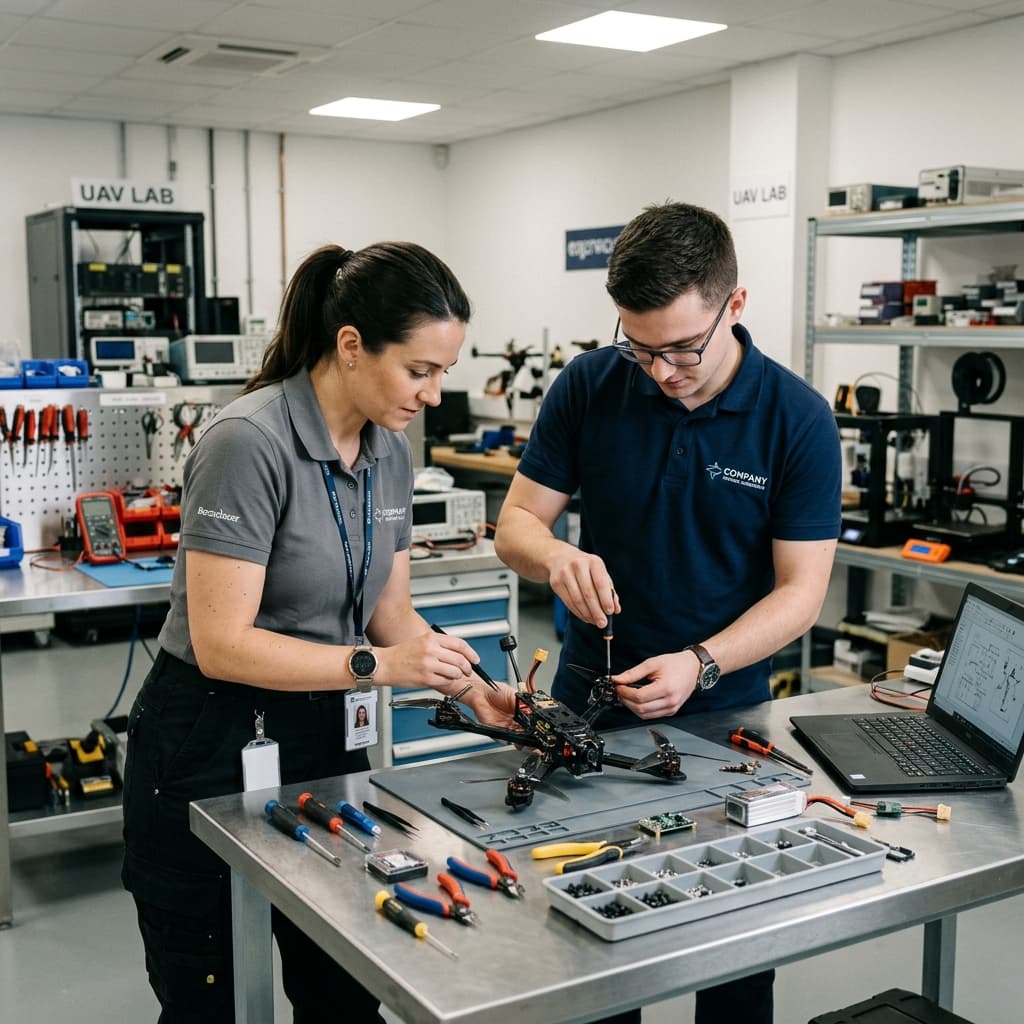
Component traceability means the ability to determine, for any component in the fleet, where it came from, what vehicle it has been installed on, what maintenance actions have been performed on it, and what its current accumulated usage is. Traceability is established by assigning unique serial identifiers to each tracked component at acquisition, logging all installation and removal events with the date, the vehicle identifier, and the current usage counter at the time of each event, and retaining this record throughout the component's service life. Traceability that can be reconstructed only from memory is not traceability.
Flight hours and landing cycles are the primary usage metrics for most UAV programs, but they are not the only ones that matter. Battery cycles are a better predictor of battery health than flight hours for a platform that runs many short missions. Motor run time at high current is a better predictor of bearing wear than total flight time for a platform that frequently hovers under heavy payload. Selecting the usage metric that best correlates with the failure mode being managed improves the predictive accuracy of the maintenance interval and reduces the waste of replacing components that have remaining useful life.
Material condition assessment at each maintenance interval supplements usage tracking with direct observation of component health. A motor that has accumulated fewer hours than its replacement interval but that shows elevated vibration or abnormal current signature should be removed regardless of its usage counter. Conversely, a component that shows no degradation indicators at its replacement interval may justify an interval extension on a case-by-case basis, documented with an engineering disposition that records the assessment basis and the extended interval authorization. Treating maintenance intervals as absolute rather than as guides informed by both usage and condition leads to unnecessary replacement of serviceable components and misses the early failures that condition-based indicators would have caught.
Return-to-service authorization after any maintenance action must be a documented function, not an informal sign-off. The technician who performed the maintenance should produce a maintenance record that identifies the work order, the component serial numbers involved, the specifications checked, the measurements recorded, and the task card reference for each action. A second person should verify the critical checks, including fastener torque, propeller tracking balance, and motor rotation direction, before authorizing return to flight. Two-person authorization for return-to-service is not costly in time; eliminating the practice is costly in incident rate.

Integration of maintenance data into the mission authorization process is the link between the maintenance program and operational safety. Before any mission, the crew or program office should confirm that no aircraft in the planned configuration has a component whose maintenance is overdue or whose condition-based assessment has flagged for replacement. Programs that separate maintenance records from mission briefing processes create a path for a degraded-configuration aircraft to fly because the pilot and the maintenance system were not communicating.
Spare parts inventory management is the operational complement to component life management. A maintenance interval plan that prescribes motor replacement every one hundred hours for a fleet of ten aircraft generating two hundred hours per month requires two complete motor sets per month. Spare parts planning that does not account for maintenance demand creates situations where aircraft are grounded for lack of spare parts at the same time that operational demand is highest. The maintenance interval plan should drive a spare parts demand forecast that is reviewed quarterly and adjusted as actual consumption data is collected.
Data from the maintenance tracking system should feed continuous improvement of the maintenance program. Monthly review of component replacement causes, categorized as interval replacement, condition-based replacement, and unscheduled failure, identifies components where the interval is too long, too short, or where a condition indicator is not providing adequate advance warning of failure. Programs that treat their maintenance history data as actionable intelligence rather than as archival record improve their maintenance program continuously and reduce the incidence of in-service failures that were preventable.
We facilitate small-group sessions for customers and prospects without requiring a slide deck, focused on your stack, constraints, and the decisions you need to make next.