Insights · Article · UAV Systems · Apr 2026
How to design and configure UAV ground control stations for reduced cognitive load, better situational awareness, and sustainable operator performance across long missions: display layout, alarm design, crew coordination, and fatigue management.
Ground control station design has a direct effect on mission success that is rarely quantified before a program encounters a problem. A GCS that clutters the primary display with low-priority alerts, requires the operator to navigate multiple menus to arm a failsafe response, or uses small fonts that are unreadable in sunlight creates cognitive demands that degrade decision quality during high-workload moments. Most operators adapt to a poorly designed GCS over time, which masks the problem until a time-critical situation exposes the hidden cost of that adaptation.
Display layout should separate information by urgency and action requirement. Critical alerts that require immediate pilot action belong in a fixed, high-visibility region of the display that is never obscured by other information. Telemetry that the operator monitors but acts on only when a threshold is crossed belongs in a secondary region. Historical data, log information, and system status that is useful during post-mission review but not during active flight should not be visible unless the operator deliberately requests it. This three-tier hierarchy of information visibility reduces the time between anomaly detection and correct response.
Alarm design is a specialized ergonomics discipline that GCS developers frequently underinvest in. An alarm system that generates frequent false positives trains operators to dismiss alerts habitually. An alarm system that generates too few alerts fails to notify the operator of real problems in time to act. The correct alarm philosophy for UAV GCS applications is informed by aviation human factors research: alarms should be unique, they should indicate the nature and severity of the condition, they should prioritize correctly when multiple alarms fire simultaneously, and they should suppress secondary alarms that are consequences of a primary fault rather than independent problems.
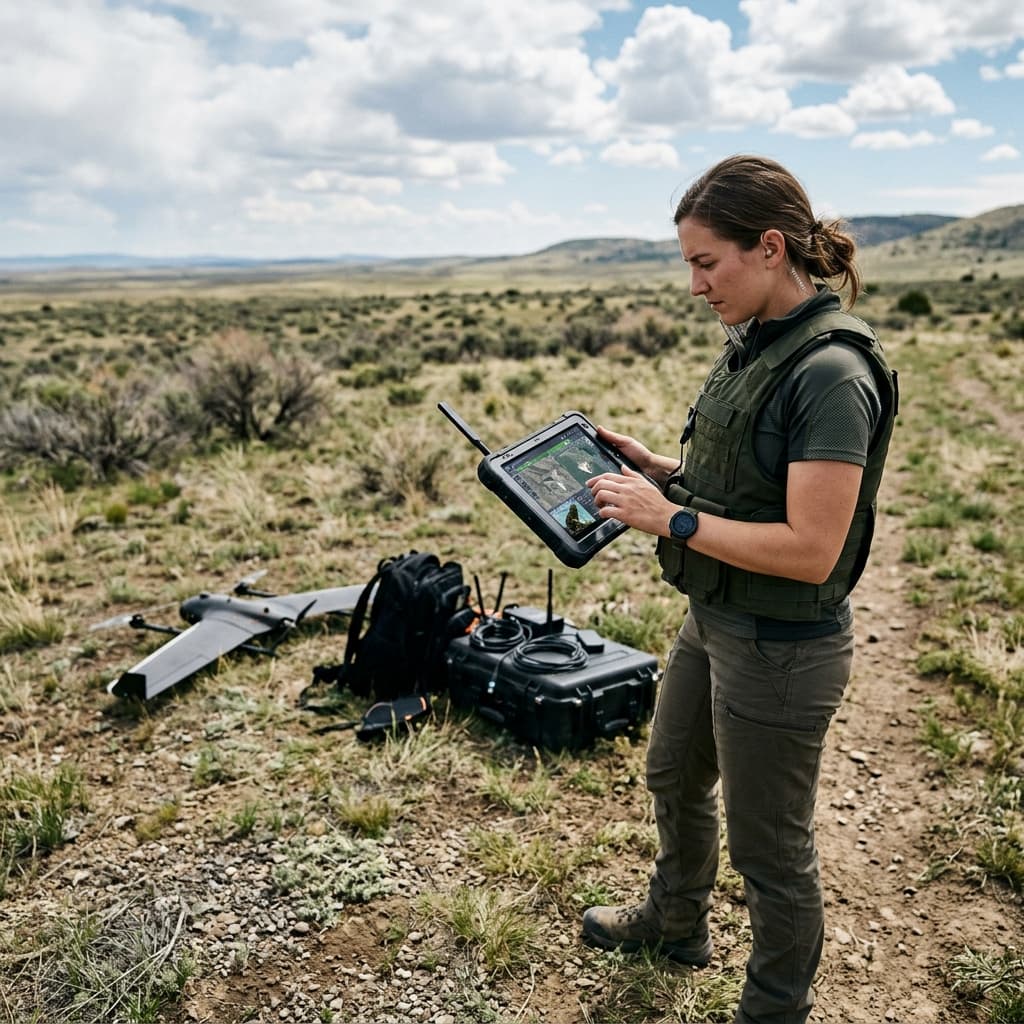
Control input design affects response time in proportion to the frequency with which a given control is used under stress. Controls for frequent actions such as mode changes, camera pan and tilt, and return-to-home should be reachable without the operator moving their eyes from the display. Controls for infrequent actions such as reconfiguring geofence parameters can require menu navigation. Hardware controls for critical safety functions, including emergency motor stop and immediate return-to-home, should be physical buttons with tactile feedback that can be activated by feel without visual confirmation.
Sunlight readability is a fundamental field requirement that is often evaluated only in an office environment. A display that is perfectly readable indoors at maximum brightness may be nearly illegible in direct equatorial sunlight. Programs operating in high-ambient-light environments must test GCS readability at the actual deployment location and time of day, not under simulated conditions. Anti-reflective coatings, hood accessories, and display brightness specifications should all be part of the GCS procurement criteria for field operations.
Crew coordination protocols define how workload is distributed between pilot, payload operator, and mission commander roles. Even on single-operator platforms, the protocols matter because the pilot's mental model of who is responsible for monitoring which information affects how they allocate attention. On multi-crew operations, ambiguity in task allocation is a known contributor to both missed alerts and duplicated control inputs. Clear verbal protocols, defined hand-off language, and a crew briefing structure that covers role responsibilities before each mission are the organizational complement to hardware ergonomics.
Fatigue management is an ergonomic consideration that extends across the mission duration rather than applying only to control design. Operators in sustained operations maintain higher decision quality when they take structured breaks at defined intervals, when shift lengths are bounded by evidence-based limits rather than operational convenience, and when secondary tasks such as log management and communications are handled by support roles rather than the primary pilot. Programs that treat operator fatigue as a personal responsibility rather than a system design variable accept degraded performance as an unmanaged risk.
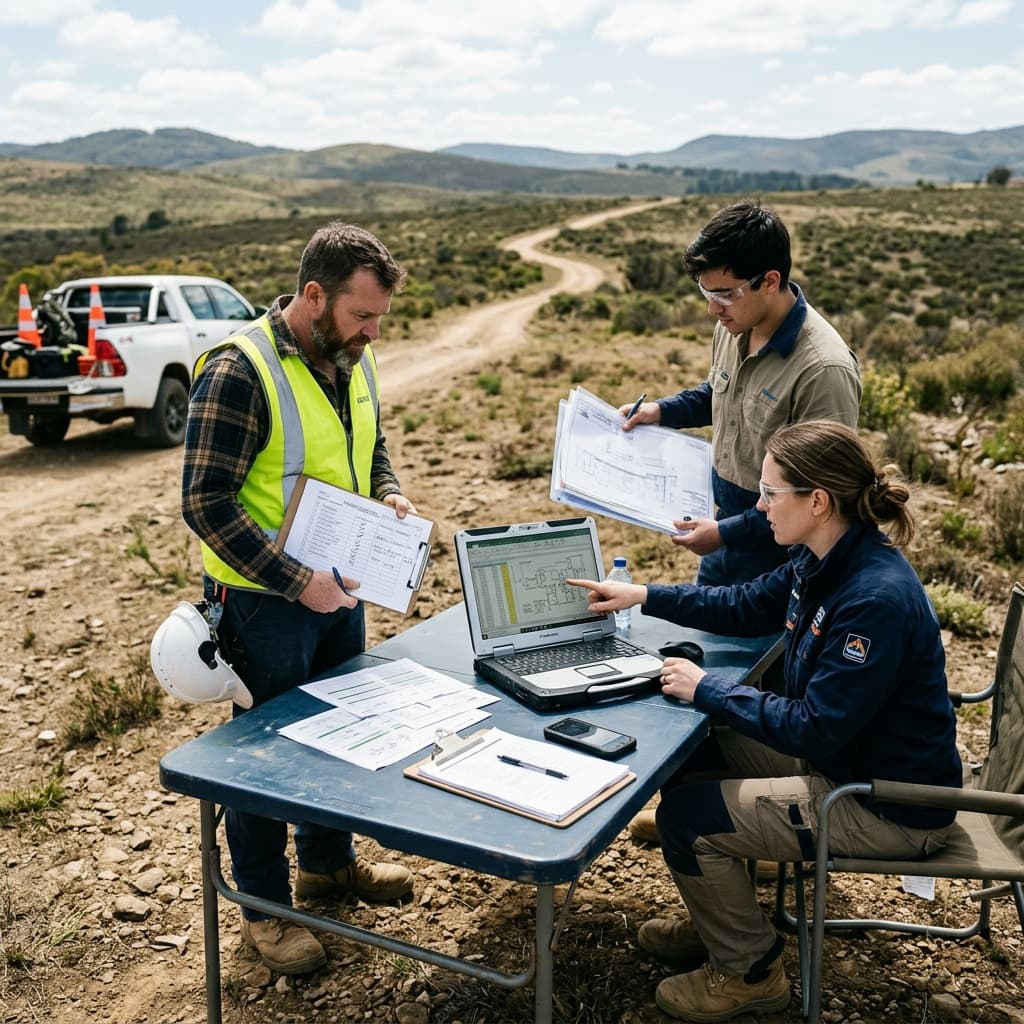
Training for GCS operations should integrate the ergonomic design intent, not just the button layout. Operators who understand why information is organized the way it is, why certain alarms take priority, and why specific controls are positioned where they are, are better equipped to adapt when conditions differ from training scenarios. Familiarity with the intent behind the design allows operators to make correct inferences about system behavior in unfamiliar situations, rather than relying only on memorized procedures that may not cover the specific combination of events they encounter.
Environmental hardening of the GCS is directly related to ergonomics because a system that fails in the field forces the operator to find workarounds that add cognitive load at exactly the wrong moment. GCS hardware for field operations should meet an ingress protection rating appropriate for the expected precipitation and dust conditions, operate reliably across the full ambient temperature range of the deployment region, and maintain battery runtime under full display and communication load for the maximum expected mission duration plus a reserve.
Feedback from operators should be collected systematically after operational use and evaluated against objective metrics where available. Objective metrics include time from alert to correct response, frequency of missed alerts detected only in post-mission log review, and incidence of inadvertent control inputs. Subjective metrics include perceived workload ratings using validated instruments such as the NASA Task Load Index. Together these metrics identify GCS design deficiencies more reliably than either source alone and provide the evidence needed to justify design changes to program management.
GCS software versioning and change management deserve the same discipline as flight software updates. A GCS software update that changes display layout, alarm priorities, or control mappings requires notification to operators before deployment, a transition training period, and a post-update evaluation period during which operator performance is monitored for adverse effects. A change that reduces workload for the average operator may create a critical gap for an operator who had built specific muscle memory around the previous configuration. Managing this transition systematically protects both program safety and operator confidence.
We facilitate small-group sessions for customers and prospects without requiring a slide deck, focused on your stack, constraints, and the decisions you need to make next.