Insights · Article · UAV Systems · Apr 2026
Cold weather UAV operations require specific preparation: battery thermal management, propeller icing assessment, motor lubrication checks, and environmental readiness gates that define minimum conditions for safe flight in sub-zero temperatures.
Cold-weather UAV operations expose a cluster of failure modes that are absent or negligible in temperate environments. Battery capacity reduction, propeller icing, lubricant thickening in bearings and gearboxes, and moisture condensation on electronics are not exotic failures. They are predictable physical consequences of operating hardware at temperatures outside the range for which it was characterized at the factory. Programs that treat cold weather as a minor operational variation rather than a distinct operating mode accept risks that are easily prevented with appropriate procedures.
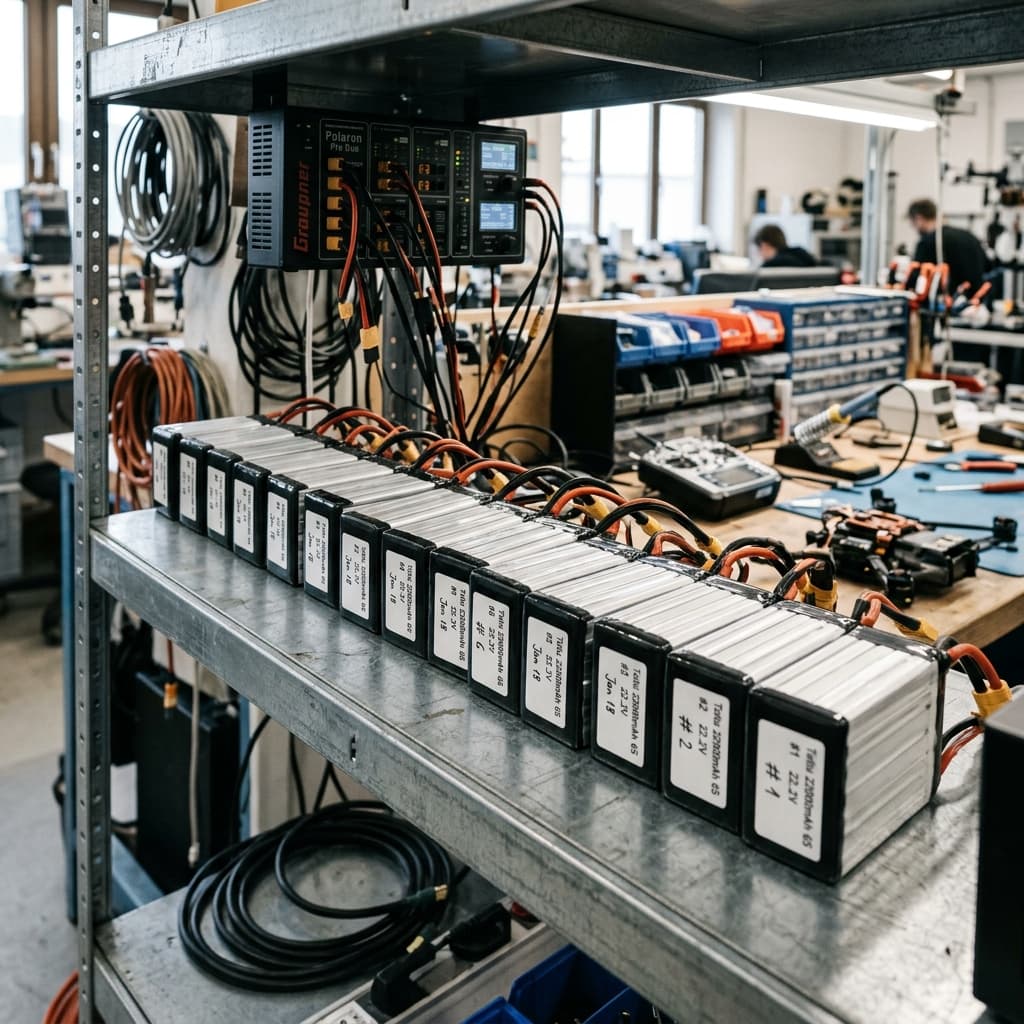
Battery thermal management is the dominant cold-weather concern. Lithium polymer and lithium-ion cells exhibit significant capacity reduction below ten degrees Celsius, with the effect accelerating below zero. At minus twenty degrees Celsius, a pack rated for twenty minutes of flight at room temperature may deliver fewer than ten minutes before voltage sag triggers a low-voltage motor cutoff. The mitigation has two parts: pre-flight warming and in-flight thermal management. Pre-flight warming involves keeping batteries at or above a minimum temperature in an insulated storage container or active warmer until immediately before installation in the aircraft. In-flight management means understanding the effective derating and adjusting mission duration planning accordingly.
Propeller icing is a hazard on UAV platforms in conditions that produce visible moisture precipitation or freezing fog at temperatures near or below zero. Ice accumulation on propellers is not uniform; it tends to accumulate preferentially on the leading edge and at the tip, creating asymmetric mass distribution that produces vibration and reduces lift efficiency. Unlike manned aircraft, most small UAVs do not have propeller de-icing or anti-icing systems, which means the operational limit for icing conditions is no flight in visible moisture below the freezing point unless the program has specifically tested and characterized the icing exposure the platform can tolerate.
Motor and bearing behavior at low temperatures is affected by lubricant viscosity changes. Most bearing greases used in UAV motors are rated for a temperature range that includes typical cold-weather conditions, but a motor that has been cold-soaked overnight may have significantly higher initial friction than the same motor at operating temperature. The consequence is higher current draw during the initial spin-up and a different vibration signature during the first minute of operation. Pre-flight motor run-up procedures in cold weather should specify a warm-up interval before the aircraft is loaded with mission-critical payloads, allowing the motors to reach a stable thermal operating point.
Electronics condensation occurs when a cold airframe is brought into a warm environment and then taken back outside before equilibrating. The moisture that condenses on circuit boards and connectors during the warm period can freeze during re-exposure to cold, creating ice bridges between conductors that cause short circuits or ground faults on power-up. The protocol for transitioning between indoor warmth and outdoor cold is to allow the aircraft to equilibrate at outdoor temperature before opening its electronics bays, to use silica gel desiccant in storage cases, and to avoid powering the aircraft on during rapid temperature transitions.
Readiness gates for cold-weather operations should be documented in the mission briefing checklist as numerical thresholds, not qualitative descriptions. The gates should specify the minimum battery temperature at installation, the maximum acceptable wind speed for the expected air density and battery derate condition, the minimum ambient temperature above which operations are authorized, the icing condition limit, and the minimum battery cell voltage at twenty percent state of charge below which the pack will not be certified for flight. Gates expressed as numbers can be checked objectively; gates expressed as qualitative judgment calls introduce variability that compounds under operational pressure.
Equipment selection for cold-weather programs should be conducted before deployment, not in the field. Verify that all lubricants in bearings, gimbal motors, and hinges are rated for the minimum anticipated temperature. Verify that display screens remain readable at the operating temperature, since liquid crystal displays can freeze and become unresponsive in extreme cold. Verify that connector materials remain flexible and do not become brittle. Synthetic rubber O-rings and gaskets in IP-rated enclosures can harden and lose sealing effectiveness at temperatures below their rated minimum; confirm that the housing IP rating is maintained across the cold operating range.
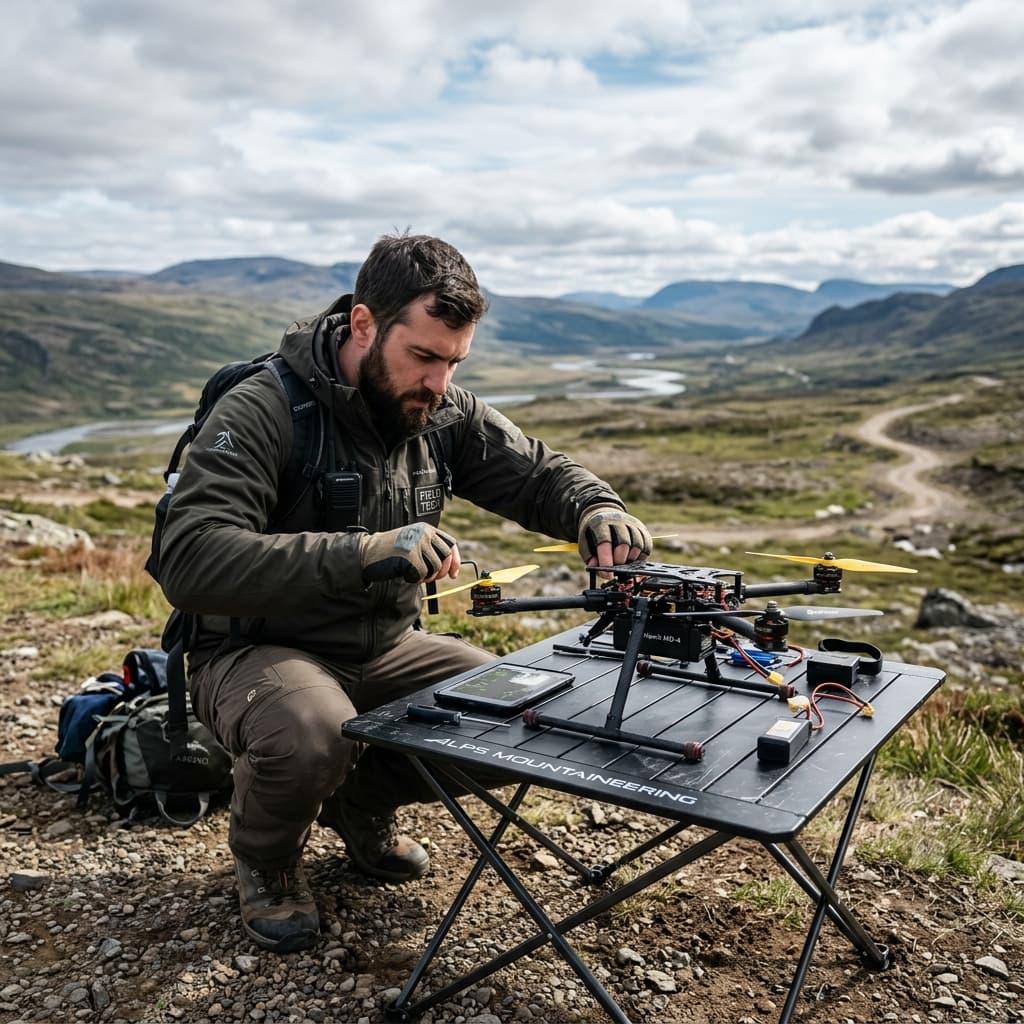
Cold-weather landing site selection deserves specific consideration in mission planning. Snow-covered ground changes the landing dynamics significantly: the aircraft may sink into soft snow, the landing gear may not find a solid contact surface, and displaced snow from the propeller downwash can be blown into motor intakes. Hard ice surface landings may cause sliding after touchdown. Mission planning for cold-weather deployments should identify the landing surface type for each site, assess the risk associated with each surface type, and designate alternate landing zones where the primary site is assessed as unsuitable.
Post-flight inspection and storage in cold weather require the same discipline as pre-flight preparation. A battery pack that has been run at cold temperatures should be warmed before charging, since charging a cold lithium cell can cause lithium plating that permanently degrades capacity and introduces a safety risk. Aircraft systems should be inspected for ice accumulation in vents and cooling passages before storage. Propellers should be rotated by hand to confirm freedom of movement and to distribute any moisture away from motor shaft seals before the aircraft is placed in its case.
Training for cold-weather operations should include scenarios where battery performance is significantly degraded and the operator must make a mission-termination decision based on real-time voltage data. Operators who have only practiced in temperate conditions develop voltage-management habits that are calibrated to full-capacity batteries. Cold-weather operations require recalibrated instincts: lower return-trip voltage thresholds, earlier return decisions, and conservative altitude choices that reduce the power demand during return. Simulator training with cold-derated battery models and structured scenario briefings on cold-weather decision criteria close this training gap before it becomes a field incident.
We facilitate small-group sessions for customers and prospects without requiring a slide deck, focused on your stack, constraints, and the decisions you need to make next.