Insights · Article · Rugged Hardware · Apr 2026
Engineering fanless rugged computers to maintain peak processing power in extreme heat: conduction cooling pathways, chassis fin design, TDP management, and avoiding the silent performance cliff of thermal throttling.
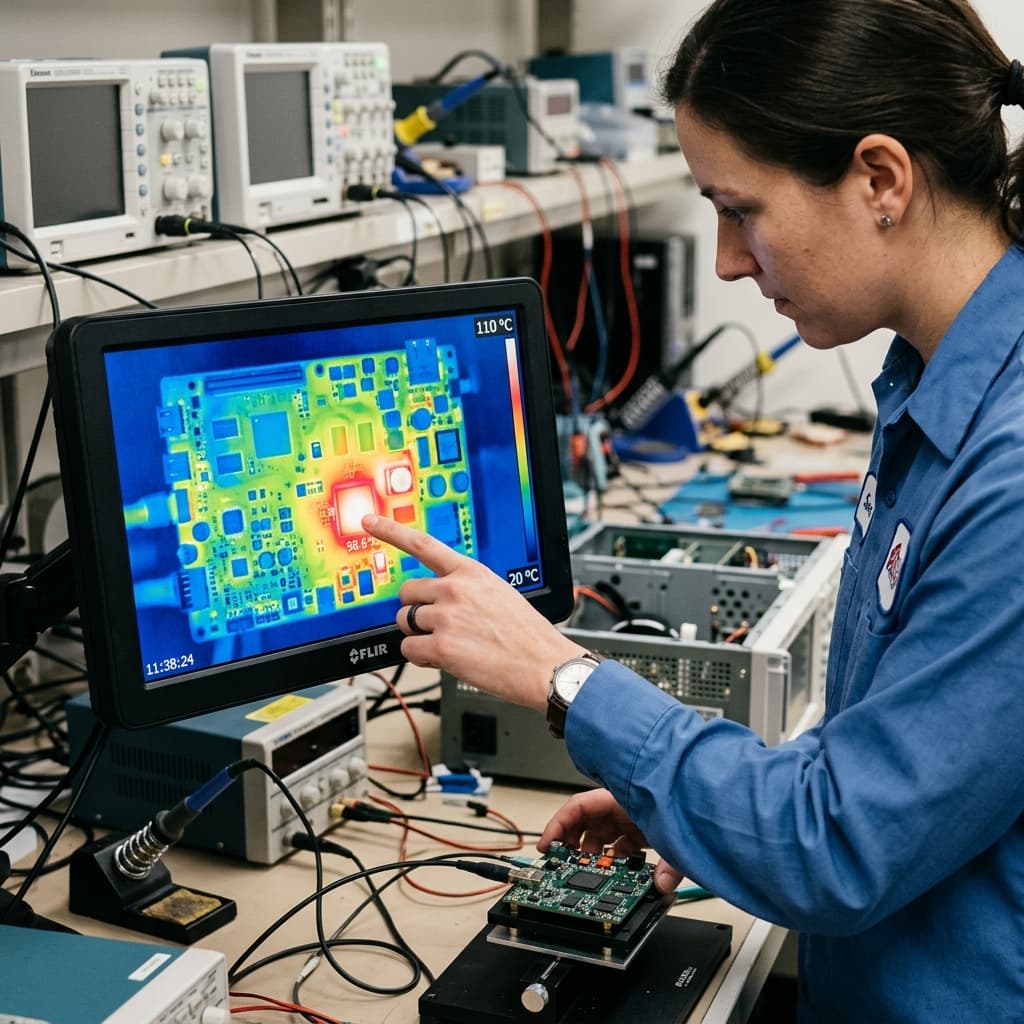
Rugged computing relies on fanless architectures because mechanical fans are inherent failure points. Fans ingest dust, sand, and moisture, pulling precisely what you want to keep out of the chassis directly across sensitive electronics. A fan will eventually seize in a harsh environment, leading to catastrophic system failure. However, removing the fan eliminates active convection cooling. The entire thermal load of the CPU, GPU, and power supply must be dissipated through passive conduction to the chassis exterior. When conduction cannot keep pace with heat generation, the processor enacts its final defense mechanism: thermal throttling.
Thermal throttling is a silent performance killer. Modern processors are designed to protect themselves from melting. When the silicon die reaches its maximum safe operating temperature (Tjunction), the firmware automatically drastically reduces the clock speed and voltage. The system remains operational, but its processing power plummets. In a tactical scenario, this means video feeds stutter, target recognition algorithms slow down, and software defined radio latency spikes. A rugged computer that benchmarks perfectly in an air-conditioned lab may deliver only thirty percent of its capability when mounted in a hot vehicle.
Conduction cooling pathways are the core of fanless thermal engineering. Heat must be moved from the silicon die to the external chassis with absolute minimal thermal resistance. This requires precision-machined aluminum or copper heat spreaders that perfectly mate to the processors. Because manufacturing tolerances prevent perfect microscopic contact, thermal interface material (TIM)—such as high-performance paste or graphite pads—must bridge the gap. A poorly applied TIM layer, or worse, a gap created by shock and vibration loosening the heat spreader assembly, acts as an insulator, trapping the heat on the processor and triggering immediate throttling.
Chassis design determines the final rate of heat rejection to the environment. The exterior of a fanless rugged computer acts as a massive heatsink. The deep fins milled into the aluminum chassis are not decorative; they exponentially increase the surface area available for natural convection to carry heat away into the surrounding air. The orientation of these fins matters. If a finned chassis is mounted vertically, the heated air rises naturally through the channels, enhancing cooling. If mounted horizontally, or shoved into a tightly packed equipment rack with no airflow, the fins saturate with hot air, and the cooling efficiency collapses.
Thermal Design Power (TDP) management requires realistic matching of processor architecture to the operating environment. A 65-watt desktop-class CPU generates massive computational power but demands aggressive active cooling. Attempting to cram a high-TDP processor into a small fanless chassis intended for a 60°C ambient environment guarantees permanent thermal throttling. Rugged computing often prioritizes mobile or embedded-class processors with lower TDPs (e.g., 15W to 45W). These processors may trail desktop counterparts in raw benchmark scores, but they will sustain their peak performance indefinitely without throttling when temperatures soar.
Heat pipe integration bridges the gap when the physical distance between the processor and the chassis exterior is too great for solid metal conduction alone. Heat pipes contain a phase-change fluid that vaporizes at the hot end (the CPU) and condenses at the cold end (the chassis), transferring massive amounts of thermal energy incredibly efficiently. However, heat pipes are somewhat orientation-dependent and can be susceptible to deformation under extreme shock. Their routing requires meticulous engineering to avoid compromising internal component layout or creating structural weaknesses.
Component placement optimization on the motherboard plays a crucial role. If major heat-generating components—the CPU, a discrete GPU, and the power regulators—are clustered tightly together, their combined thermal plume creates a massive localized hotspot that the heat spreader cannot adequately conduct away. Distributing these components across the board layout forces the heat to dissipate across a wider area of the chassis, preventing localized thermal saturation.
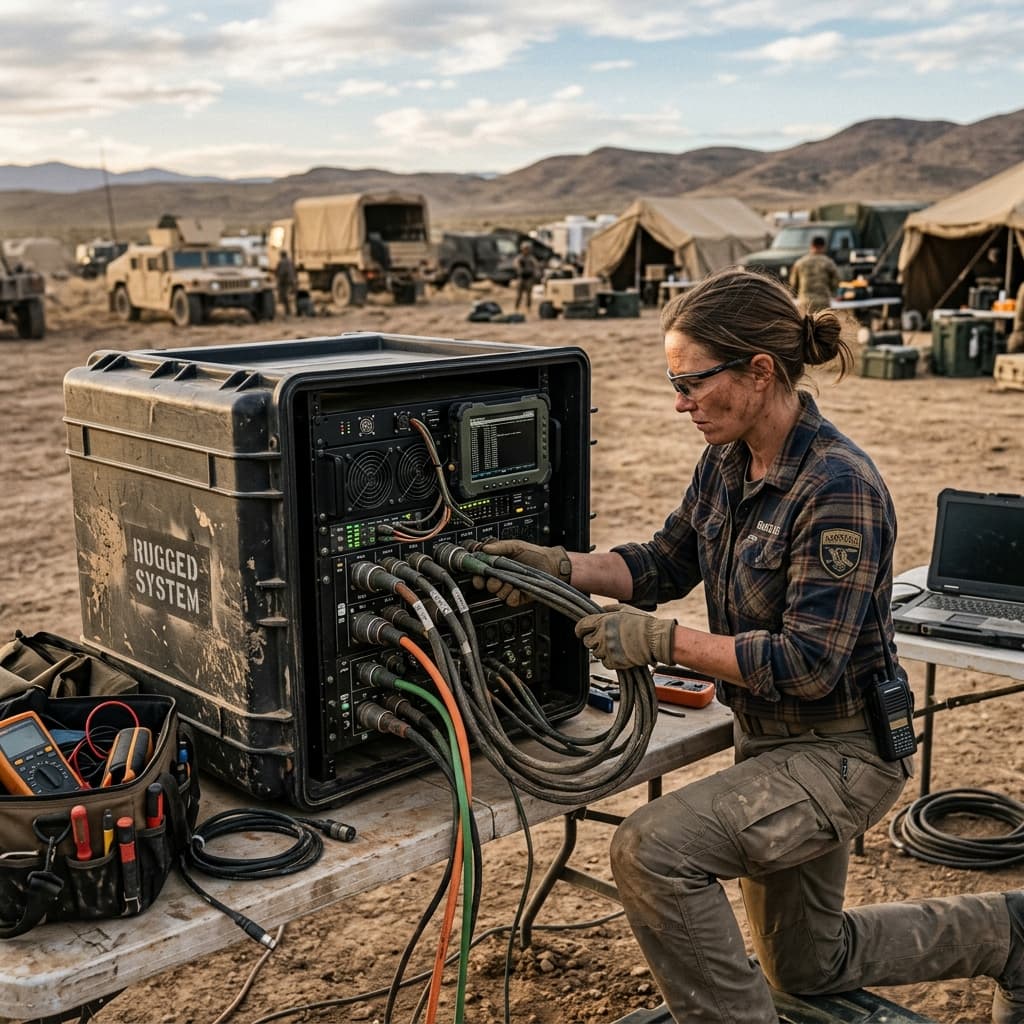
Solar loading completely upends thermal calculations for systems deployed outdoors. A black aluminum chassis baking in the midday desert sun absorbs enormous radiant heat, raising its baseline temperature dramatically before the internal processors even power on. If the chassis is already at 70°C from sunlight, the thermal delta available to reject processor heat is almost zero. Mitigation strategies include employing solar shaded mounts, coating the chassis with specialized IR-reflective paints, or anodizing the aluminum in lighter tactical colors like tan or silver rather than black.
Verification testing must replicate the worst-case scenario. Thermal chamber testing should load the CPU and GPU to 100% utilization simultaneously while the ambient temperature is raised to the maximum specified operating limit. The test must run until the system achieves thermal equilibrium (often several hours), monitoring the processor clock speeds continuously. If the clock speeds drop below the advertised base frequency at equilibrium, the system's thermal design is fundamentally inadequate for its rating.
Ultimately, successfully mitigating thermal throttling comes down to resisting the marketing allure of the fastest processor model and instead engineering a holistic thermal system where the silicon TDP, the internal conduction path, and the external chassis surface area are perfectly balanced against the harsh realities of the intended operational environment.
We facilitate small-group sessions for customers and prospects without requiring a slide deck, focused on your stack, constraints, and the decisions you need to make next.