Insights · Article · Parachute Systems · Apr 2026
A structured guide to qualifying tandem parachute systems: harness compatibility testing, three-ring release verification, reserve container and pilot chute integration, and the documentation package required to place a tandem system into authorized service.
Tandem parachute system qualification is a more complex engineering undertaking than qualification of single-person systems because the qualification envelope must cover a substantially larger weight range, a load-sharing arrangement between the jump master harness and the passenger harness, and a reserve deployment sequence that must function correctly with a two-person load that may be in a non-ideal body position at the time of reserve activation. Each of these additional complexity dimensions requires explicit analysis and testing, not extrapolation from single-person qualification data.
Harness compatibility testing covers the physical and mechanical interface between the instructor harness, the passenger attachment system, and the container. The instructor harness must be sized, adjusted, and inspected for the population of instructors who will use the system, considering the range of torso lengths and chest widths that require specific container placement and leg strap position to distribute pull forces correctly. The passenger attachment system must accommodate the extremes of the passenger population, from light and short to heavy and tall, without creating pressure points that could injure the passenger during opening shock or allowing clearances that permit the passenger to slip from the attachment during the jump.
Three-ring release system verification is a critical safety check that must be performed on every tandem harness at each packing inspection. The three-ring system provides the main canopy cutaway capability. In a tandem context, the release must be operable by the instructor with one hand while managing the passenger, which places a higher demand on the ergonomics and force requirements of the release handle than a solo jump. The release force should be verified with a calibrated pull tester, and the ring wear and cable condition should be assessed against the manufacturer's tolerance limits. Any ring that shows wear beyond the specified limit should be replaced regardless of apparent function.
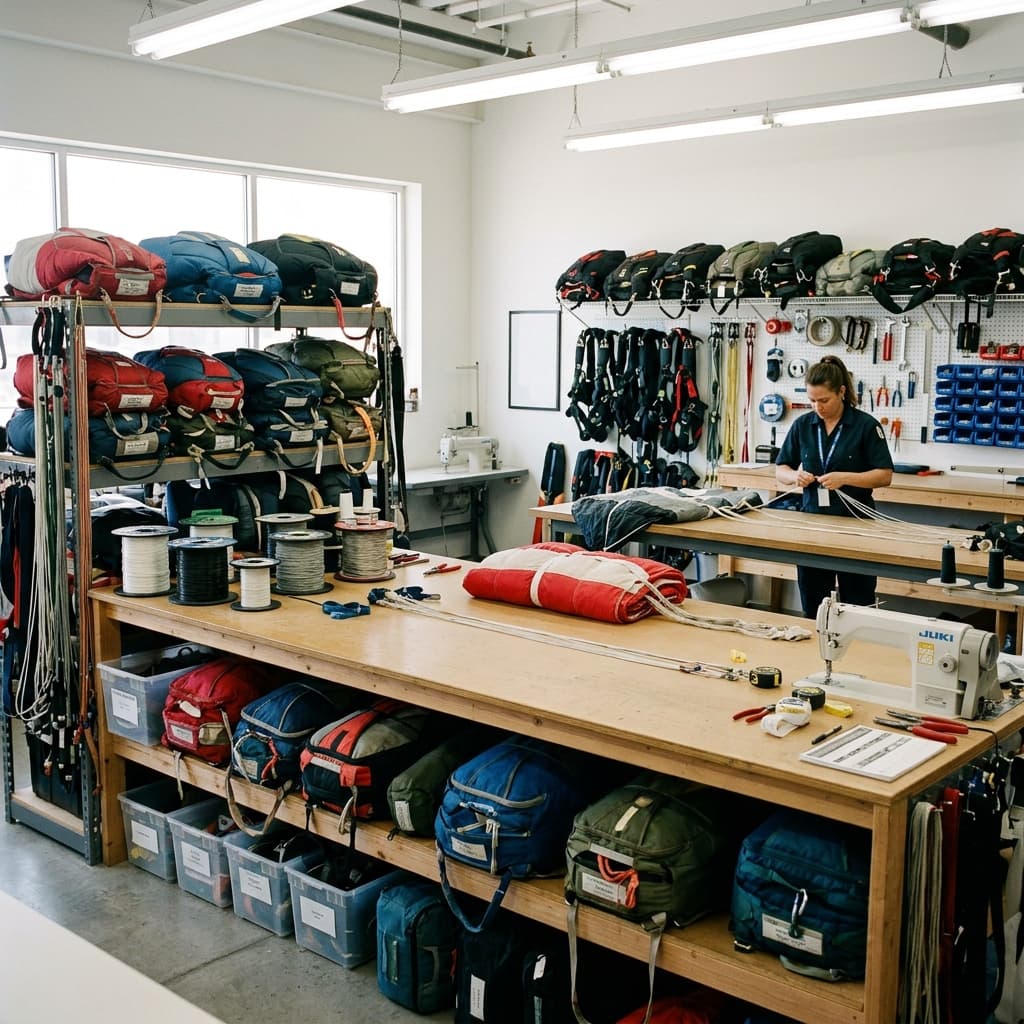
Reserve container design for tandem systems differs from solo systems in pack volume and extraction force requirements. The combined weight of the reserve canopy sized for the maximum tandem gross weight must fit within a container that remains accessible for the instructor to reach the reserve handle while managing a passenger. The container closing force must be achievable by the rigger in a manner that prevents premature opening during the jump while allowing reliable opening under reserve deployment loads. These constraints often require specific container design trade-offs that should be documented and validated against the applicable system specifications.
Reserve pilot chute selection and sizing is particularly important for tandem systems because the deployment speed at which the reserve may be activated covers a wider range than for solo jumps. A solo jumper activating a reserve is almost always in a relatively controlled body position. A tandem instructor activating a reserve may be in an inverted position, in a spin, or under a malfunctioning main canopy. The reserve pilot chute must generate sufficient extraction force in the worst expected activation posture at the lowest likely airspeed. Wind tunnel testing of the pilot chute in degraded posture configurations provides data that ground testing cannot replicate.
Automatic activation device integration into tandem systems requires verification that the AAD firing unit and cutter are mounted correctly, that the firing circuit is not subject to false triggers from the structural loads of a two-person system during normal main canopy opening, and that the cutter activation opens the reserve container effectively when fired. The AAD calibration altitude and activation speed should be set appropriately for tandem gross weight operations, which may differ from solo jump settings because of the different descent rate of a tandem system under a fully inflated main canopy.
Load testing of the complete tandem system should cover the dynamic loads associated with the qualification certification jump profile. The test matrix should include the maximum gross weight configuration, the maximum activation airspeed, and the worst-case body position at reserve activation. For systems that will be used in accelerated freefall tandem programs, the test matrix should include the airspeeds and body positions associated with instructional maneuvers rather than only the nominal stable freefall profile. Ground-based pull tests with calibrated equipment provide the baseline, but drop testing with instrumented dummies at the qualification weight provides the direct measurement of actual deployment forces.
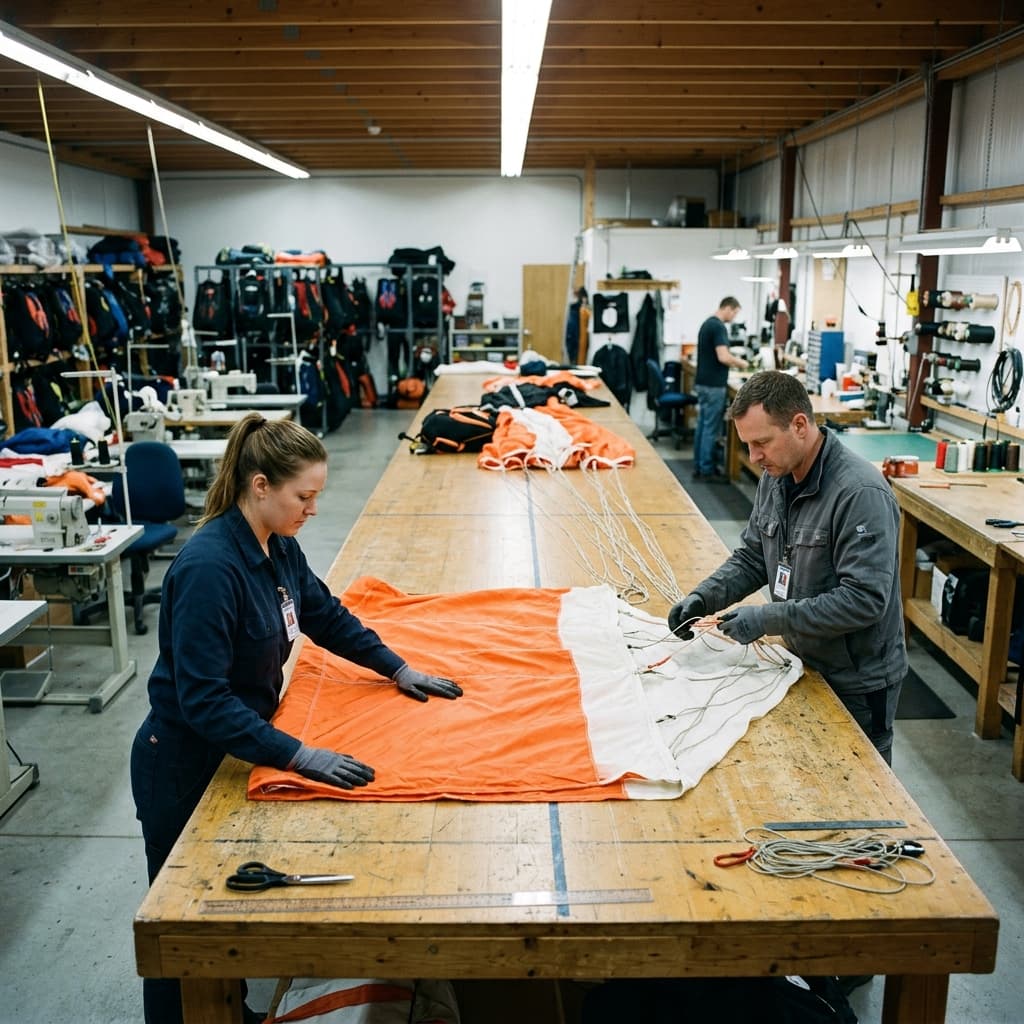
Documentation for tandem system qualification should produce a qualification record that identifies the specific system components by serial number, the weight range over which the system was tested, the test conditions for each test point, the measured forces or times, the pass criteria, and the authorization signatures. This document becomes the foundation for the approved component listing that governs which components may be used together in an authorized tandem configuration. Any component substitution that is outside the approved combination should trigger a new qualification analysis before the substituted configuration is deployed in operations.
Instructor recurrency and equipment-specific qualification should be tied to the tandem system model, not only to the instructor's general tandem rating. A tandem instructor rated on one manufacturer's system should not be assumed qualified on another manufacturer's system without model-specific training and assessment. Reserve activation sequence, cutaway handle geometry, passenger attachment release, and reserve pilot chute activation all differ between manufacturers. Equipment-specific currency requirements should be documented in the program operations manual and enforced at the logbook level.
Post-jump inspection of tandem systems should capture any anomalies observed during the jump, including hard openings, deployment bag behavior, reserve handle pull forces if a reserve was activated, and any passenger complaint related to harness fit or pressure points. This information should be recorded and accessible to the rigger at the next repack. A system that has experienced a hard opening above the expected range should trigger an evaluation of the canopy pack job, the pilot chute extraction sequence, and the canopy condition before it is repacked for the next operational use.
We facilitate small-group sessions for customers and prospects without requiring a slide deck, focused on your stack, constraints, and the decisions you need to make next.