Insights · Article · Field Robotics · Apr 2026
Transitioning from single-asset teleoperation to multi-agent swarm deployments: the mechanics of mesh networking, distributed mapping (SLAM), task allocation, and preventing communication collapse under data saturation.
Deploying a single tactical robot relies on centralized control: one operator interpreting a direct data feed and commanding one machine. The operational evolution involves deploying dozens of small, expendable robots simultaneously to map a massive subterranean complex or clear a contested urban block in minutes. This 'swarm' architecture shatters the centralized control paradigm. If a single human operator is required to manually monitor the video feeds of twenty robots and individually assign them navigation waypoints, the cognitive load guarantees immediate mission failure. Swarm robotics relies on synchronization, decentralized autonomy, and brutal data curation.
Mesh networking is the foundational backbone of the swarm. In a complex concrete or tunnel environment, the robots cannot rely on a direct line-of-sight back to a central command post antenna. Instead, each robot acts as an active relay node in a dynamic, self-healing mesh. If Robot A drives around a corner and loses contact with the base, it routes its data through Robot B, which is still in the hallway. If Robot B is destroyed, the network instantly re-routes the traffic through Robot C. This distributed architecture guarantees that the operational footprint can expand indefinitely as long as the agents maintain proximity to each other.
Distributed mapping, specifically Collaborative Simultaneous Localization and Mapping (C-SLAM), is the primary objective of a reconnaissance swarm. As ten different robots explore ten different corridors, they each generate their own localized 3D point cloud and obstacle map. Transmitting ten massive, raw point clouds back and forth across a degraded tactical mesh network will instantly choke the available bandwidth. The swarm must rely on data fusion: each robot processes its own raw data locally, identifies the key geometric features, and transmits only the highly compressed, abstract map 'edges' across the network.
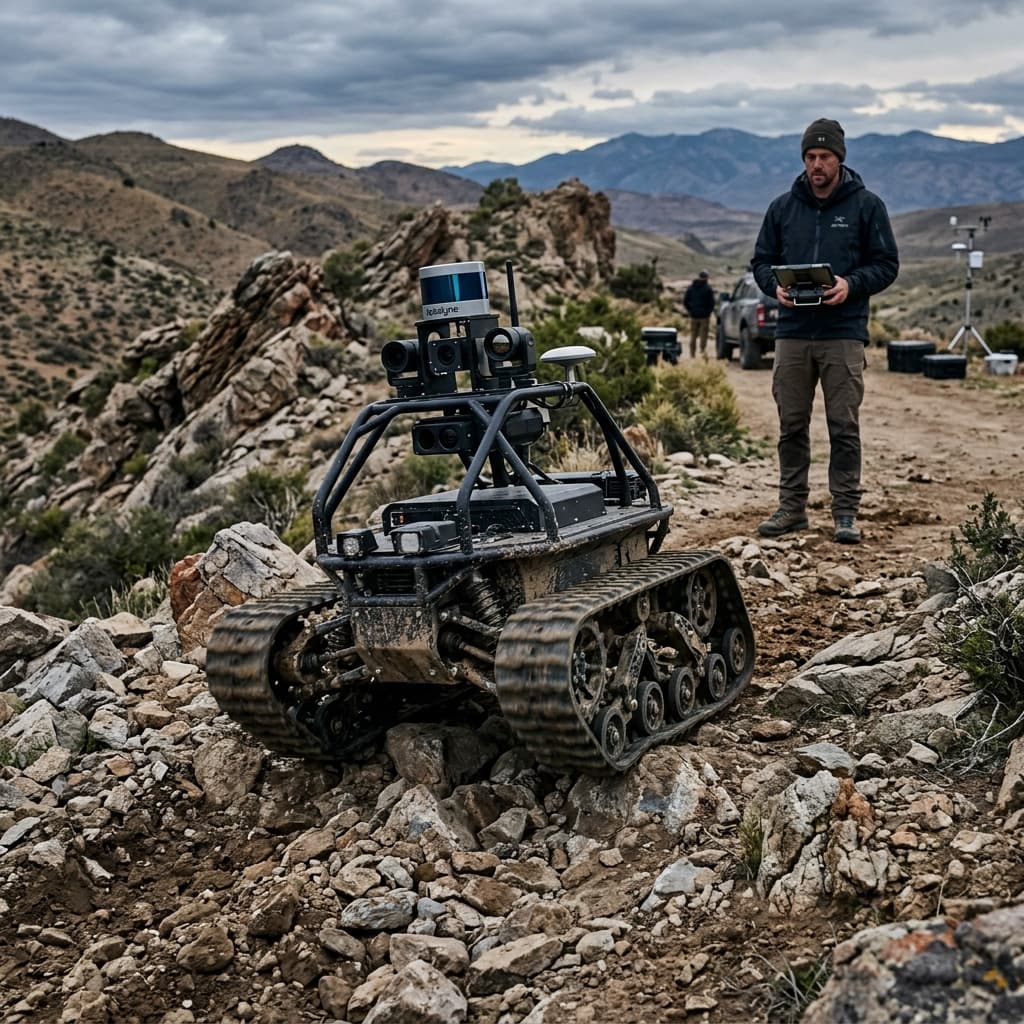
A centralized fusion engine—located either on a heavily armored 'mothership' robot or at the operator console—receives these disparate puzzle pieces from the swarm. The engine mathematically stitches the compressed map fragments together, recognizing where Robot A's tunnel intersects with Robot C's surveyed room, generating a unified, high-fidelity 3D map for the operator in real time. The operator views the aggregated tactical picture, rather than staring at twenty individual, confusing camera feeds.
Decentralized task allocation prevents the swarm from acting like a dumb herd. If the operator commands the swarm to 'search the industrial complex,' the robots must not all blindly drive through the front door and down the same hallway. The swarm intelligence must negotiate. Robot A signals, 'I am clearing the lower left quadrant.' Robot B receives that intent and autonomously calculates, 'I will clear the upper right quadrant to maximize efficiency.' This negotiation must occur seamlessly in the background, governed by algorithms optimizing for shortest path and maximum area coverage.
Collision avoidance within the swarm is surprisingly mathematically intense. It requires agents to understand not only static obstacles (walls, rubble), but the dynamic vectors of their peers. When two robots arrive at the same narrow chokepoint from opposite directions, they must negotiate right-of-way based on mission priority or battery status without crashing into each other or freezing in a permanent dead-lock. The physics simulation running locally on each robot must account for the physical mass and stopping distance of the other agents.
Latency tolerance is arguably the most critical engineering requirement in swarm communications. In a massive, multi-hop mesh network, packet delay is guaranteed. If a robot's collision avoidance algorithm requires absolutely instantaneous updates from its peers to function, the swarm will crash the moment the RF environment gets noisy. Swarm agents must execute 'predictive tracking,' estimating the trajectory of their peers based on the last known data packet, allowing them to continue moving safely and autonomously even if the network experiences momentary rolling blackouts.
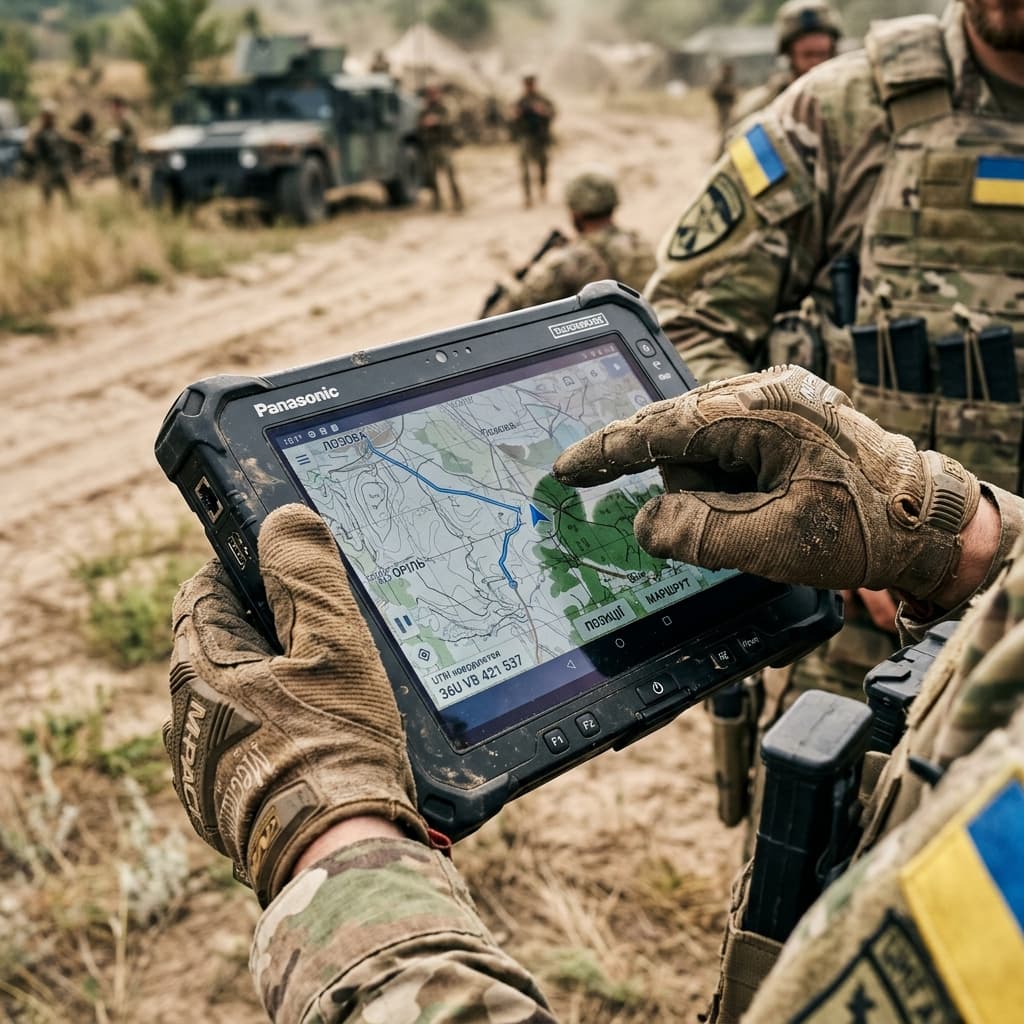
The engineering reality of swarm robotics dictates shifting the compute burden from the communications link to the physical edge device. By imbuing each expendable robot with enough localized processing power to navigate, map, and filter data independently, the swarm becomes a resilient, distributed organism that continues to execute the mission even when the invisible threads of the network begin to fray.
We facilitate small-group sessions for customers and prospects without requiring a slide deck, focused on your stack, constraints, and the decisions you need to make next.