Insights · Article · Shelter Systems · Apr 2026
Procedural guidelines for maintaining expedition tent fabrics: identifying stress concentrations, differentiating between abrasion and tension tears, executing permanent field repairs with adhesives and thermoplastic welding, and ensuring UV resistance.
The fabric skin of a soft-wall shelter is a highly engineered structural membrane, not merely a tarp draped over a frame. It must maintain tension to provide structural rigidity, shed water, resist tearing under catastrophic wind loads, and withstand intense UV degradation. A breach in this fabric is an immediate failure of the environmental envelope and, if left unaddressed, will rapidly propagate under dynamic wind stress until the shelter is structurally compromised. Immediate, permanent repair in the field is a mandatory operational capability.
Preventative maintenance begins with identifying and mitigating stress concentrations before they result in tears. The most common cause of fabric failure is abrasion against the internal aluminum frame. This occurs when the shelter skin is inadequately tensioned, allowing it to flutter violently against the purlins and arches during wind events. Regular tensioning of base straps and guy lines is the primary defense against abrasion. Additionally, deployers must routinely inspect the contact points between the fabric and the frame for early signs of coating wear or exposed base weave.
Differentiating between an abrasion hole and a tension tear dictates the repair strategy. An abrasion hole is typically localized, with frayed edges and thinned surrounding material, often directly over a frame joint. A tension tear is a clean, straight or jagged rip along the bias of the fabric, usually originating from a puncture or a heavily loaded guy point. Abrasion requires a robust, thick patch to replace the missing material mass, while a tension tear requires a highly structural patch capable of transferring tension across the gap without peeling.
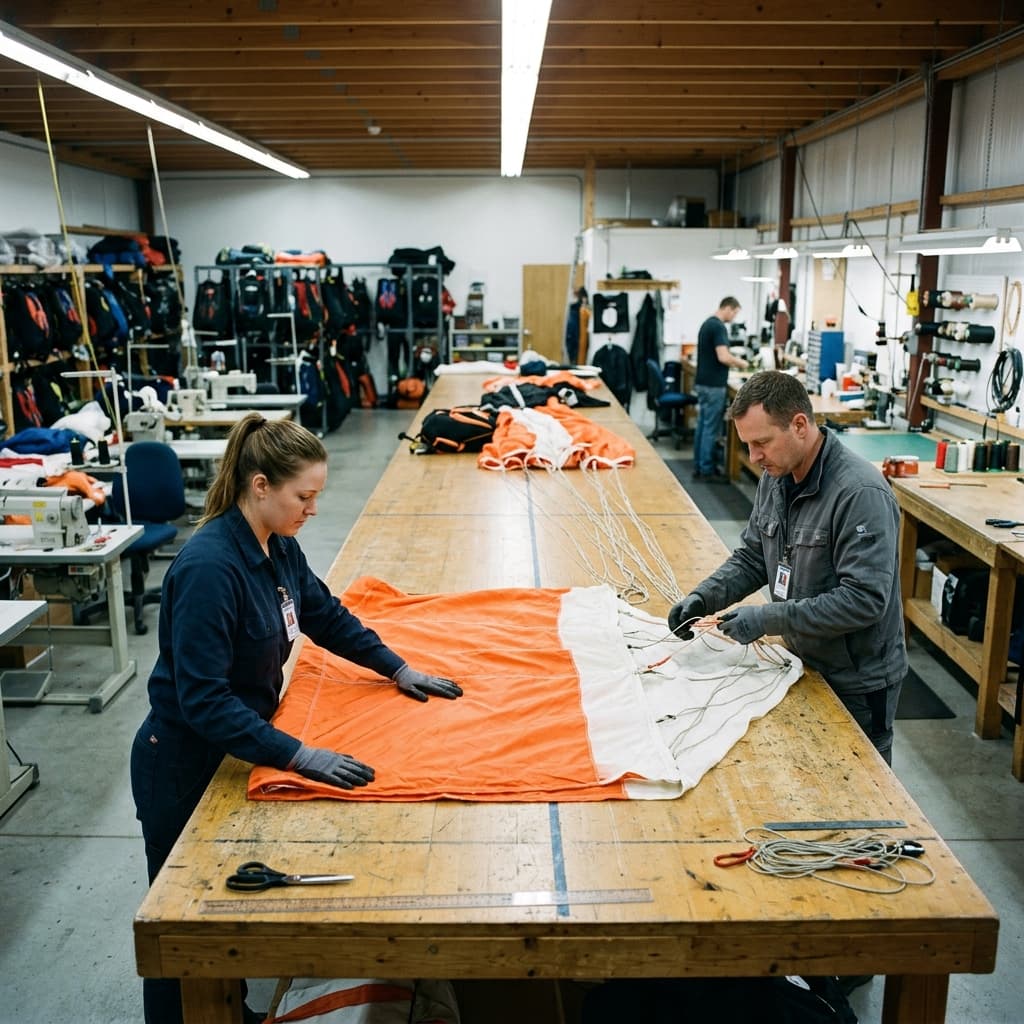
Pre-cleaning the repair area is the most frequently ignored and most critical step in field repair. Field fabrics are covered in microscopic dust, petroleum residue from generator exhaust, and environmental moisture. No adhesive or welding technique will bond to dirt. The repair area extending several inches beyond the tear must be scrubbed aggressively with an appropriate solvent—such as isopropyl alcohol or a specialized fabric prep solution—and allowed to dry completely. Applying a patch over a dusty surface guarantees the repair will peel off during the next storms.
Adhesive patching is the standard protocol for small punctures and clean tension tears under six inches. The patch material must be identical to the shelter skin—typically PVC-coated polyester—to ensure the thermal expansion coefficients match. The adhesive used is highly specialized; standard hardware store glues become brittle in the cold or melt in the sun. A two-part structural polyurethane adhesive provides the highest bond strength. The adhesive must be applied evenly to both the patch and the shelter skin, allowed to become tacky, and then mated with significant pressure using a hard roller to eliminate zero-adhesion air bubbles.
Thermoplastic hot-air welding is required for large tension tears, especially those near structural seams or guy points. This technique utilizes a specialized hot-air gun to simultaneously melt the PVC coating on the shelter skin and the patch material, immediately joining them under the pressure of a silicone roller. Welding creates a bond that is stronger than the parent fabric itself, as it fuses the polymers chemically. However, it requires significant skill, electrical power, and exact temperature control; too cold, and the weld peels; too hot, and the base polyester scrim is melted and destroyed.
Repair geometry determines the long-term success of the patch. A square patch with sharp 90-degree corners is a failure waiting to happen; the sharp corners act as peel initiation points when the fabric flexes. All patches must be cut with generously rounded corners. Furthermore, the patch must extend a minimum of two inches beyond the extents of the tear in all directions to provide sufficient surface area for stress transfer. For massive tears, patching both the inside and outside of the membrane ensures maximum structural recovery.
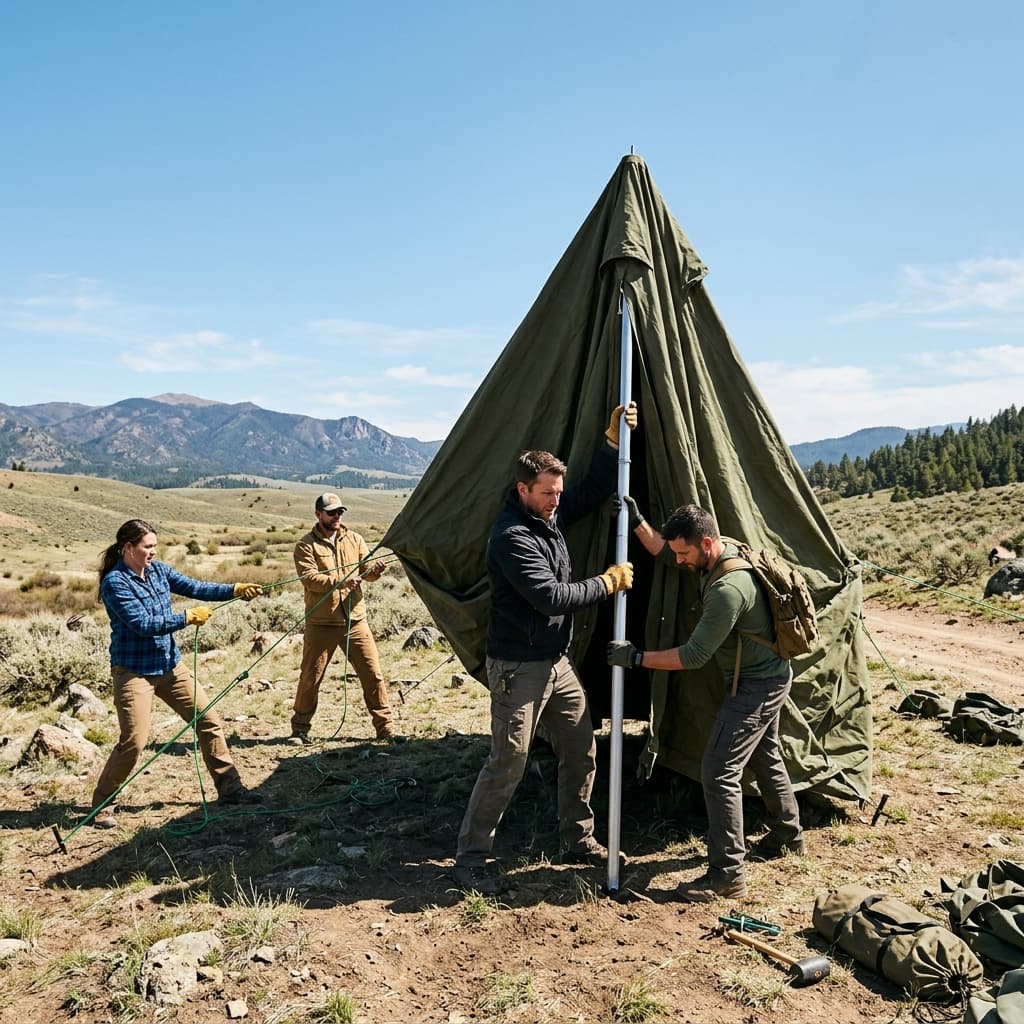
UV degradation is the silent enemy of shelter fabrics, slowly breaking down the plasticizers in the PVC coating and leaving the material brittle and prone to cracking under flex. While modern expedition fabrics incorporate UV inhibitors, prolonged deployment in equatorial environments will eventually take a toll. During maintenance inspections, fabric that feels stiffer than usual, shows a chalky white residue, or refuses to hold an adhesive patch indicates severe UV degradation. Sections displaying these symptoms must be formally documented, and the shelter should be scheduled for replacement, as it can no longer be trusted under severe structural load.
Seam sealing maintenance is equally critical. The welded or taped seams that connect the fabric panels are subjected to intense shear forces. If a seam tape begins to lift, it creates a pocket that catches water and accelerates the delamination. Peeling seam tape must be immediately addressed by cleaning the area and re-bonding the tape using a hot-air gun, or applying a specialized liquid seam sealant if the original thermoplastic adhesive has degraded entirely. A compromised roof seam in an expedition shelter creates an interior flood hazard directly above sensitive equipment.
Documentation of large structural repairs is necessary for lifecycle tracking. A shelter that has suffered a massive five-foot tension tear and received a field weld may be perfectly serviceable, but its structural history is permanently altered. The location, size, date, and method of repair must be logged in the shelter's physical data plate or digital record. This allows future commanders to make informed decisions about whether to deploy that specific asset in a benign support role or thrust it into a high-risk, extreme-weather operational environment.
We facilitate small-group sessions for customers and prospects without requiring a slide deck, focused on your stack, constraints, and the decisions you need to make next.