Insights · Article · Rugged Hardware · Apr 2026
Architecting electrical interfaces for rapid-deployment and blind-mate applications: mechanical keying, pin sequencing for hot-swapping, scoop-proof shell design, and managing contact resistance under high vibration.
In tactical operations, operators rarely have the luxury of perfectly aligning a cable under optimal lighting. Connectors on military radios, vehicle intercoms, and quick-disconnect avionics bays must often be mated by feel, in the dark, while wearing heavy protective gloves, or even automatically pushed together when a payload module slides into a rack. Designing for these 'blind-mating' scenarios requires engineering both the mechanical geometry of the connector shell and the electrical sequencing of the internal pins. A connector that requires two hands and direct line-of-sight is a liability in the field.
Mechanical keying is the foundational requirement. A blind-mate connector must utilize asymmetric guide pins, keyways, or distinct D-shaped outer shells that physically prevent the connector from being forced in sideways or upside down. If the keying is too subtle, an operator wearing heavy gloves will easily crush the internal pins by attempting to torque the connector into a misaligned receptacle. The keyways must firmly engage and align the entire shell before the delicate electrical pins make any contact with the mating sockets.
The 'scoop-proof' design principle prevents bent pins during clumsy insertions. If the shell of the loose cable connector is inserted at a severe angle, the lip of the shell must bottom out against the face of the receptacle before it can reach deep enough to 'scoop' and bend the exposed pins. This geometric constraint ensures that the pins are absolutely protected from mechanical damage until the two shells are perfectly coaxially aligned for final mating.
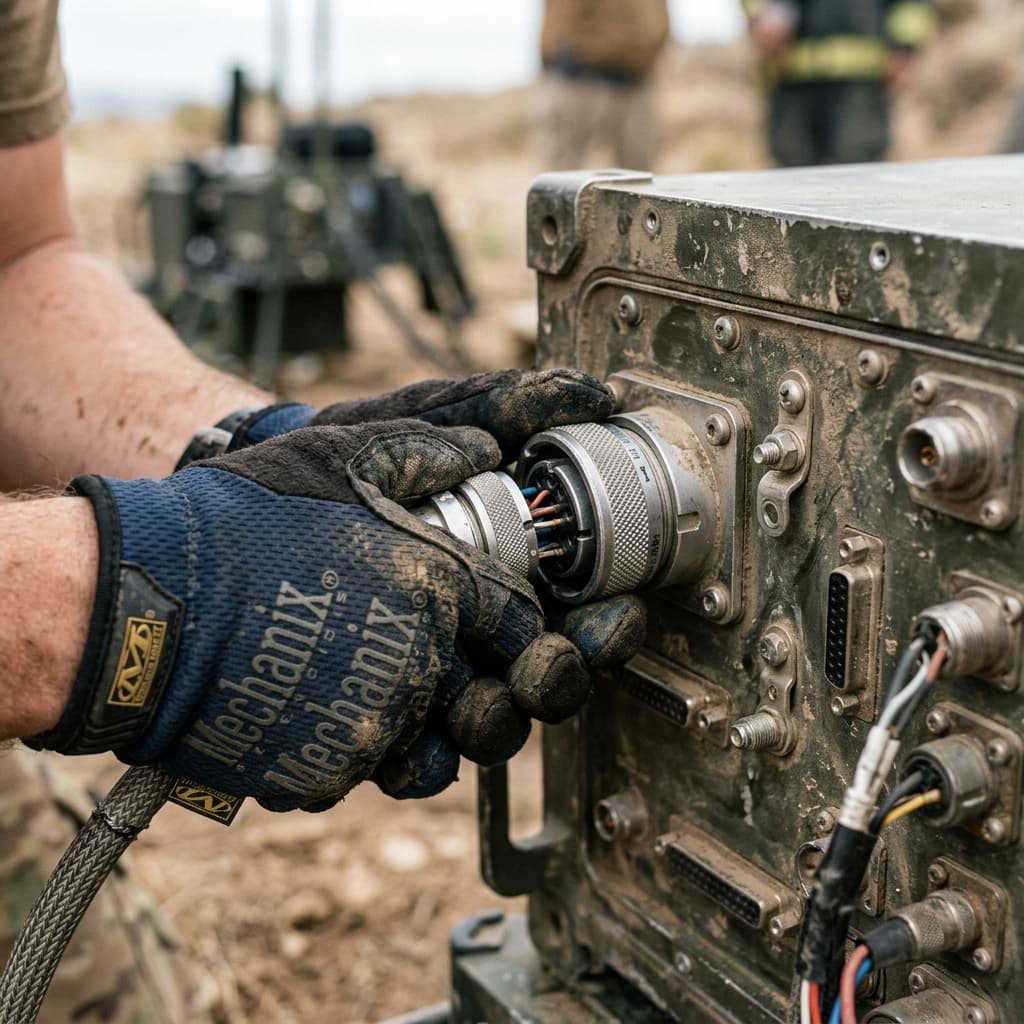
Pin sequencing is critical for hot-swappable blind-mate systems. When a payload module is forcefully shoved into a powered rack, the pins do not all make contact at the exact same microsecond. If a sensitive data line connects before the system ground is established, stray voltages can destroy the communication transceiver. Blind-mate connectors utilize staged pin lengths: 'first-mate, last-break' pins are extended longer to establish solid unified grounding before the shorter power pins engage, followed finally by the shortest data pins once the system is fully stabilized.
Contact wiping action cleans the interface during mating. In a dusty or corrosive field environment, the surfaces of both the pin and the socket will accumulate non-conductive oxidation or debris. A well-designed blind-mate contact features a tight, spring-loaded wiping action that physically scrapes the mating surfaces clean against each other as the connector engages. This micro-abrasion ensures a low-resistance electrical connection even if the connector was left uncapped in the dirt prior to mating.
Tolerance stack-up must be meticulously calculated for rack-and-panel blind-mate interfaces. If a large electronic module relies on rear-mounted blind-mate connectors to interface with the backplane, the mechanical alignment is dictated by the chassis rails. If the rails are slightly off, or if the chassis has flexed under vibration, the connectors will arrive misaligned. The blind-mate receptacles must feature floating mounts—spring-loaded hardware that allows the connector body to shift radially by a few millimeters to 'find' its mate and self-align as the module is pushed home.
Locking mechanisms must be positive, intuitive, and capable of holding the mated pair together under severe vehicular vibration. A standard threaded coupling ring takes too long to secure and is difficult to verify by feel. Quick-disconnect systems utilize push-pull locking sleeves or quarter-turn bayonet mounts that snap firmly into place, providing both a tactile 'click' and a visual indicator band. If an operator cannot confirm the lock by feel in pitch darkness, the cable will inevitably vibrate loose during the mission.
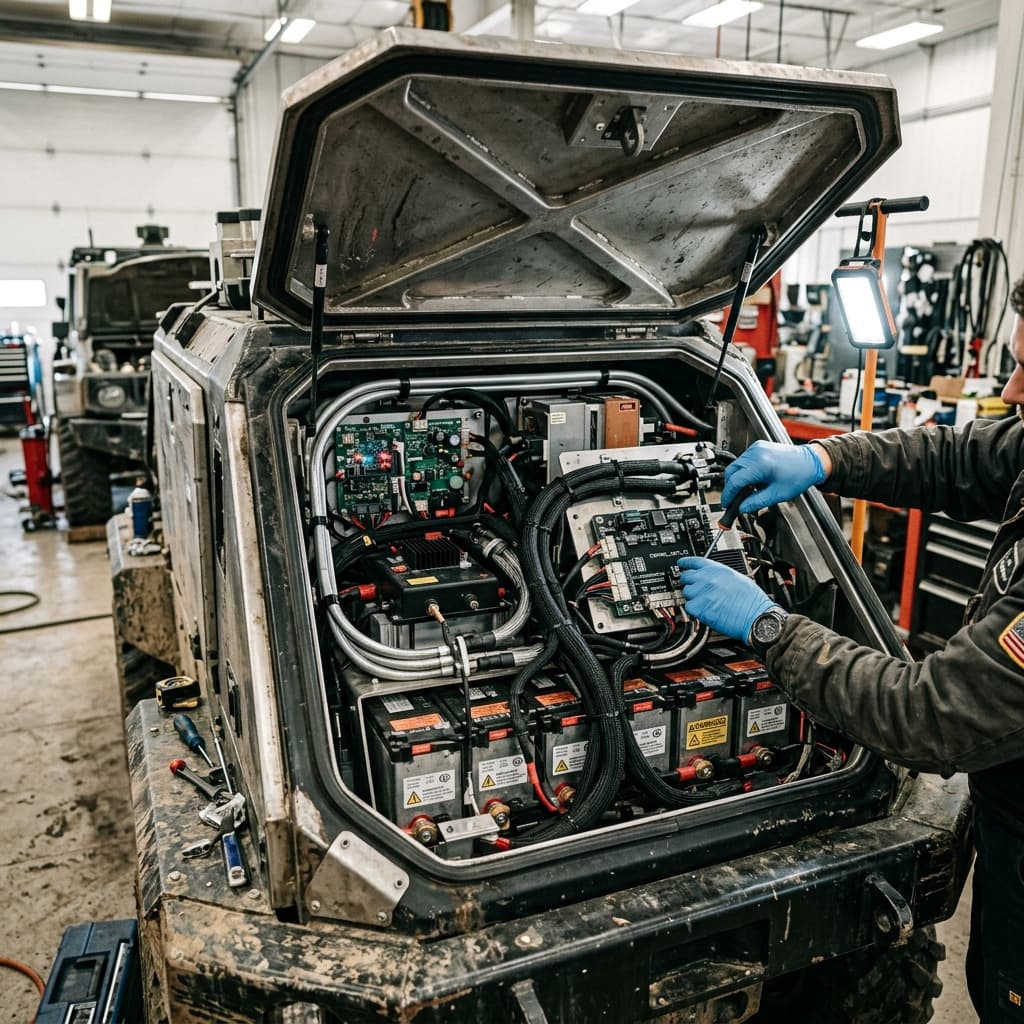
High-mating-cycle durability is demanded in modular systems. Standard commercial connectors hold their specified contact resistance for perhaps fifty mating cycles before the gold plating wears off. A tactical battery module or a drone payload interface might be swapped hundreds of times per month. These applications require high-durability contacts featuring very thick, hard gold plating over a nickel underplate, housed in shells that will not gouge or gall after thousands of rapid, forceful blind insertions.
FOD (Foreign Object Debris) mitigation is the bane of open receptacle design. A blind-mate socket installed in a vehicle floorboard will quickly fill with sand, mud, and spent brass if left uncovered. Protective measures require either tethered, spring-loaded environmental dust caps that automatically swing into place when the cable is removed, or specialized connector faces that are entirely flush and wipeable, relying on internal spring contacts rather than deep, open pin cavities.
We facilitate small-group sessions for customers and prospects without requiring a slide deck, focused on your stack, constraints, and the decisions you need to make next.