Insights · Article · Shelter Systems · Apr 2026
Executing time-critical deployments of expeditionary medical shelters: site selection hygiene, sequential footprint mapping, clean-first assembly protocols, and integrating high-flow medical infrastructure into temporary fabric structures.
When a humanitarian crisis or combat scenario demands a Role 2 or Role 3 medical facility, the deployment of soft-wall shelters must transition from deliberate construction to a choreographed rapid response. A medical shelter is not merely a tent; it is a complex envelope requiring precise climate control, clean-air environments for surgery, heavy power distribution, and sterile logistics pathways. Deploying this capability rapidly requires protocols that prioritize the immediate establishment of the critical care core while allowing secondary support structures to be assembled concurrently.
Site selection hygiene is the first protocol. Unlike a standard command post, a medical facility cannot be erected on deeply rutted, muddy, or dusty ground without extreme mitigation. The site must be as flat as possible because surgical tables and imaging equipment cannot operate on a slope. If deploying in arid environments, heavy dust mitigation—such as pre-wetting the soil or laying extensive ground tarps—must occur before the first shelter crate is opened. Dust pulled into a surgical tent during assembly creates an infection control failure before the first patient arrives.
Sequential footprint mapping governs the layout. A medical facility is a networked system of modules: triage, operating rooms, intensive care, ward space, and logistics. The deployment team must physically stake out the entire footprint, including the precise locations of the interconnection boots, before erecting any frames. Improvising the layout as shelters go up inevitably results in misaligned modules that cannot be environmentally sealed, or trapped spaces where ambulances cannot maneuver to the triage entrance.
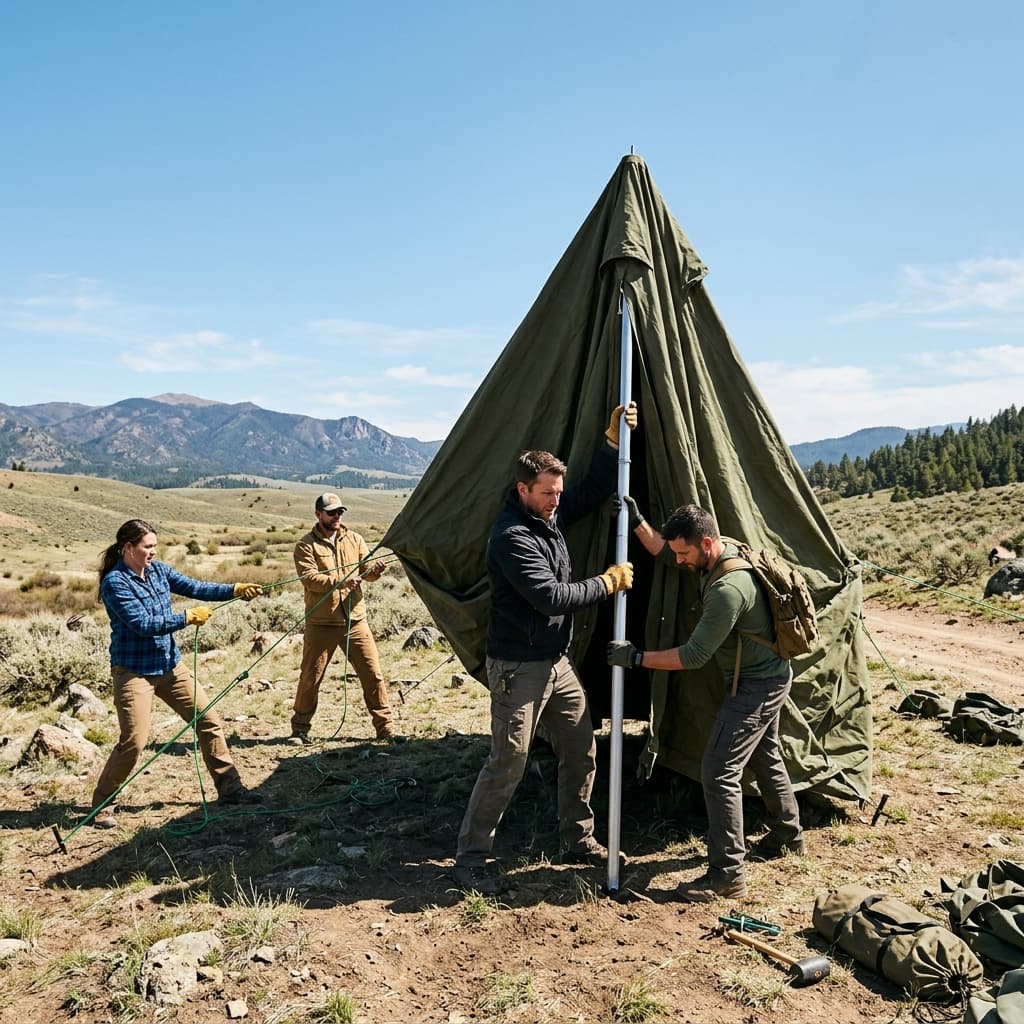
The 'Clean-First' assembly protocol dictates that the most environmentally sensitive modules—specifically the operating rooms and ICU—are erected, sealed, and powered first. By establishing the climate-controlled core immediately, biomedical technicians can begin unpacking and calibrating sensitive surgical and imaging equipment in a clean environment while the exterior team continues assembling the less sensitive ward and administrative modules. Delaying the climate baseline delays the medical capability.
Hard flooring integration represents the bottleneck in most medical shelter rapid deployments. Soft fabric floors cannot support the rolling weight of crash carts or the point loads of surgical tables. Hard, interlocking flooring panels must be laid immediately after the footprint is mapped but before the heavy equipment is moved in. The protocol must sequence the flooring teams immediately behind the frame assembly teams, ensuring a rigid, washable surface is established without slowing down the overarching erection timeline.
Medical gas and high-flow infrastructure routing must be treated separately from standard electrical power. Oxygen concentrators and manifold systems require dedicated, protected pathways. Running high-pressure lines across the floor is unacceptable in a chaotic trauma environment. The shelter design and deployment protocol must utilize overhead suspension systems or dedicated perimeter raceways to route medical gasses and vacuum lines cleanly into the surgical and intensive care modules, keeping the floor entirely clear for personnel movement.
Environmental isolation between modules requires strict adherence to interconnection procedures. The operating room module must be positively pressurized relative to the adjacent triage and ward modules to prevent airborne pathogens from entering the sterile field. This requires the deployment team to perfectly install and seal the boot assemblies connecting the tents, and then carefully balance the HVAC delivery to ensure the airflow moves continuously outward from the surgical core.
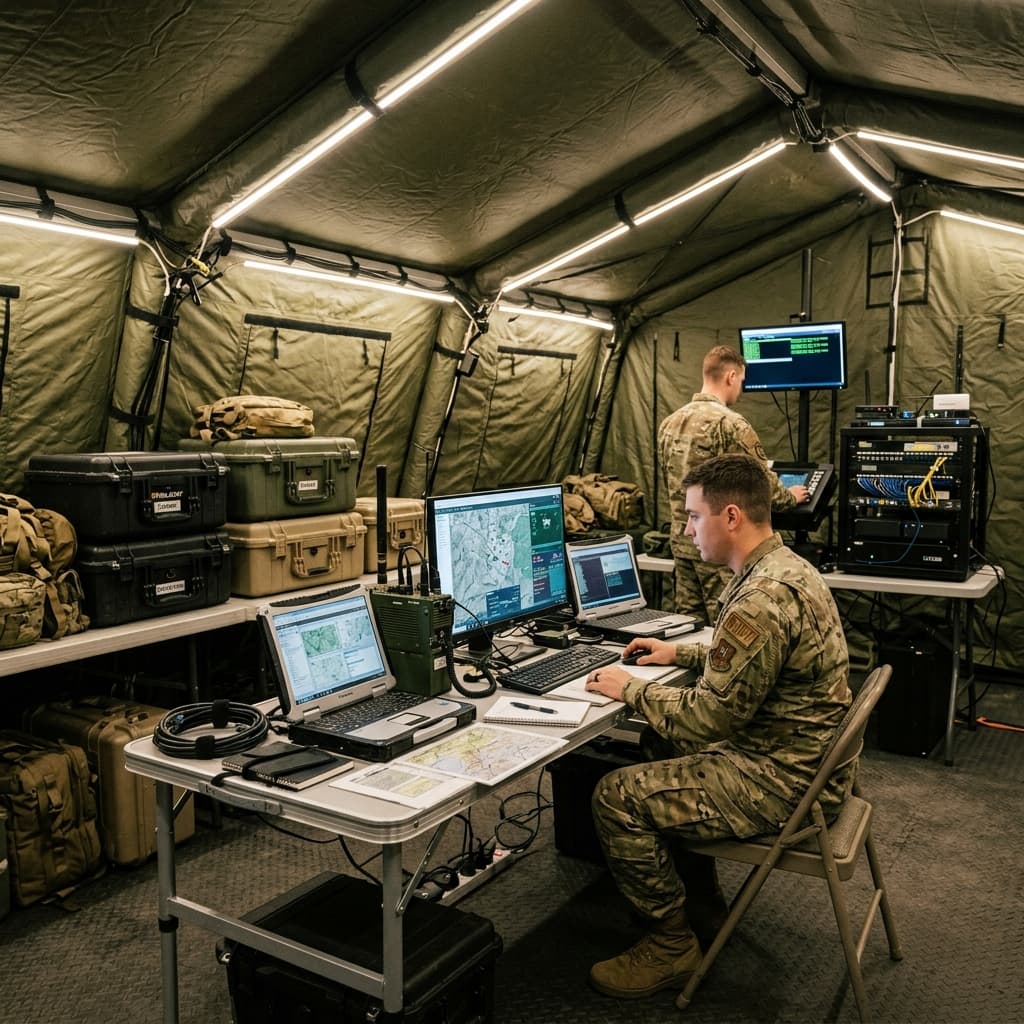
Lighting configuration in a medical rapid deployment must go beyond standard overhead illumination. Surgical teams require intense, shadow-free lighting. The shelter's overhead arch frames must be robust enough to support the hanging of heavy, articulated surgical examination lights without sagging or warping the frame. The deployment team must integrate these specialized fixtures into the overhead power grid immediately upon establishing the roof, ensuring they are positioned precisely over the planned surgical table locations.
Logistics and waste pathway planning cannot be an afterthought. A functioning trauma facility generates massive amounts of regulated medical waste and requires continuous resupply. The deployment layout must include dedicated, separate corridors for clean supply entry and biohazardous waste exit. If these pathways cross, the facility is compromised. The shelter configuration must physically enforce this separation through distinct module doors and airlocks.
The final protocol is the integrated systems test. Before a rapid deployment is declared operational and handed over to the medical commander, a designated team must conduct a full-load test: engaging all HVAC units to maximum capacity, turning on all high-draw laboratory and imaging equipment, and verifying the positive pressure gradient across the modules. Discovering a breaker fault or a pressure leak when the first trauma casualty is wheeled in is a failure of the rapid deployment process, not an acceptable field friction.
We facilitate small-group sessions for customers and prospects without requiring a slide deck, focused on your stack, constraints, and the decisions you need to make next.