Insights · Article · Parachute Systems · Apr 2026
Understanding and verifying the parachute deployment sequence from extraction through full canopy inflation: how to analyze bag strip timing, pilot chute effectiveness, bridle tension events, and opening shock to confirm the system is performing within design intent.
The parachute deployment sequence is a chain of timed mechanical events that must occur in the correct order, at the correct rate, and within defined force limits to produce a safe opening. Each event, from initial bag extraction through full canopy inflation, affects the subsequent event. An anomaly at any point in the sequence, whether caused by a rigging error, fabric condition, component interaction, or environmental factor, can have consequences that do not manifest until several seconds later when the canopy is fully inflated. Analyzing the deployment sequence as a system, rather than evaluating each component in isolation, is the foundation of effective parachute acceptance testing.
Deployment sequence analysis begins with the timeline. For a given system configuration at a given airspeed and altitude, the time from pilot chute extraction to full canopy inflation should fall within a defined window. This window is derived from the design analysis and validated by testing. If the opening time is shorter than the lower limit, the opening shock load may exceed the design value. If it is longer than the upper limit, the aircraft may be descending below the minimum safe opening altitude before full deployment. Instrumented drop tests that record deployment time precisely are the primary source of this data.
Pilot chute effectiveness is the first variable in the sequence that is sensitive to environmental conditions. A pilot chute must generate sufficient drag to reliably extract the deployment bag from the container. At higher airspeeds, this is straightforward. At lower airspeeds, particularly near the minimum deployment speed for the system, the pilot chute drag may be insufficient to overcome container lock or deployment bag friction before the parachutist or cargo has descended too far. The minimum deployment speed for each system should be established by testing at progressively lower speeds, not by calculation alone.
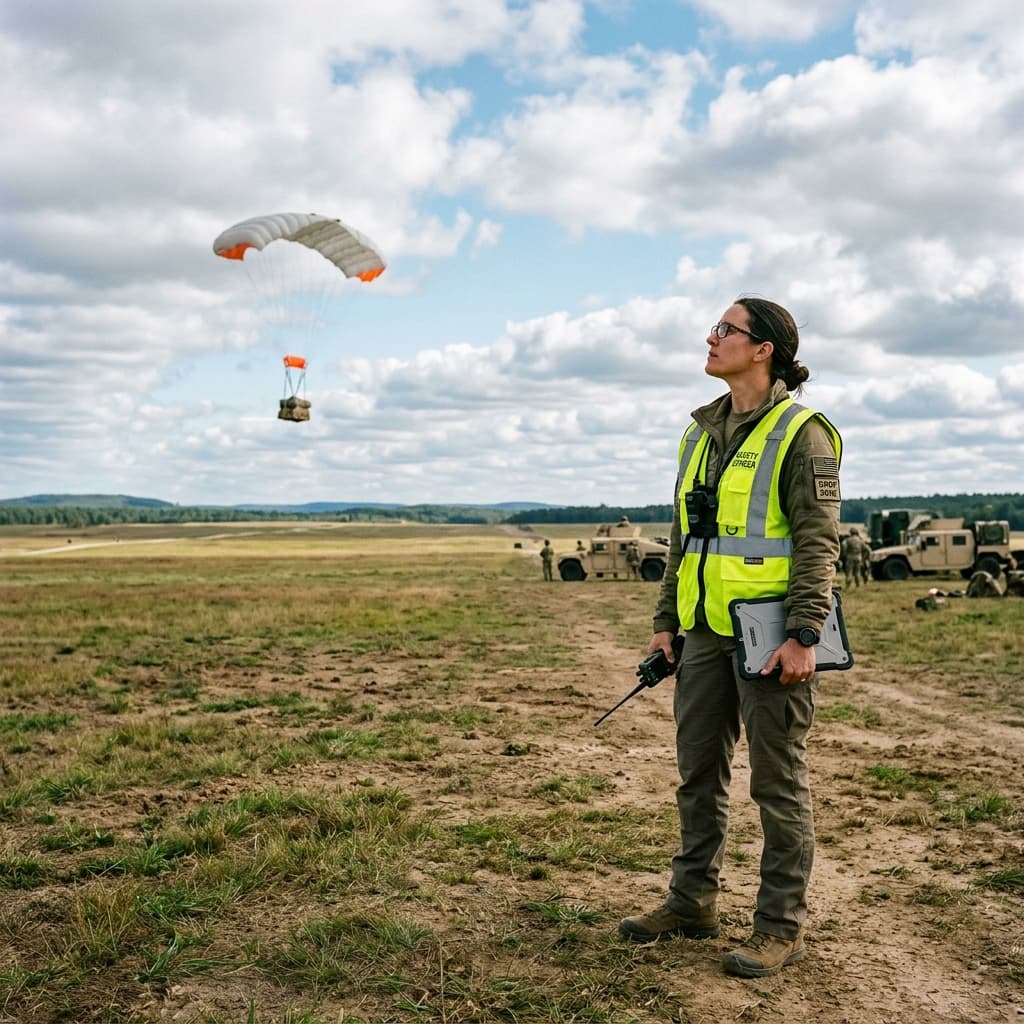
Bag strip analysis focuses on the interval between the moment the deployment bag becomes taut and the moment the last suspension line is paid out from the bag. During this interval, the lines are being stretched from packed to full extension while the canopy and bag still move together. The bag strip order matters: the suspension lines should leave the bag stows consistently from the lowest attachment point upward to ensure the canopy is correctly oriented when it begins to inflate. Irregular bag strip order, visible in high-speed video, indicates rigging inconsistency that may produce off-heading openings or line entanglement.
Bridle tension events occur as the deployment bag reaches full line extension and begins to decelerate while the canopy is still in the process of being pulled from the bag. The bridle, the connection between the pilot chute and the deployment bag, experiences a significant load spike at this point. The bridle must be strong enough to transmit this load without failure, and flexible enough to avoid rebound oscillation that could cause re-contact between the canopy and the deployment hardware. Material selection and length calibration for the bridle should be referenced against the dynamic load calculations for the system, not only against the static weight of the deployment bag.
Canopy inflation rate is the aerodynamic phase of the deployment sequence. The time from bag strip completion to full canopy inflation depends on the canopy area, the fabric porosity, the geometric shape of the canopy, and the airspeed at inflation. High-porosity canopies inflate more slowly and produce lower opening shock loads. Low-porosity canopies inflate faster and produce higher opening shock loads. The relationship between porosity, inflation time, and opening force is well understood analytically, but the specific behavior of each canopy design must be validated by test because manufacturing variations in fabric porosity influence the result.
Opening shock forces should be measured during initial qualification drops and compared against the design limits for the harness, container, and suspension system. The peak opening force occurs at the point of snatch force, when the fully extended lines first arrest the canopy, and again at the point of maximum canopy projected area during inflation. Both peaks should be within the design limits, not just the higher of the two. Instrumented test drops with load cells in the harness attachment points provide the direct measurement needed to verify this against the design analysis.
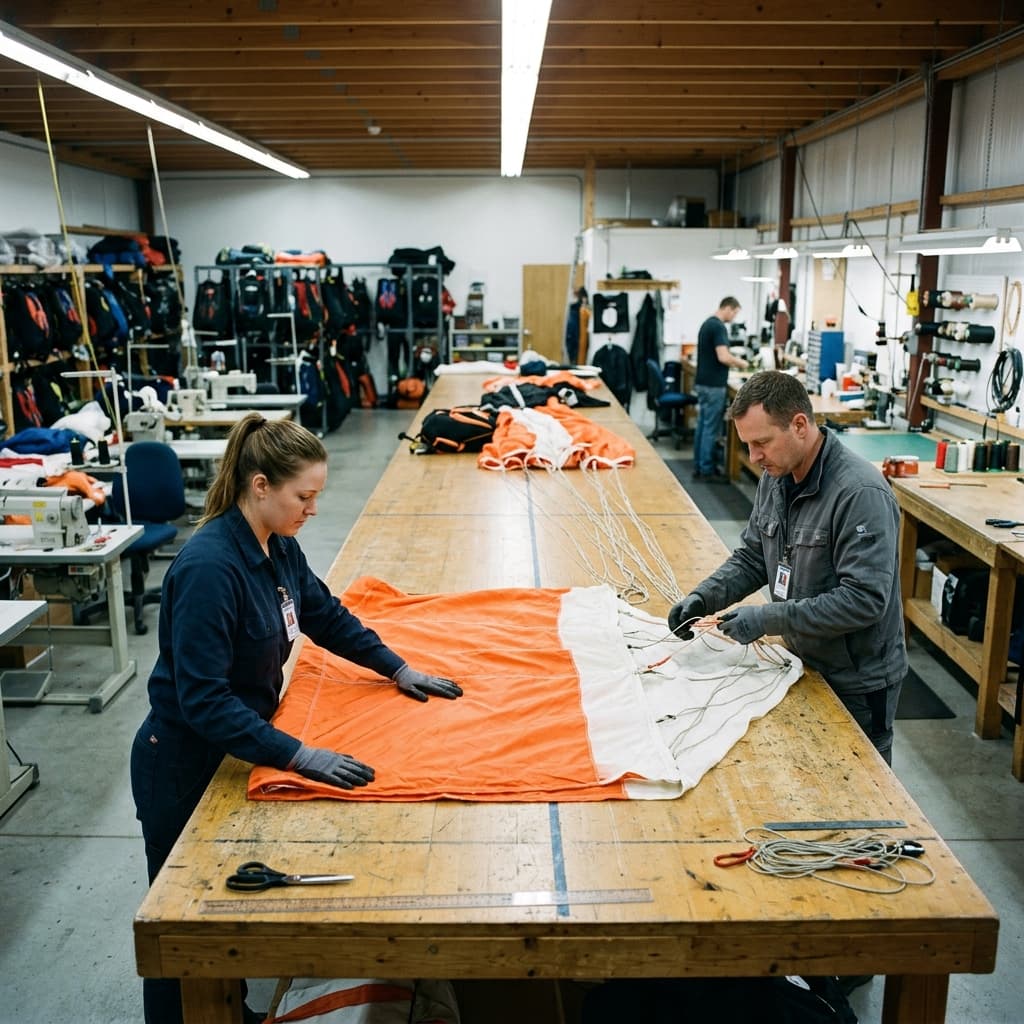
High-speed video analysis is an invaluable tool for deployment sequence analysis when force measurements alone are insufficient to identify the root cause of an anomaly. A camera positioned to capture the full deployment sequence from bag extraction through canopy inflation reveals visual anomalies, including line twists, canopy inversion during inflation, slider behavior on ram-air systems, and localized fabric behavior that is not captured by force measurements alone. For programs that cannot instrument every drop, systematic high-speed video of development drops provides a recoverable record that can be reviewed in detail after the event.
Environmental variables that affect the deployment sequence should be characterized during the qualification program. Temperature affects fabric stiffness, which influences how the canopy leaves the deployment bag. Humidity affects the static friction of nylon lines in stows, which influences bag strip consistency. Altitude affects air density, which influences both pilot chute effectiveness and canopy inflation rate. A system qualified at sea level and moderate temperature should not be deployed at high altitude and extreme temperature without analysis and, where the analysis shows significant differences from the qualified behavior, additional testing.
Changes to any element of the rigging configuration that could affect the deployment sequence, including the deployment bag design, the stow material, the pilot chute size, or the container pocket depth, should trigger an analysis of the effect on the deployment sequence timing and forces. Changes that fall within the bounds of previously tested variations may not require additional drop testing. Changes that alter the opening time or the opening shock beyond the previously bounded range require qualification testing before operational deployment. The rigging change authority should define these boundaries explicitly so that the person approving a configuration change to a rigged system can make an evidence-based decision.
We facilitate small-group sessions for customers and prospects without requiring a slide deck, focused on your stack, constraints, and the decisions you need to make next.