Insights · Article · Parachute Systems · Apr 2026
How to plan and execute military parachute testing at a drop zone: air corridor coordination, safety officer responsibilities, meteorological requirements, abort criteria, and the integrated briefing and debriefing process that captures lessons from every test event.
Military parachute testing at a drop zone is a live flying activity with multiple interacting safety considerations: the aircraft operation, the parachute equipment under test, the drop zone surface conditions, the personnel in and around the drop zone, the meteorological environment, and the coordination of all of these elements through a command-and-control structure that can make time-critical decisions without ambiguity. Programs that treat drop zone safety as an add-on to the technical testing agenda rather than as a co-equal engineering function encounter preventable incidents that disrupt test programs, damage equipment, and injure personnel.
Air corridor coordination begins in the planning phase. The test area airspace must be coordinated with the relevant air traffic management authority to ensure that the drop zone is clear of conflicting traffic during each test window and that the aircraft used for the test has the necessary clearances for the planned altitude, heading, and drop point. Temporary restricted airspace or a notice to airmen provides the procedural protection for the test corridor, but achieving that coordination requires a lead time of days to weeks depending on the jurisdiction. Test programs that discover airspace coordination requirements on the day of the test experience delays that compress the schedule and create pressure to accept conditions that would otherwise be rejected.
Safety officer authority must be clearly defined in the test plan. The safety officer should have unambiguous authority to abort any test point for any safety reason without requiring endorsement from the test conductor or program manager. Programs where the safety officer's authority is conditional on the agreement of other roles create situations where safety concerns are weighed against schedule and cost pressures at the moment when safety concerns should dominate. The safety officer's authority and responsibility should be documented in the test plan signature block at the same level as the test conductor.
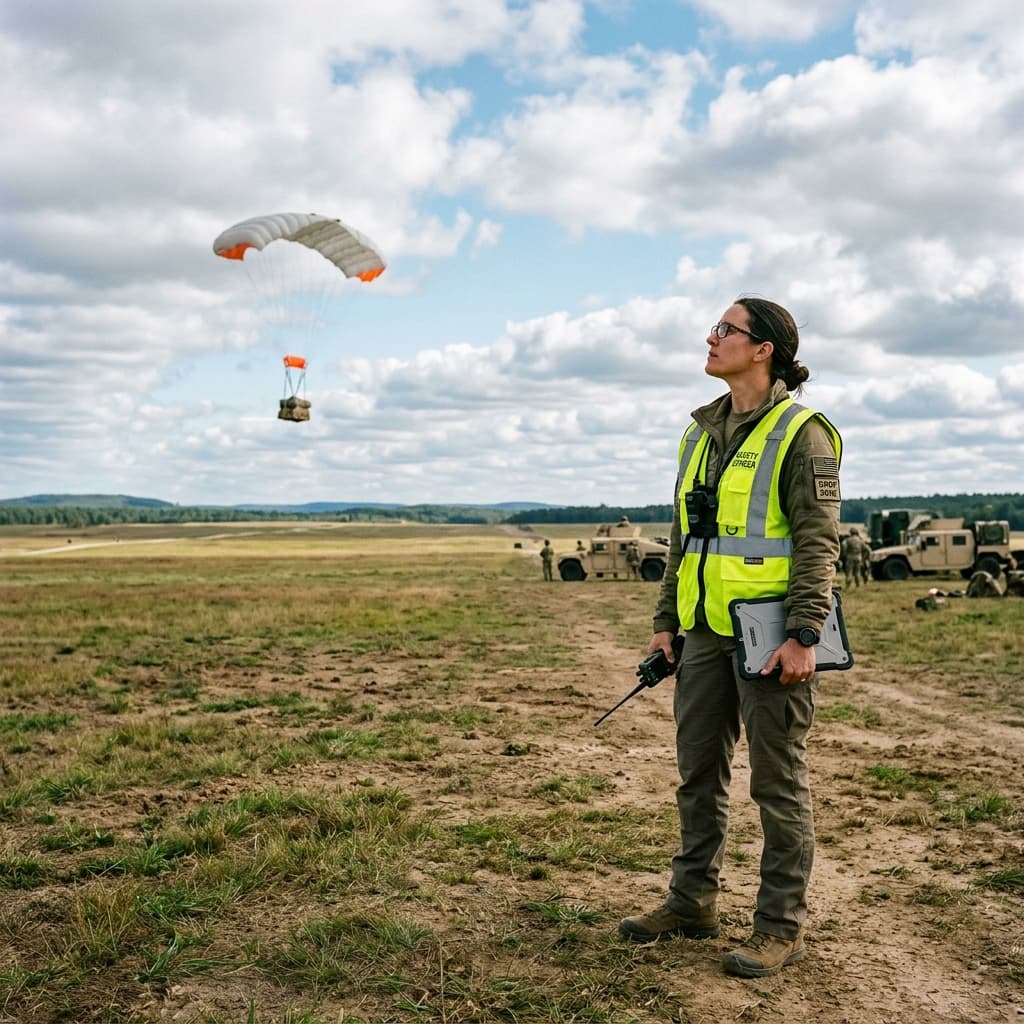
Meteorological requirements for parachute testing must be specified in the test plan as measurable thresholds, not as general weather conditions. The wind speed and direction at drop altitude, at the anticipated canopy inflation altitude, and at the surface may all be different, and each matters for a different reason. Drop altitude wind determines the offset from the release point to the actual parachute deployment point. Inflation altitude wind affects the trajectory of the descending system. Surface wind determines landing drift and landing velocity for the range calculations. Each layer should have a specified acceptable range, and the test should be authorized only when all layers are within limits simultaneously.
Abort criteria provide the safety officer and test team with pre-defined conditions under which the test or a specific test point is terminated. Abort criteria should cover meteorological deterioration, loss of communication with the aircraft, personnel positioning violations on the drop zone surface, unexpected airspace incursions, equipment anomalies identified during the pre-drop check, and any subjective safety concern that cannot be immediately resolved. Criteria expressed in measurable terms, such as surface wind exceeding a specific speed rather than an observation that it seems too windy, can be evaluated consistently by different personnel.
Drop zone preparation before each test session should include a surface inspection for hazards including debris, standing water, unexpected infrastructure, and animal activity that could affect landing safety or compromise the drop zone surface condition. Ground markers for the target and offset reference points should be in place and visible from altitude. Operational personnel should be briefed on their assigned positions, the communication channels in use, and the procedures for their role during each test point. Personnel not assigned to the test should be outside the drop zone hazard area, and the hazard area boundary should be clearly marked.
Data recording equipment at the drop zone should be positioned before the test begins. High-speed cameras for deployment observation should be aimed and focused at the expected trajectory. Weather stations at the surface and, where available, at altitude should be operational and logging. Timing equipment should be synchronized across all recording channels. A ground observer with a calibrated range finder or GPS unit can provide landing point data that allows the test team to calculate the wind drift experienced during the drop and compare it against predictions, improving future release point calculations.
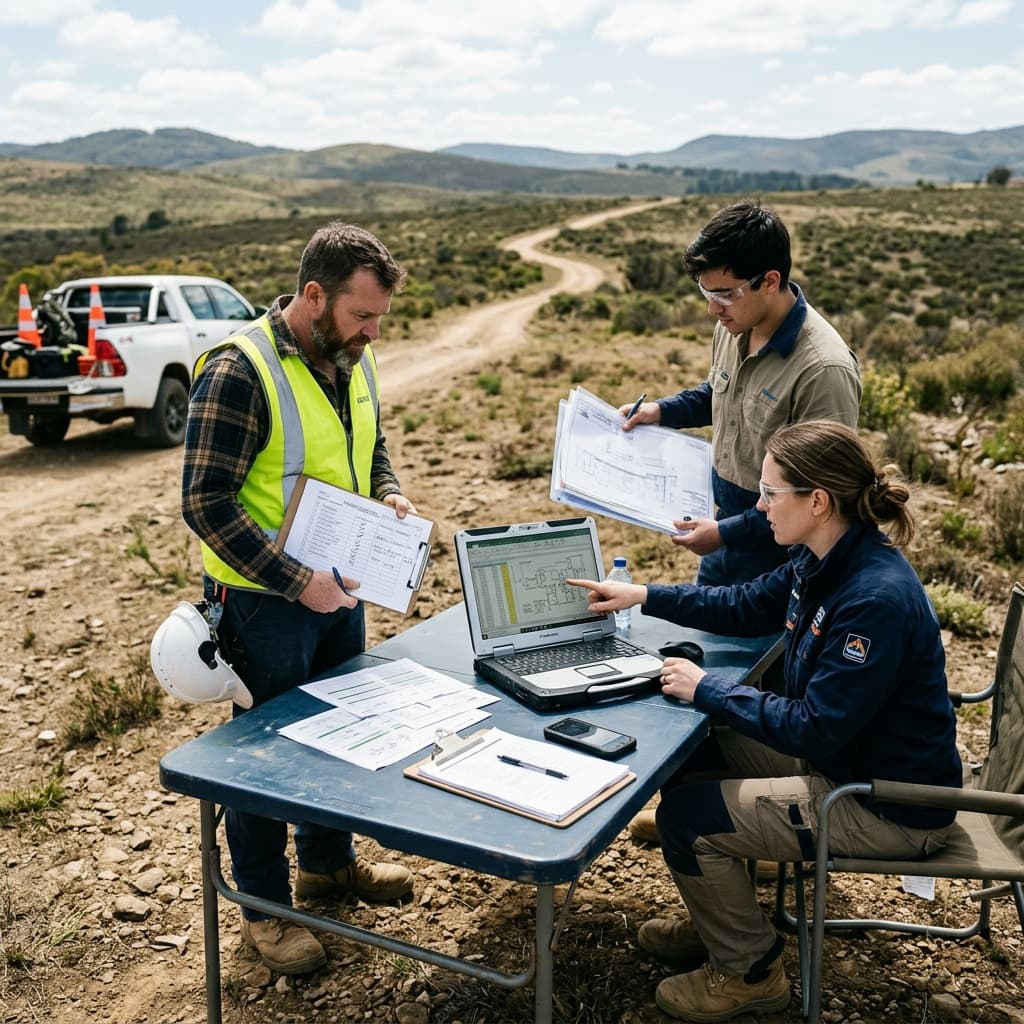
The test briefing conducted before each drop zone session should cover the test objectives, the aircraft profile for each test point, the specific parachute system configuration, the safety officer and his authority, meteorological limits, abort criteria, communication frequencies and protocols, personnel assignments, and the debriefing plan. The briefing should include time for questions, and the safety officer should specifically solicit any concerns before the session is authorized to begin. A briefing that is compressed to save time creates the conditions for assumptions that should have been discussed.
Equipment anomaly handling during test sessions requires a decision process that is defined before the session begins. If an equipment anomaly is observed during a pre-test inspection or reported during a test point, the test should be suspended while the anomaly is evaluated. The evaluation should involve the qualified equipment engineer, not only the test conductor, and should result in either a written disposition approving continuation or a formal decision to redesign and re-inspect before the next test point. Verbal clearances for equipment anomalies during live test sessions are not an appropriate substitute for written engineering evaluation.
Post-session debriefs should be conducted on the day of testing while observations are fresh. The debrief should cover the performance of each test point against the test objectives, any anomalies, deviations from the test plan, safety concerns that arose, and data quality of the recordings. Action items from the debrief should be documented with responsible persons and completion dates. The debrief record becomes an input to the test report and to the planning for the next test session, creating a continuous improvement loop that improves drop zone test efficiency and safety over the course of the development program.
We facilitate small-group sessions for customers and prospects without requiring a slide deck, focused on your stack, constraints, and the decisions you need to make next.