Insights · Article · Rugged Hardware · Apr 2026
Engineering rugged battery packs to survive catastrophic cell failure: venting strategies, internal compartmentalization, phase-change materials, and preventing cascading thermal runaway within tightly packed tactical enclosures.
High energy density lithium-ion battery packs are the foundation of modern expeditionary electronics, powering everything from man-pack radios to autonomous ground vehicles. However, this energy density comes with a severe structural risk: thermal runaway. When a single lithium-ion cell suffers an internal short—whether from manufacturing defect, severe crush damage, or external heat—its temperature rapidly spikes past its safe operating limit. The cell forcefully vents superheated, highly flammable, and toxic gasses. If this event occurs inside a sealed, ruggedized aluminum enclosure, the expanding gasses turn the chassis into a pressure vessel on the verge of explosive detonation.
Pressure management is the first imperative of enclosure design. A perfectly sealed IP68-rated battery box will hold the vented gasses until the internal pressure exceeds the tensile strength of the securing bolts or the chassis walls themselves, resulting in a catastrophic shrapnel event. Rugged battery enclosures must incorporate engineered pressure relief valves (PRVs) or burst discs. These devices maintain an environmental seal during normal operation but automatically pop open at a precisely calibrated pressure threshold, allowing the superheated gas to vent rapidly and safely into the atmosphere, rather than violently rupturing the casing.
However, simply venting the gas does not solve the root thermal problem. The superheated gas from one failing cell aggressively heats the adjacent cells packed tightly beside it. If those adjacent cells absorb enough heat to reach their own critical temperatures, they too will vent, causing a cascading thermal runaway that destroys the entire multi-cell pack and potentially the vehicle carrying it. The engineering goal transitions from immediate pressure relief to preventing cell-to-cell propagation.
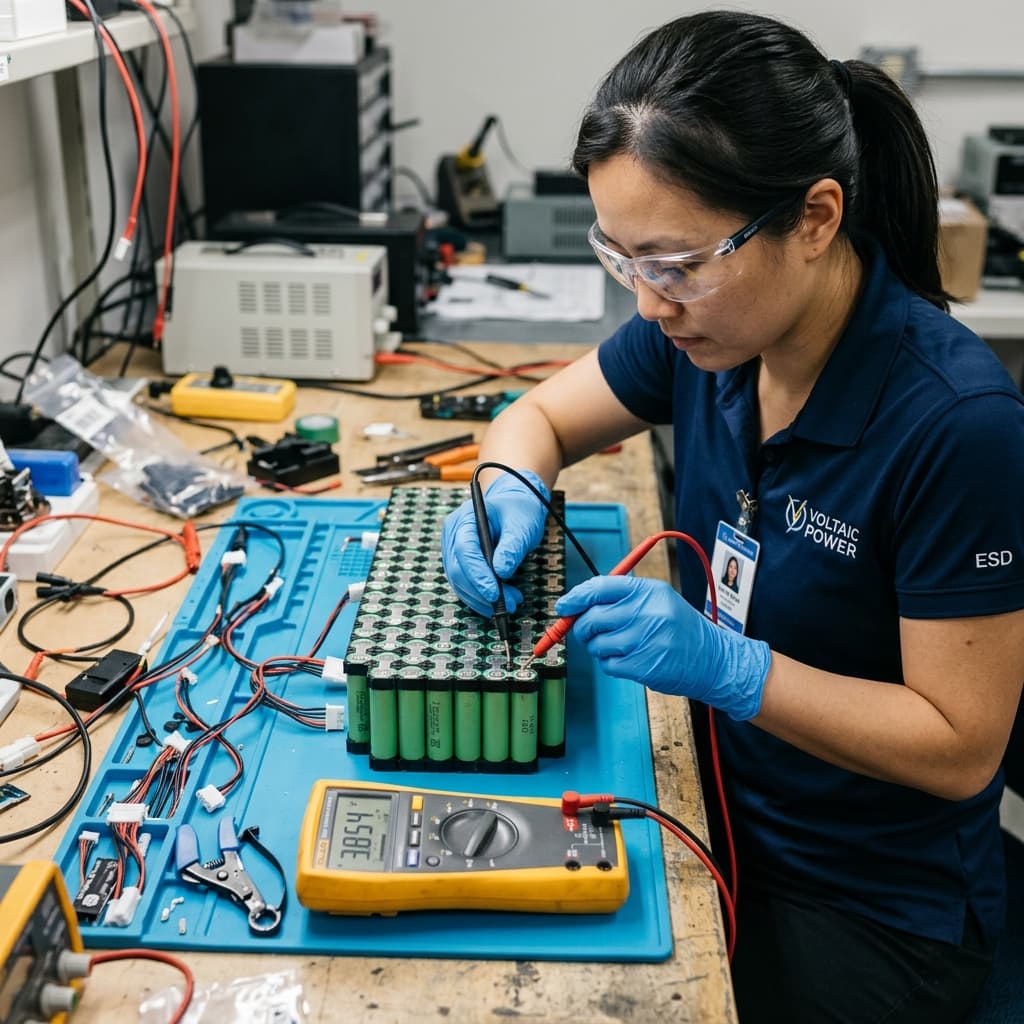
Internal thermal compartmentalization is the most effective containment strategy. Instead of packing cylindrical or prismatic cells in direct physical contact, the pack architecture must interpose a specialized thermal barrier material between every individual cell. These intumescent materials or ceramic-based potting compounds act as firewalls. When exposed to extreme heat from a failing cell, they do not burn; instead, they insulate the neighboring cells, reflecting the thermal energy outward and isolating the catastrophic failure to a single unit rather than a cascading chain reaction.
Phase Change Materials (PCMs) offer a highly advanced method for absorbing the massive thermal shock of a runaway event. PCMs are engineered compounds (often specialized waxes) placed in the voids around the battery cells. As the failing cell heats up, the PCM absorbs an enormous amount of thermal energy as it changes state from a solid to a liquid, effectively acting as a massive heat sink. By 'stealing' the heat to fuel its phase change, the PCM prevents the adjacent cells from reaching their critical runaway temperature threshold.
Directional venting must dictate the path of the exhaust plume. The superheated gas exiting the pressure relief valve is often flaming and is always toxic. The battery enclosure design must route this exhaust away from sensitive electronic payloads, away from fuel lines if mounted on a vehicle, and crucially, away from the operator. If a man-pack radio battery vents, the internal chassis geometry must forcefully direct the plume downward or outward, rather than shooting a stream of superheated gas up into the soldier's neck.
Active Battery Management Systems (BMS) are the electronic perimeter defense prior to physical cell failure. A sophisticated BMS continuously monitors the voltage and temperature of individual cell clusters. If it detects a rapid, unnatural temperature rise indicative of a developing internal short, it must immediately electronically isolate that cell cluster from the rest of the pack and the external load, halting the charge/discharge cycle and potentially triggering early cooling mechanisms before full runaway initiates.
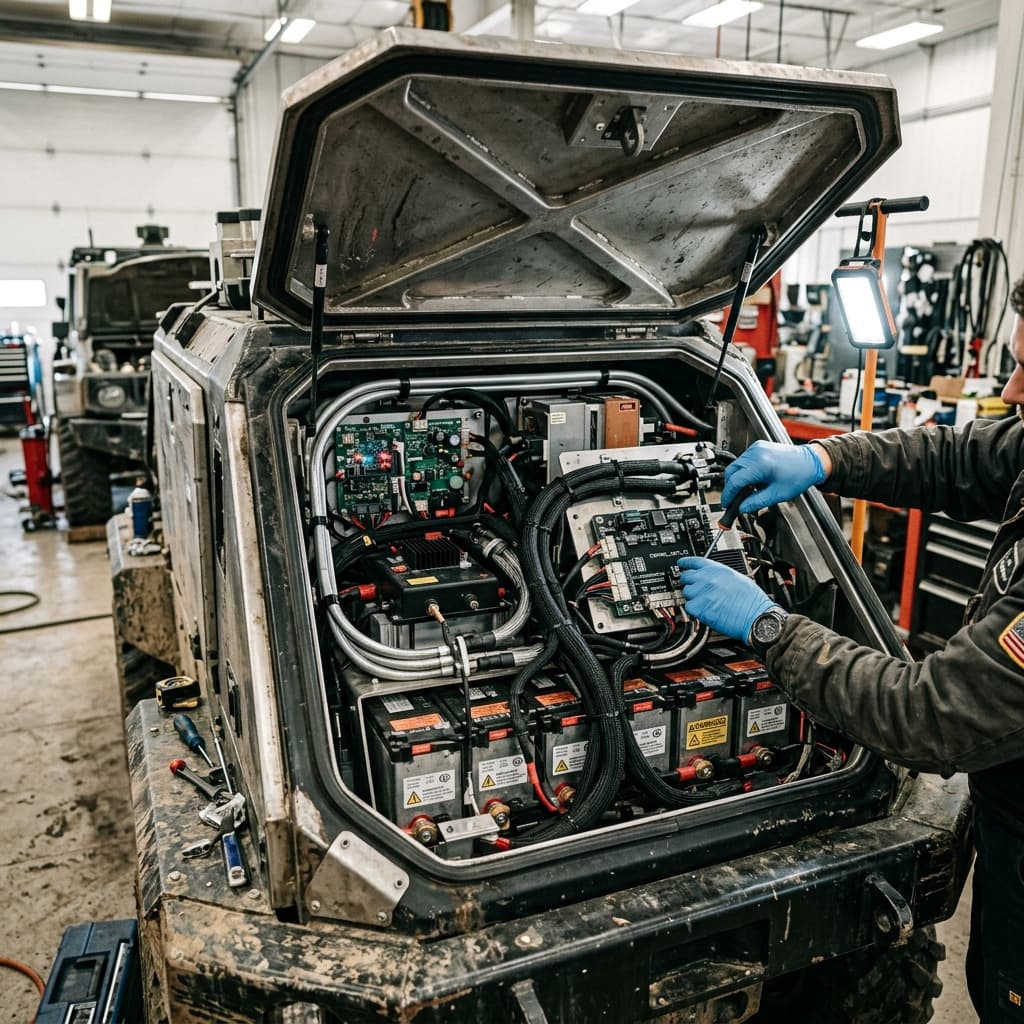
Transportation regulations strictly mandate the testing required to prove thermal runaway containment. Passing UN38.3 testing is mandatory for shipping lithium-ion batteries by air, and military programs often require even more severe nail-penetration or severe crush tests. The engineering test deliberately forces a single cell into catastrophic thermal runaway perfectly within the center of the dense pack. The pack only passes if the resulting explosion is successfully contained, pressure is vented safely, and propagation to the adjacent cells is halted.
Designing a rugged battery pack is not merely an electrical engineering task of linking cells in series and parallel. It is fundamentally a thermodynamic engineering and structural containment challenge. The difference between a well-designed and a poorly designed enclosure is the difference between a confined failure that shuts down the system and a catastrophic explosion that destroys the mission.
We facilitate small-group sessions for customers and prospects without requiring a slide deck, focused on your stack, constraints, and the decisions you need to make next.