Insights · Article · Rugged Hardware · Apr 2026
Deconstructing Ingress Protection ratings for rugged hardware: why IP67 is a strict standard, why IP68 requires careful vendor scrutiny, and how dynamic pressure defeats static immersion testing.
Ingress Protection (IP) ratings are frequently cited as absolute proof of a device's environmental ruggedness, yet they are among the most misunderstood specifications in electronics procurement. The difference between an IP67 and an IP68 rating is not merely a linear progression of water resistance; it represents a fundamental shift in how the testing parameters are defined. For military and expeditionary hardware, failing to understand the exact testing methodology behind the rating often leads to field failures when equipment encounters conditions that technically align with the rating but violate the hidden parameters of the test.
The '6' in both ratings verifies complete protection against dust ingress, tested in a vacuum-assisted chamber circulating fine talcum powder. If a device achieves a '6' for solid ingress, it is dust-tight. The divergence occurs in the liquid ingress rating. IP67 is a strict, standardized test: the device is immersed in water at a depth of one meter for exactly thirty minutes. If the device functions afterward, and inspection reveals no internal water ingress that compromises safety or operation, it passes. IP67 leaves no room for vendor interpretation.
IP68, conversely, is an open-ended specification. The standard simply states that IP68 protection must exceed the requirements of IP67, and that the specific depth and duration of the immersion must be defined by the manufacturer. One vendor might define IP68 as immersion at 1.5 meters for thirty-one minutes. Another might define it as three meters for two hours. Therefore, an 'IP68 rated' claim is meaningless without the accompanying depth and time specifications. Procurement engineers must immediately request the test report to understand what the manufacturer actually verified.
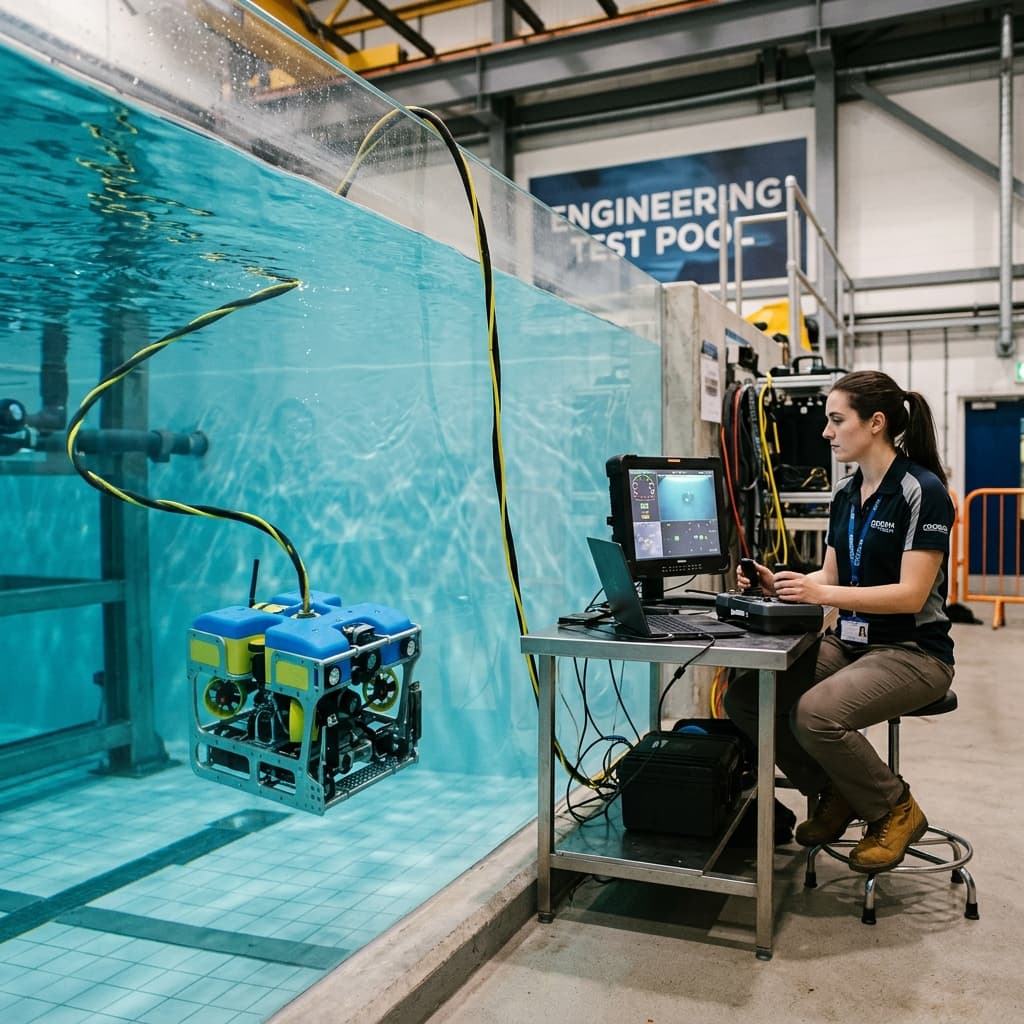
Static immersion testing, which defines both IP67 and IP68, does not account for dynamic pressure. Setting a radio gently into a one-meter pool of static water applies a consistent, relatively low hydrostatic pressure to the seals. Dropping that same radio into a shallow puddle from a height of three feet creates a momentary dynamic pressure spike on the impact face that can easily exceed the pressure of a one-meter static immersion, forcing water past the seals. Furthermore, moving water—like a fast-flowing river or the jet from a high-pressure hose—applies dynamic pressure that static testing never replicates.
Thermal shock is a major catalyst for water ingress that IP testing often misses. A piece of electronics baking in the desert sun expands, pushing internal air out through the microscopic tolerances of its seals. If that hot device is suddenly plunged into cold water, the rapid cooling creates an internal vacuum. This vacuum actively sucks water forcefully past the seals, breaching a device that might otherwise easily pass a standard room-temperature IP67 immersion test. Rugged designs mitigate this by incorporating Gore-Tex or similar breathable vents that equalize pressure without allowing liquid water to pass.
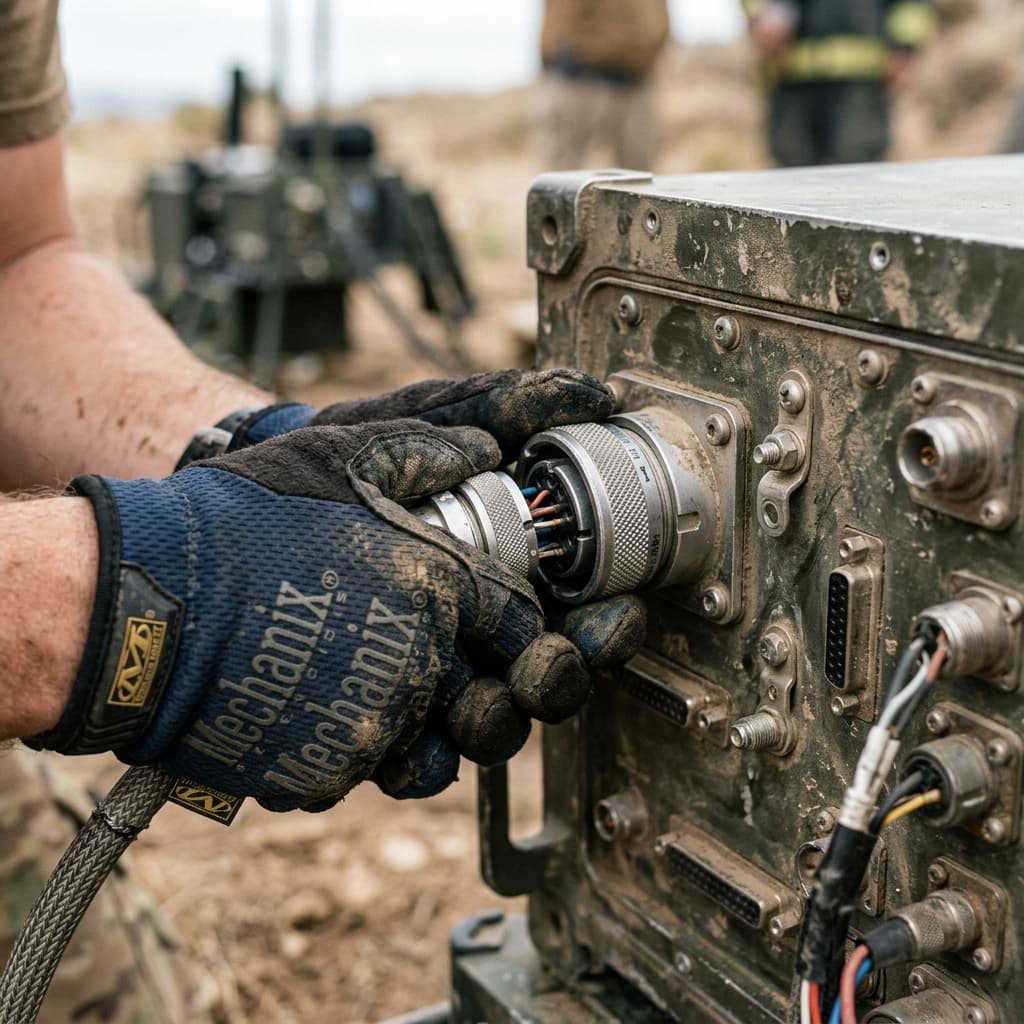
Connector vulnerabilities are the most common source of IP rating failures in the field. A rugged chassis may be perfectly IP68 rated, but if a commercial-grade USB cable is plugged into its port, the device is compromised. Ingress protection only applies when the appropriate mating connectors are used, or when the protective caps are securely fastened over unused ports. The selection of circular MIL-spec connectors over commercial interfaces is driven entirely by the need to maintain the IP rating across the cable interconnects.
Seal degradation over time renders initial factory IP ratings void. Rubber O-rings and silicone gaskets degrade under UV exposure, extreme cold, and chemical exposure (such as DEET insect repellent, which aggressively attacks many plastics and rubbers). An IP67 radio delivered from the factory will not remain IP67 indefinitely if deployed in harsh conditions. Programs must establish maintenance cycles that include inspecting and replacing perimeter seals and connector gaskets.
IP69K is an entirely separate rating designed to address the dynamic pressure failures of IP67/68. It tests protection against high-pressure, high-temperature water jets (essentially a hot pressure washer) applied at close range from multiple angles. While originally developed for equipment requiring intense washdown procedures, IP69K is increasingly demanded for rugged vehicle-mounted electronics that are exposed to extreme driving rain and high-pressure vehicle cleaning protocols where standard IP68 seals would fail under the kinetic energy of the water jet.
Verifying an IP rating claim requires reviewing the third-party laboratory test certificate. Self-certification by manufacturers is common but carries inherent bias. A legitimate rugged hardware vendor will readily provide the independent lab report detailing the exact test setup, the duration, the temperature parameters, and the pass/fail criteria used. Without this documentation, the IP rating printed on the datasheet is merely marketing.
Ultimately, relying solely on an IP rating is a flawed engineering strategy. The rating proves the device passed a specific test under controlled conditions on a specific day. True environmental resilience requires a holistic design approach encompassing thermal management, potting, conformal coating, appropriate connector selection, and realistic field testing that simulates the combined effects of shock, thermal cycling, and water exposure that the IP test standard isolates and ignores.
We facilitate small-group sessions for customers and prospects without requiring a slide deck, focused on your stack, constraints, and the decisions you need to make next.