Insights · Article · Field Robotics · Apr 2026
Designing field robotics for uninterrupted endurance: the electrical and mechanical engineering behind true hot-swap battery bays, eliminating boot-up latency, and managing power budgets during extended tactical deployments.
A tactical ground reconnaissance robot inherently operates under a severe power deficit. High-torque drive motors, spinning LiDAR arrays, and continuous high-bandwidth radio transmission quickly deplete even the most advanced lithium-ion packs. When a perimeter security robot or long-range reconnaissance platform stops to recharge by plugging into a wall, it fails its primary objective: persistent presence. Achieving true persistent operation requires a hot-swappable battery architecture, allowing an operator in the field to pull a dead battery and slam in a fresh one without ever powering down the robot's critical systems.
The electrical architecture of a hot-swap system requires a dual-bus power paradigm. The robot cannot run on a single primary battery. It must contain at least two identical, independent battery bays—or a primary bay paired with a small, permanent internal bridging battery. The power management circuitry (the BMS and power distribution board) must seamlessly transition the entire electrical load of the robot from the depleted battery to the fresh battery or bridging cell in the microsecond that the first battery's connection is physically broken.
Eliminating boot-up latency is the tactical justification for this complexity. A highly advanced robotic platform loaded with complex internal sensors, Linux-based vision processors, and network routers can easily take two to three minutes to fully boot up and re-establish a secured encrypted RF link with the operator control unit. In a hostile environment, having a robotic asset go 'deaf and blind' for three minutes during a battery swap is unacceptable. Hot-swapping ensures the network and sensors remain fully energized and operational while the motive power is merely refreshed.
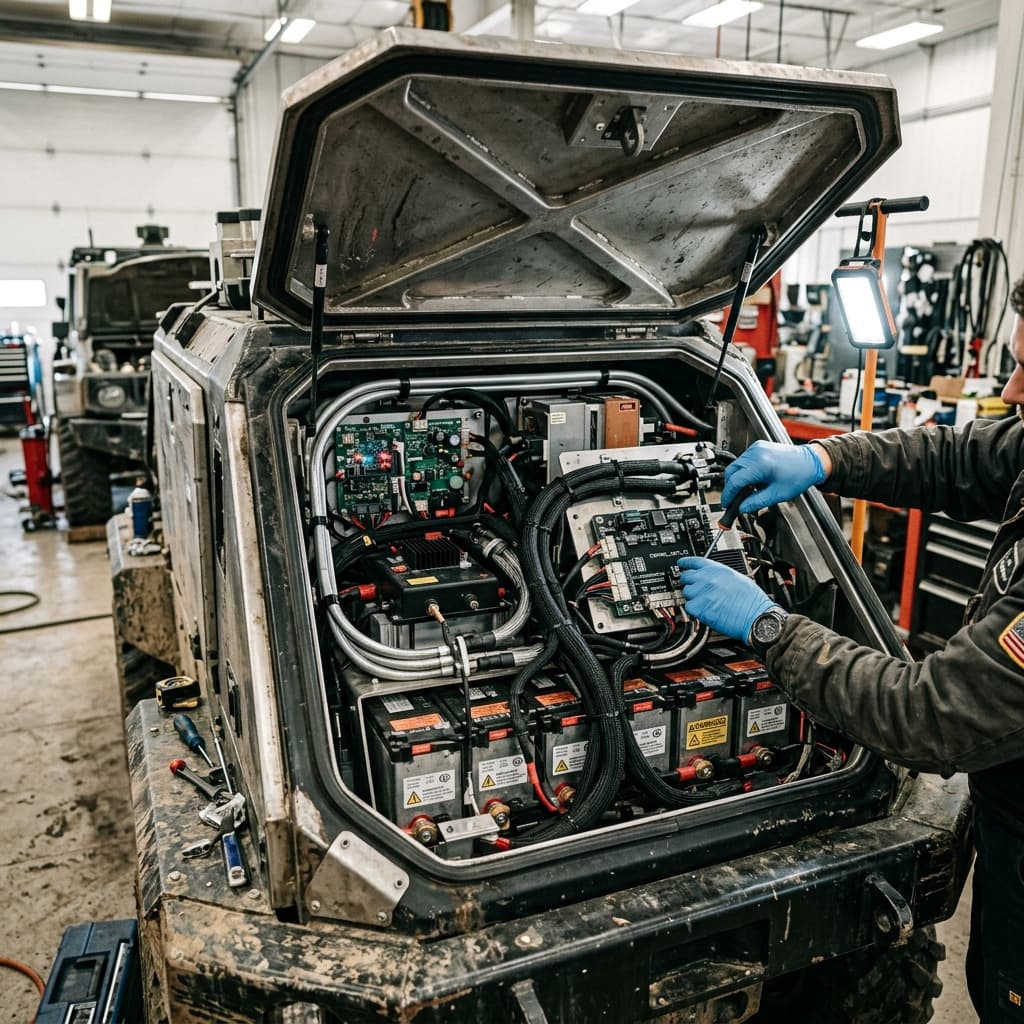
Mechanical interface design dictates the success of a hot-swap action under stress. The battery bay cannot require the operator to unscrew a hatch, disconnect a frail molex wire harness, or precisely align delicate pins. The battery structure itself must be a rigid cassette. The operator must be able to eject the dead cassette by throwing a heavy, mud-proof mechanical latch and forcibly sliding the fresh cassette into rails until it 'clicks' securely. The electrical connectors must be heavy-duty, blind-mating, and self-wiping to ensure a clean connection even if the replacement battery was dropped in the dirt.
Power budgeting during the swap phase must be actively managed by the robot's firmware. If a heavy tracked robot is executing a steep stair climb pulling maximum current, dropping out one of its dual batteries for a swap might overload the remaining battery, triggering a brownout or a protective shutdown. The HMI must notify the operator to halt aggressive driving maneuvers during the swap. Advanced systems automatically curtail power-hungry drive motors to 'parked' mode when a battery bay latch is released, preserving the remaining power strictly for the compute and comms payload.
Voltage disparity is a lethal hazard in parallel battery configurations. If an operator slams a fully charged 24V battery into a parallel bay next to a severely depleted 18V battery, massive, unregulated current will immediately flow from the full battery into the empty one in an attempt to equalize the voltage. This immense current spike will melt harnessing, destroy the BMS, and likely initiate thermal runaway. The power distribution board must incorporate robust diode isolation or intelligent solid-state switching to ensure the batteries only discharge to the robot's load, and never violently cross-charge each other.
Tactical logistics determine the form factor. The robot's battery cassette should ideally match the chemistry and general voltage architecture of the squad's existing man-pack radio batteries or vehicle power systems, allowing for emergency cross-utilization. Furthermore, a hot-swappable cassette must be physically small and light enough that a single operator can comfortably carry a spare in a backpack and execute the swap sequence one-handed while maintaining situational awareness with their weapon in the other.
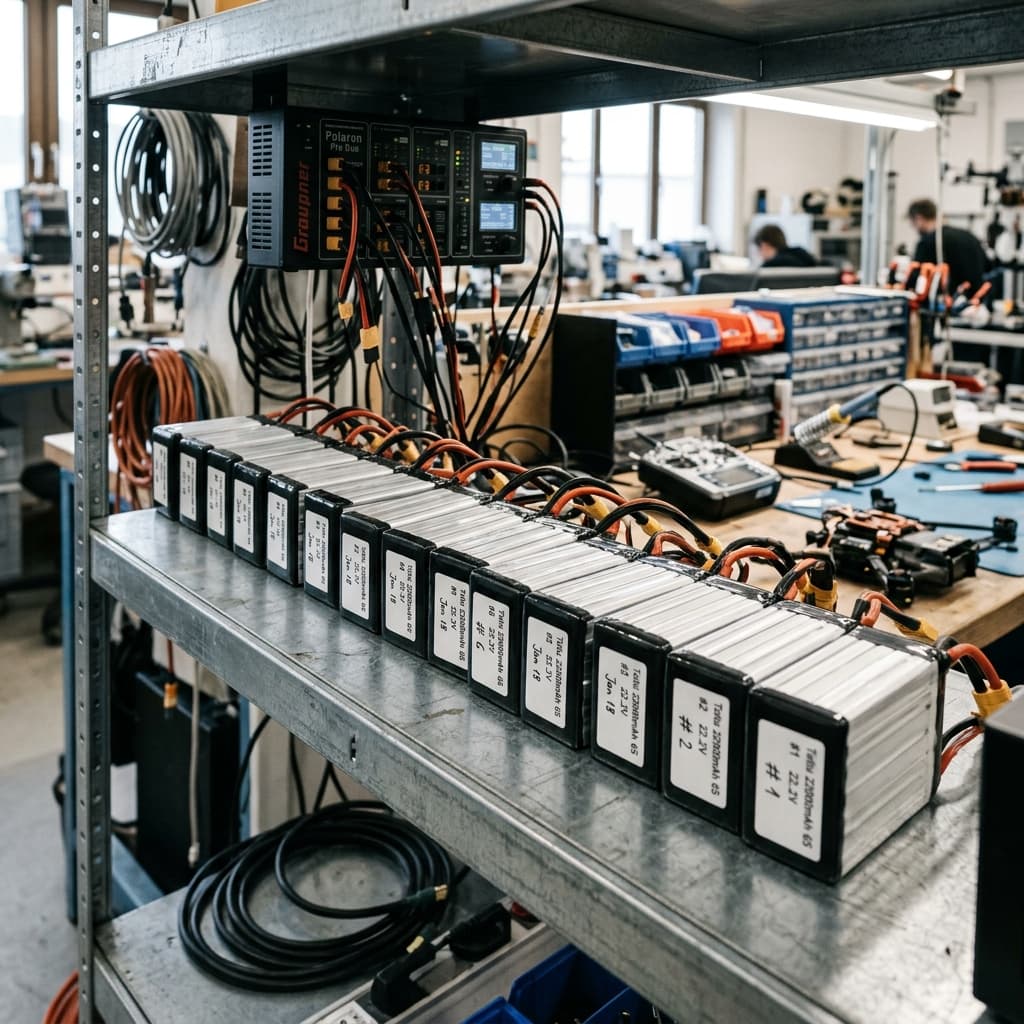
Successfully executing a hot-swap architecture transforms a robotic asset from a limited-duration gadget into a permanent piece of tactical infrastructure. It guarantees that the sensor footprint, perimeter coverage, and network relay established by the robot never blinks out due to the relentless physics of battery depletion.
We facilitate small-group sessions for customers and prospects without requiring a slide deck, focused on your stack, constraints, and the decisions you need to make next.