Insights · Article · Shelter Systems · Apr 2026
Engineering ground anchoring systems for expedition shelters in high wind environments: calculating uplift loads, selecting appropriate stake types for varying soil mechanics, maintaining guy point geometry, and verifying hold strength.
Soft-wall expedition shelters are essentially large sails that are constrained to the ground. In high wind, the aerodynamic forces acting on the broad fabric panels generate massive uplift and shear loads that attempt to separate the shelter from its foundation. A robust anchoring system is the only mechanism transferring these forces safely into the earth. When a shelter fails in a storm, it is rarely the frame that breaks first; it is typically an anchor that pulls out, allowing the guy line to go slack, which then permits the frame to deform dynamically under the wind load until catastrophic failure occurs.
Calculating the uplift load is the starting point for anchor selection. The load on a specific guy point is a combination of the wind speed, the surface area of the shelter facing the wind, the shape coefficient of the structure, and the geometry of the guy line network. Because wind force increases with the square of the velocity, the difference in load between forty knots and sixty knots is more than double. The anchoring plan must specify the maximum designed wind speed and calculate the required holding capacity for each stake location based on that worst-case aerodynamic profile.
Soil mechanics govern anchor performance entirely. An anchor stake that holds a thousand pounds of tension in dense clay may hold less than two hundred pounds in loose sand or wet mud. The one-size-fits-all approach to shelter stake kits guarantees failure when the operational environment does not match the assumed soil condition. Programs must equip their deployment teams with a variety of anchor profiles: long, wide-flanged pickets for sand and snow; heavy steel pins for rock and compacted gravel; and auger or helical anchors for loam and clay soils.
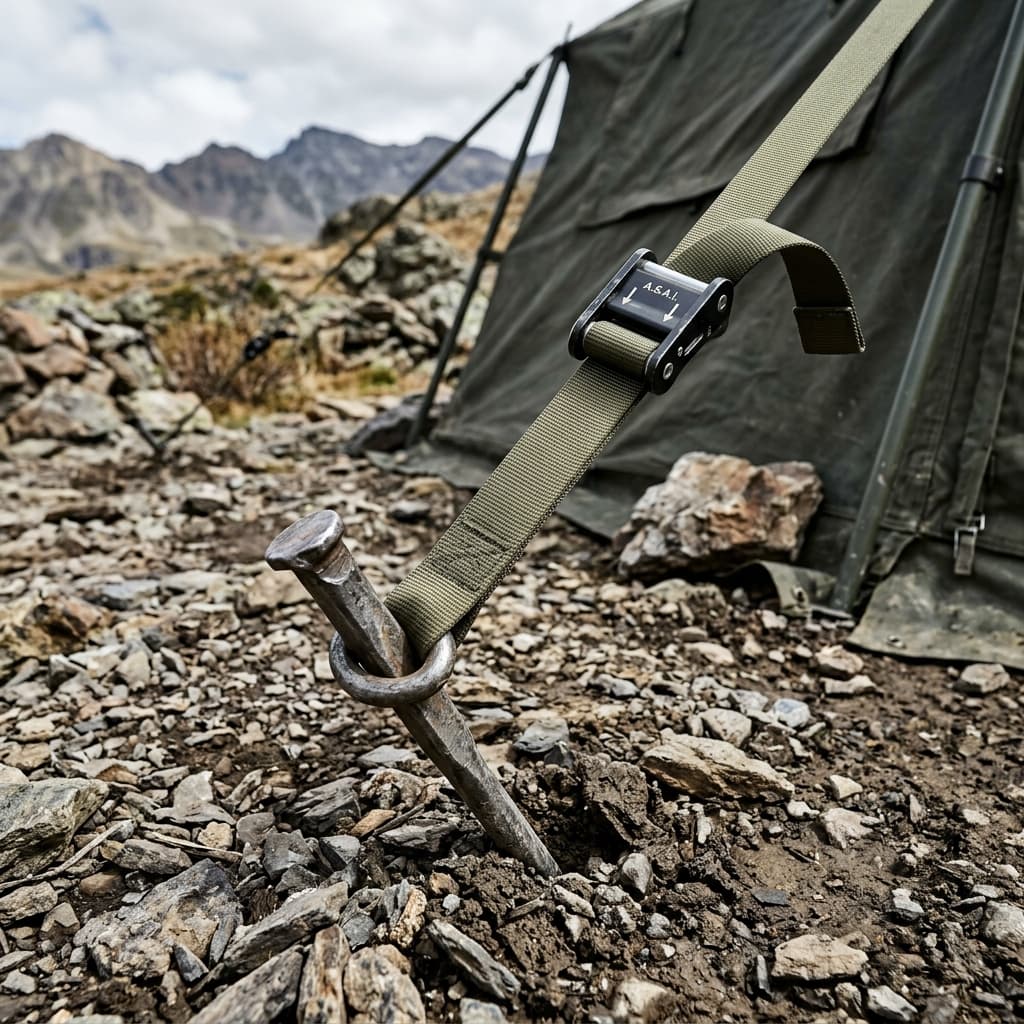
Drive angle and depth are the physical execution of the anchoring plan. A stake driven vertically provides significantly less pull-out resistance against an angled guy line than a stake driven at a ninety-degree angle relative to the guy line's approach. The stake must be driven until its head is close to the ground, minimizing the leverage the guy line has to bend the stake or pry it loose. Stakes left protruding far out of the soil are acting as lever arms, multiplying the force that will eventually rip them through the softer topsoil.
Guy line geometry determines how effectively the aerodynamic load is shared across the anchoring network. Guy lines should extend outward in line with the frame arch they are supporting, rather than angling off to the side, maintaining pure tension along the line without introducing twisting forces into the shelter frame. The angle from the ground to the guy line attachment point should ideally be between thirty and forty-five degrees. A steeper angle increases the vertical pull-out force on the stake, while a shallower angle requires excessive clearance space around the shelter footprint.
Tensioning systems must manage the dynamic nature of wind loads. Wind is not a steady pressure; it consists of gusts that cause the shelter to flex, momentarily loading and unloading the guy lines. A tensioning strap that cannot lock securely will gradually slip under this cyclic loading. Heavy-duty cam buckles or ratchets are required. Crucially, the tension must be checked and adjusted after the first twenty-four hours of deployment, as the shelter fabric stretches and the ground stakes settle into the soil. A guy line that has gone slack provides no structural benefit when the next gust strikes.
For extreme environments, such as Arctic operations or severe storm zones, deadman anchors may be required where conventional stakes are insufficient. Establishing a deadman involves burying a heavy object, a log, a specialized plate, or a sand-filled bag, horizontally in a trench and routing the guy line around it. The holding capacity is derived from the mass and shear strength of the overburden soil. While highly labor-intensive, deadman anchors provide exponential holding power in low-cohesion mediums like snow or loose sand.
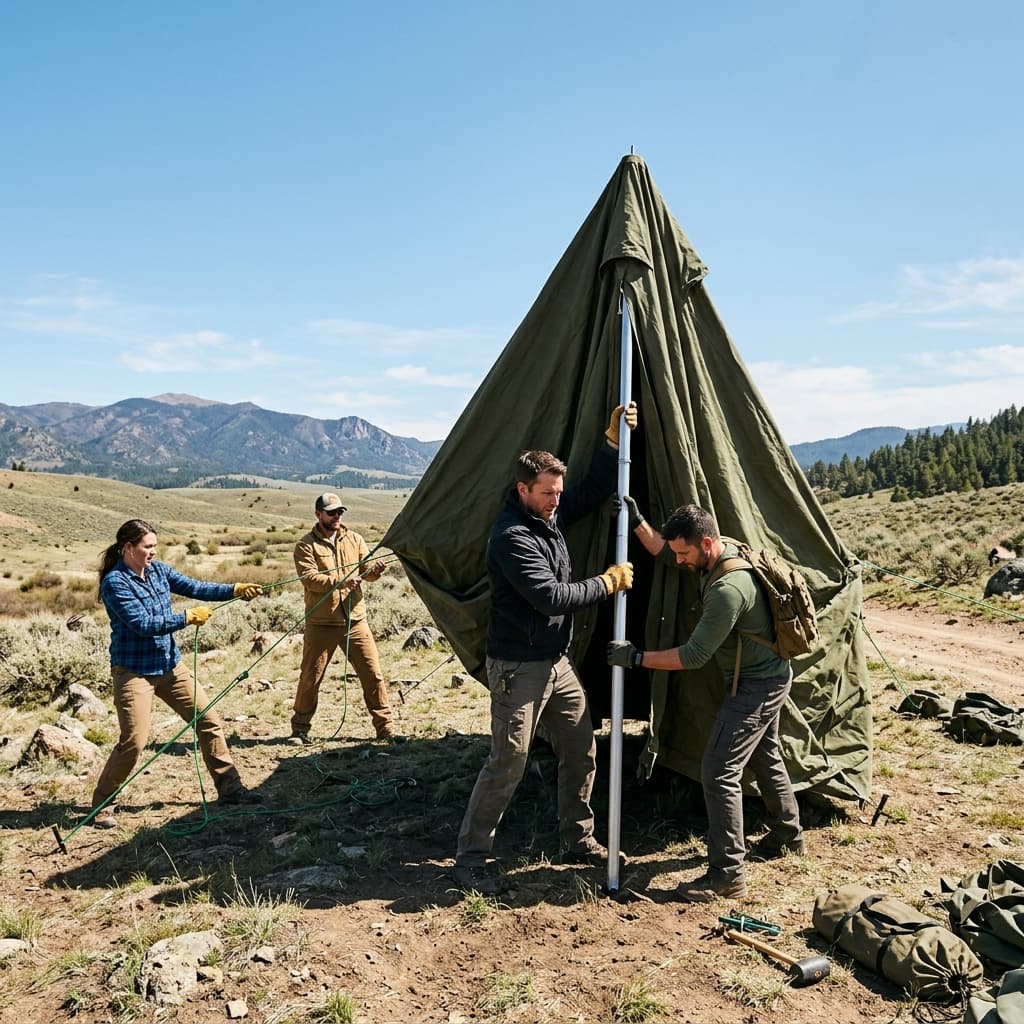
Verification of the anchoring plan requires formal validation during setup. The deployer should consult the provided footprint template to ensure spacing and geometry are correct. A pull test using a tension meter on a representative anchor can confirm that the local soil condition provides the requisite holding power predicted in the design. If the pull test fails the minimum requirement, the team must switch to a different stake profile, double the number of guy lines using a secondary attachment point, or relocate the shelter.
Anchoring over paved surfaces or concrete requires entirely different strategies because ground penetration is impossible. Ballast anchoring relies on mass rather than soil friction. Water bladders, Jersey barriers, or sandbags are attached to the guy lines. The total mass of the ballast must exceed the calculated uplift force per guy point by a significant safety factor, accounting for the reduced coefficient of friction if the ballast slides on wet pavement. Weighting down the perimeter skirt of the shelter also prevents wind from getting underneath and lifting the structure.
Daily inspection of the anchoring system is a mandatory operational routine. The inspection should verify that no stakes are backing out of the ground, that all tensioning hardware remains locked, and that the guy line webbing is not chafing against rocks or hardware. Ground that was dry and secure during installation can become saturated during rain, drastically changing the soil bearing capacity and requiring stakes to be repositioned or supplemented. In expedition sheltering, wind resilience is not a permanent state; it is maintained through daily vigilance.
We facilitate small-group sessions for customers and prospects without requiring a slide deck, focused on your stack, constraints, and the decisions you need to make next.