Insights · Article · Rugged Hardware · Apr 2026
Engineering electronics for survival at 30,000 feet: mitigating dielectric breakdown, arcing vulnerabilities, catastrophic cooling failure in thin air, and outgassing trapped in sealed rugged enclosures.
Electronic systems designed for deployment on UAVs, high-altitude balloons, or unpressurized cargo bays face environmental extremes vastly different from ground-based operations. At 30,000 feet, the ambient temperature may plunge to -50°C, and the atmospheric pressure drops to roughly thirty percent of sea level. This combination of intense cold and 'thin' air brutally exposes flaws in thermal design, electrical isolation, and component selection. An enclosure that performs flawlessly in a desert test lab will often suffer immediate, catastrophic electrical breakdown when subjected to high-altitude transit.
Dielectric breakdown and electrical arcing represent the most absolute threat at high altitudes. The insulating properties of air decrease significantly as atmospheric pressure drops. Under Paschen's Law, the voltage required to spark (arc) across a given air gap drops precipitously in a low-pressure environment. A high-voltage power supply or heavy RF amplifier circuit that maintains perfectly safe clearance distances between traces at sea level will suddenly arc across those same gaps at 30,000 feet, searing the PCB and instantly destroying the system.
Mitigating this high-altitude arcing requires aggressive layout rules. Engineers must dramatically increase the creepage and clearance distances between all high-voltage traces on the circuit board, spacing components far wider than standard commercial rules dictate. Where physical distance cannot be increased due to size constraints, thick conformal coating or heavy silicone potting must encapsulate the high-voltage sections entirely. Potting removes the low-pressure air from the equation, substituting a solid dielectric material that prevents the arc from forming regardless of altitude.
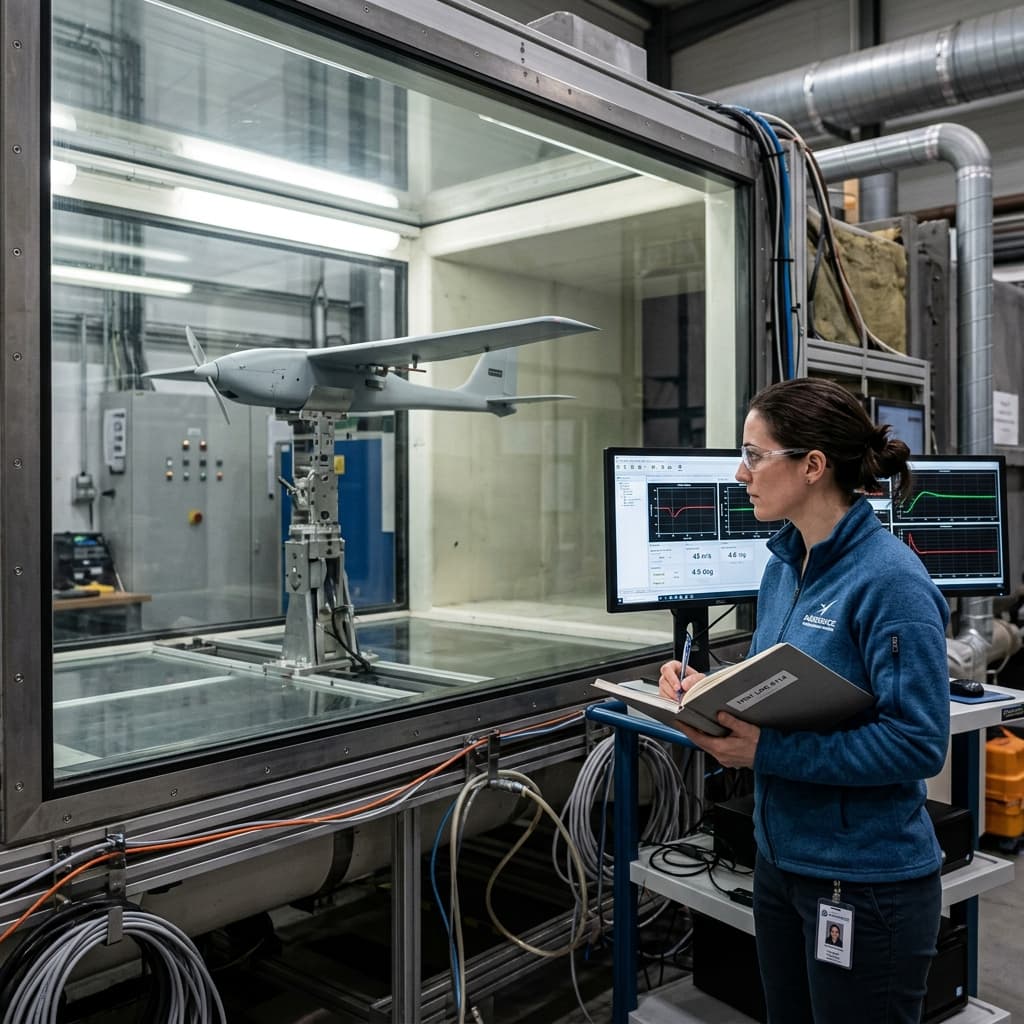
Thermal management failures are ironically common at high altitudes, despite the extreme ambient cold. Fast-moving, dense air at sea level is an excellent medium for convection cooling. At high altitude, the air is extraordinarily thin, meaning there are far fewer air molecules available to carry heat away from a heatsink fin. Convection cooling becomes incredibly inefficient. If an unpressurized electronic system relies on an internal fan pushing air through the chassis to cool a hot processor, that fan will merely spin uselessly in thin air, causing the processor to overheat rapidly even while the exterior chassis freezes.
To survive thermal challenges at high altitude, systems must rely entirely on conduction cooling. The heat must be actively conducted via solid metal pathways (copper spreaders, heat pipes) from the silicon die directly to the outer skin of the aircraft or a massive external cold plate. Designing a rugged electronics box for unpressurized flight requires abandoning all assumptions regarding internal airflow and forcing 100% of the thermal load through solid-state conduction to the exterior surface, where the extreme ambient cold can finally dissipate the energy.
Outgassing and bursting components are a frequent consequence of rapid depressurization. Electrolytic capacitors, sealed relays, and even certain types of batteries trap air and volatile solvents within their housings during manufacturing. As the external pressure drops rapidly during ascent, the pressure differential causes these trapped gasses to expand violently. Electrolytic capacitors will burst their seals, leaking corrosive electrolyte across the motherboard. High-altitude design mandates substituting solid tantalum or ceramic capacitors and specifying only hermetically sealed components rated for the target altitude.
Enclosure sealing logic inverts when dealing with unpressurized flight. A hermetically sealed, IP68-rated rugged box bolted into an unpressurized cargo bay will experience a massive, outward pressure differential as the aircraft climbs. If the box is perfectly sealed at sea level, the expanding internal air will blow out the O-ring seals, shatter the display glass, or permanently warp the aluminum chassis. Unpressurized rugged electronics must incorporate specialized two-way breather vents (like Gore-Tex patches). These vents allow the internal air pressure to equalize slowly with the external altitude while still blocking liquid water molecules from entering.
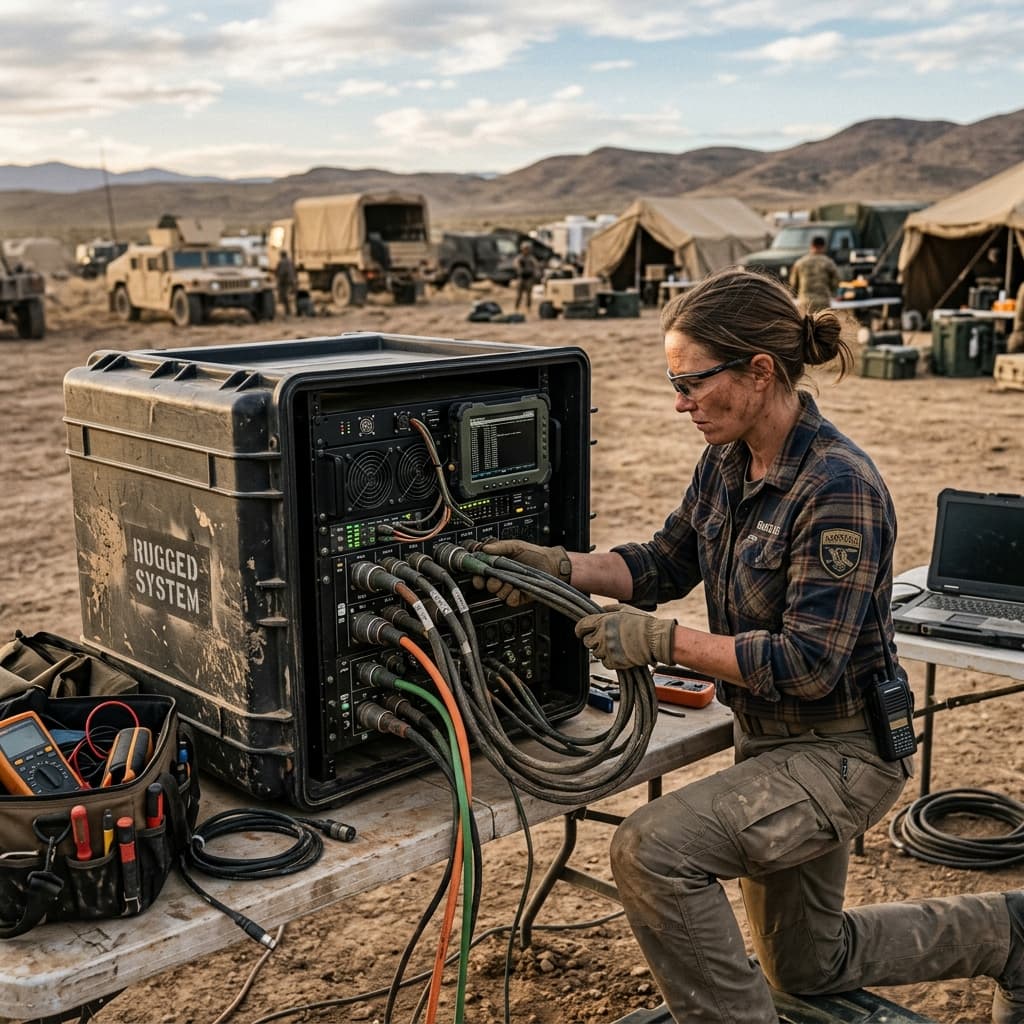
Cold-soak starting presents the final operational challenge. If an electronic payload sits powered-off in an unpressurized bay for a long loiter time, the entire system cold-soaks to -40°C or lower. Standard oscillators fail to start, LCD screens freeze completely solid, and mechanical hard drives seize up. System architecture requires integrating dedicated, low-wattage silicone heating blankets bonded directly to critical components. Before the main system is commanded to boot, the firmware must route trickle power to these heaters, holding the system in a warm-up state until the internal temperature sensors report the critical components have crossed their minimum operational thermal threshold.
Validation of high-altitude systems requires complex combined-environment testing. Placing the system in an altitude chamber and pulling a vacuum proves the seals won't burst, but it doesn't prove survivability. The test must combine rapid depressurization with simultaneous extreme temperature cycling to mimic an actual ascent profile, while the system is fully powered and under electrical load, to ensure thermal runaway, arcing, and component bursting are all successfully mitigated.
We facilitate small-group sessions for customers and prospects without requiring a slide deck, focused on your stack, constraints, and the decisions you need to make next.