Insights · Article · Hardware · Apr 2026
Closing the loop between schematic intent and field behavior: environmental stress, firmware-in-the-loop test hooks, and failure modes that only appear when power sequencing and EMI match the deployment, not the bench.
Rugged electronics programs often ship with two products: the board and the story people tell about the board. Hardware-in-the-loop testing is where the story meets measured behavior. The goal is not to duplicate every field hour in the lab, but to exercise interfaces, timing, and protection paths under stresses that correlate with deployment.
Environmental stress should follow a profile, not a single extreme point. Thermal cycling while IO is active catches solder fatigue and connector retention issues that constant hot-soak misses. Vibration profiles should include cable harness resonance if your field packaging routes flex near board edges.
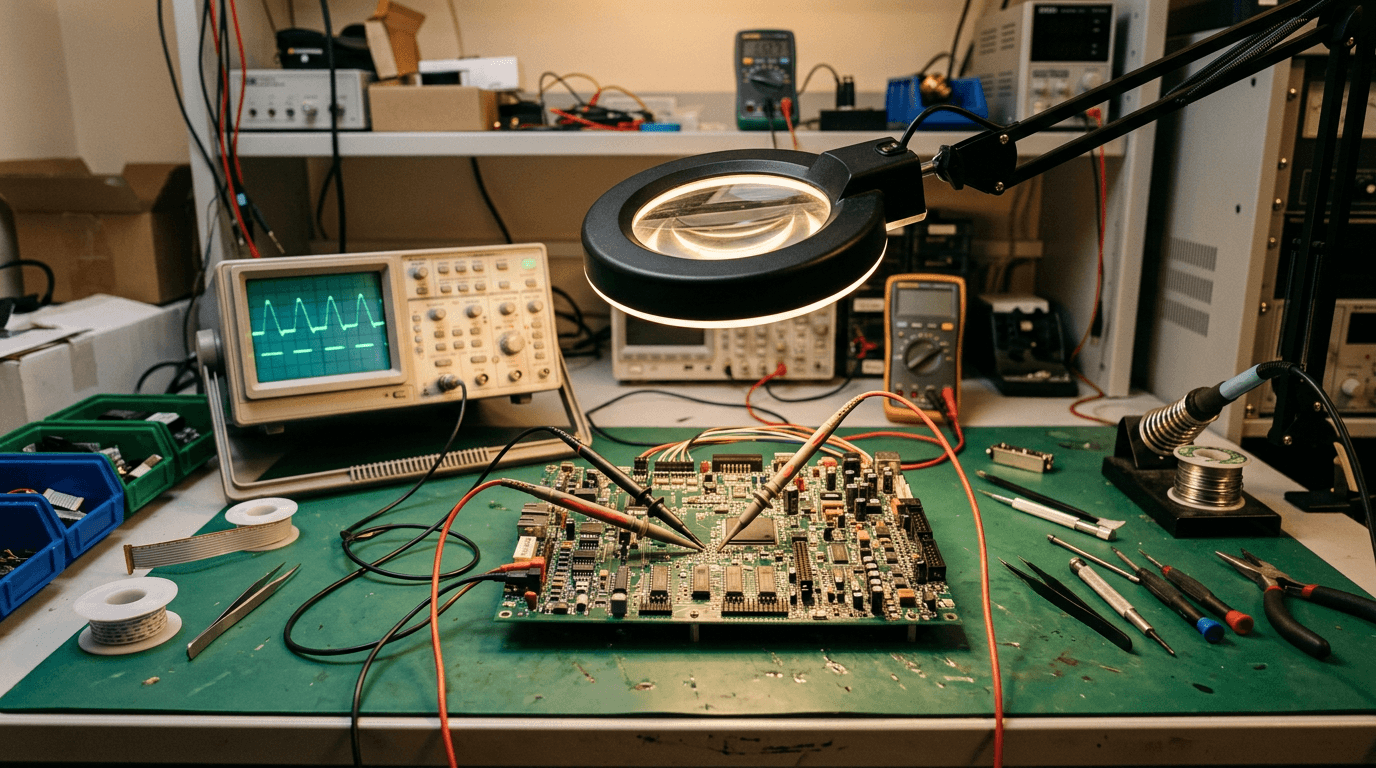
Power sequencing is a frequent source of latent defects. Brownout reset behavior, inrush limiting, and reverse polarity protection should be verified with supplies that can emulate sag and bounce, not only ideal rails. If firmware assumes stable power in milliseconds but hardware needs milliseconds more, you want that mismatch in the log before a vehicle does.
Firmware-in-the-loop hooks pay dividends when they are designed in, not bolted on after the first field trip. Test modes that can simulate sensor feeds, inject bus errors, and throttle tasks let you validate watchdog coverage and recovery paths without flying. Keep those modes behind explicit safeguards, but keep them.
EMI and grounding interact with digital margins in ways that are tedious to model. Conducted and radiated susceptibility tests should include representative cabling. A filter that works on a bare board can fail once the harness acts as an antenna. Document the worst-case configuration you tested and treat departures as significant changes.
Failure analysis discipline matters as much as pass criteria. When a board misbehaves, capture waveforms, software state, and environmental context before swapping parts. The second failure is often informative only if the first failure was preserved with enough detail to compare.

Finally, align HIL milestones with procurement gates. If a supplier change touches a protection device or a clock tree, re-run the relevant HIL profile before merging. Reliability is cumulative: small slips compound across temperature, vibration, and time.
We facilitate small-group sessions for customers and prospects without requiring a slide deck, focused on your stack, constraints, and the decisions you need to make next.