Insights · Article · Shelter Systems · Apr 2026
Building from the ground up: soil stabilization, moisture vapor barriers, and modular hard flooring systems that transform a temporary tent into a durable, functional facility for sustained field operations.
The floor of an expeditionary shelter is the literal foundation of the operation. A sophisticated soft-wall structure with advanced HVAC and pristine lighting is uninhabitable if the ground beneath it turns to deep mud, pools with rainwater, or fails to support the weight of operational equipment. For deployments extending beyond a few days, ground preparation and engineered flooring systems are not optional accessories; they are critical infrastructure that dictate the facility's lifespan and hygiene.
Soil stabilization must precede shelter erection. Deploying directly onto unprepared soil guarantees progressive failure as foot traffic and equipment weight compact the ground unevenly. In muddy or loose soil conditions, the site must be graded for drainage and stabilized using geotextile fabrics or structural geocells filled with local aggregate. This establishes a load-bearing base that prevents heavy equipment—like server racks or surgical tables—from sinking, while simultaneously preventing the underlying soil from churning into the shelter interior.
Moisture vapor barriers are the primary defense against internal condensation. The earth constantly exhales moisture, even in seemingly dry environments. If a shelter is erected over bare ground or a porous fabric floor without a vapor barrier, the heated interior air will pull this moisture out of the soil. This creates rampant condensation on the inner walls and roof, leading to mold growth and equipment corrosion. A continuous, heavy-mil plastic or impermeable coated-fabric vapor barrier must be laid precisely over the footprint before the main floor is installed, with all seams heavily overlapped and taped.
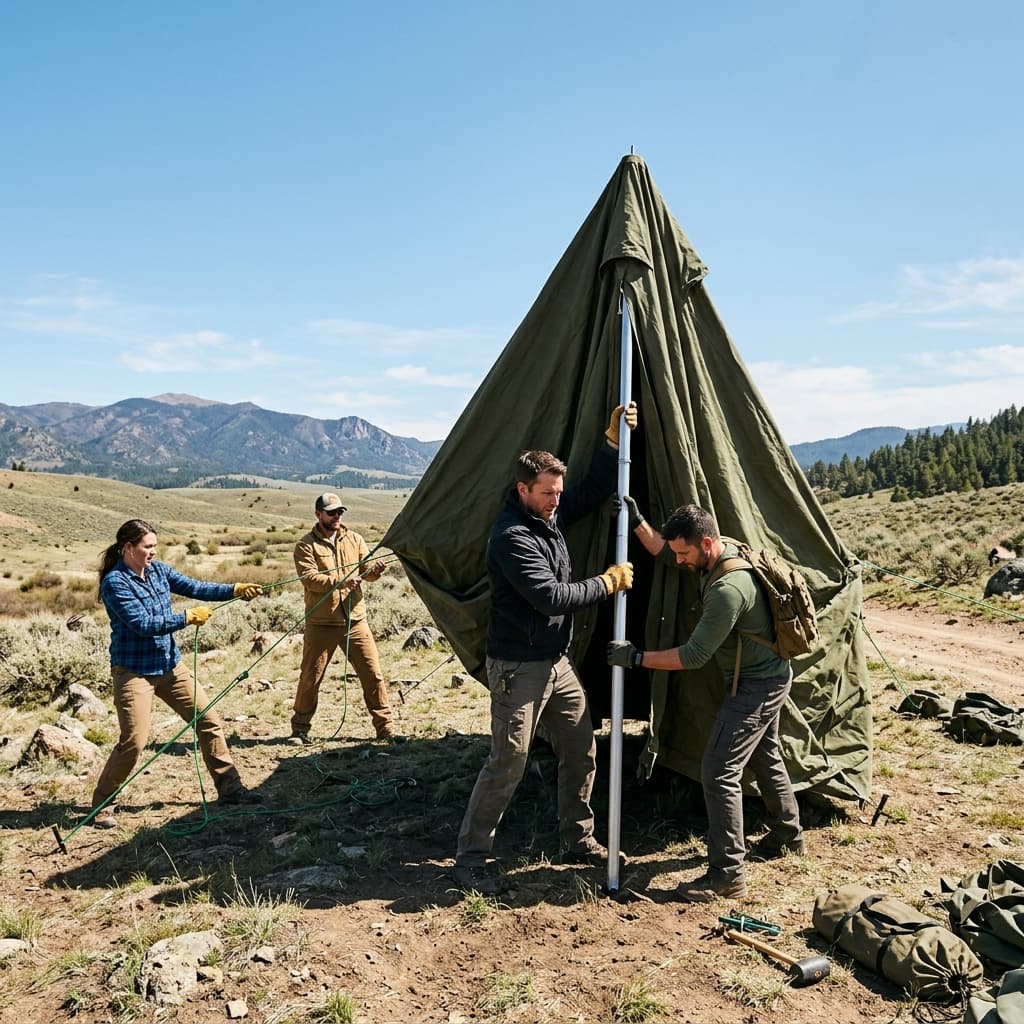
Soft fabric floors, often integrated directly into the shelter skin to create a continuous 'bathtub' seal against insects and water ingress, are suitable only for light personnel use. These floors offer no structural support and are easily punctured by cot legs, transit cases, or dropped tools. If an integrated fabric floor is used, it must be protected immediately upon installation by an overlying rigid layer, or it will be destroyed within the first week of a sustained operation.
Modular hard flooring systems provide the necessary structural bridge between the uneven ground and the operational requirement. These systems typically consist of interlocking, high-density polyethylene or composite panels. They distribute point loads (like a heavy tool chest) across a wider area of the subsoil, preventing punctures in the vapor barrier and providing a safe, predictable surface for rolling equipment. The interlocking mechanism must be robust enough to withstand the shear forces of personnel walking heavily across the floor without separating.
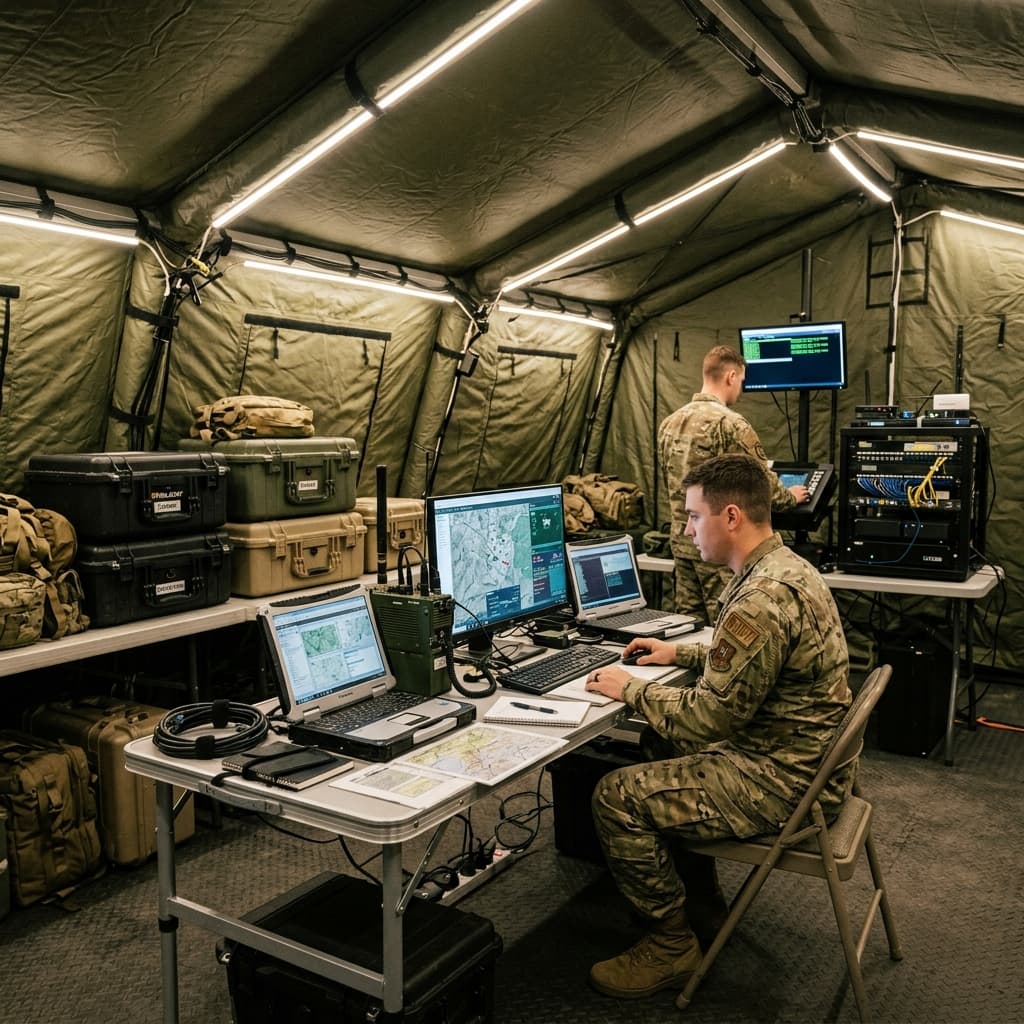
Cable routing under the floor is a major advantage of advanced modular systems. Many interlocking floors feature engineered channels on their underside. This allows heavy power feeds and data cables to be run safely beneath the working surface, eliminating trip hazards entirely without requiring overhead suspension gear. The deployment sequence must meticulously map these runs before the floor is fully locked together, as pulling a tight cable through a long under-floor channel after assembly is often impossible.
Hygiene and decontamination are vastly improved by hard flooring. A soft fabric floor that becomes saturated with spilled fuel, medical fluids, or simple mud cannot be adequately cleaned. Modular plastic floors can be swept, mopped with strong chemical disinfectants, and even pressure-washed in sections if severely contaminated. For medical or dining facilities, the junctions where the floor meets the shelter walls must be coved—curved upward—to prevent fluids from pooling in sharp corners where they cannot be cleaned.
Thermal insulation of the floor is frequently overlooked. In cold weather operations, a shelter can lose up to thirty percent of its heat directly into the frozen ground. In these environments, insulated flooring panels or a dedicated layer of rigid closed-cell foam board must be installed beneath the hard flooring surface. Preventing this conductive heat loss drastically reduces the fuel consumption of the environmental control units and prevents personnel from suffering cold injuries through their boots.
Leveling the floor on uneven terrain requires specialized sub-structures. While interlocking panels can follow minor ground contours, they cannot bridge deep ruts or negotiate sharp drop-offs. If the deployment site cannot be graded flat, adjustable jack-stand systems supporting an aluminum floor joist grid must be employed. These systems are heavier and more complex to deploy, but they guarantee a perfectly level, rigid floor regardless of the underlying topography.
Maintenance of flooring systems involves regular inspection of the interlocking tabs, as these are the mechanical weak points that break under stress. Broken panels must be replaced, or the entire floor matrix will begin to shift and separate. Additionally, any modular floor deployed for a sustained period will inevitably trap dirt and moisture beneath it. Upon demobilization, the panels must be thoroughly cleaned and dried before packing, otherwise the accumulated grit will damage the interlocking mechanisms, and trapped biological matter will degrade the material during storage.
We facilitate small-group sessions for customers and prospects without requiring a slide deck, focused on your stack, constraints, and the decisions you need to make next.