Insights · Article · Shelter Systems · Apr 2026
Analyzing soft-wall shelter frame dynamics under severe snow loads: the difference between live and dead loads, recognizing structural deflection limits, and operational protocols for maintaining integrity during heavy precipitation.
Snow loading presents a unique structural challenge for expedition shelters because it is a cumulative, static load that alters the fundamental shape of the structure. Wind is a dynamic load that strikes and releases; snow is a dead load that continuously presses down, increasing in mass as precipitation continues. Understanding how a lightweight aluminum or composite frame supports, distributes, and eventually yields to this load is essential for commanding safe shelter operations in winter environments.
The engineering specification for snow load is calculated in pounds per square foot (PSF), but this metric is often misunderstood in the field. A shelter rated for twenty PSF snow load does not mean it can support twenty PSF uniformly across its entire surface simultaneously. Design standards typically assume a specific distribution profile based on the roof pitch. As snow accumulates on the ridge, the fabric sags between the purlins (the horizontal frame members), creating valleys that catch more snow, concentrating the weight in specific localized areas rather than distributing it evenly across the arch.
Ponding is the most dangerous consequence of initial deformation. When the fabric sags under a moderate snow load, it creates a depression. If precipitation turns to rain or if the shelter's internal heat melts the bottom layer of snow, water pools in these depressions. Water is substantially denser than snow. A small sag can quickly collect enough water to exceed the local yield strength of the nearest frame member, leading to a cascading progressive collapse of the entire roof section.
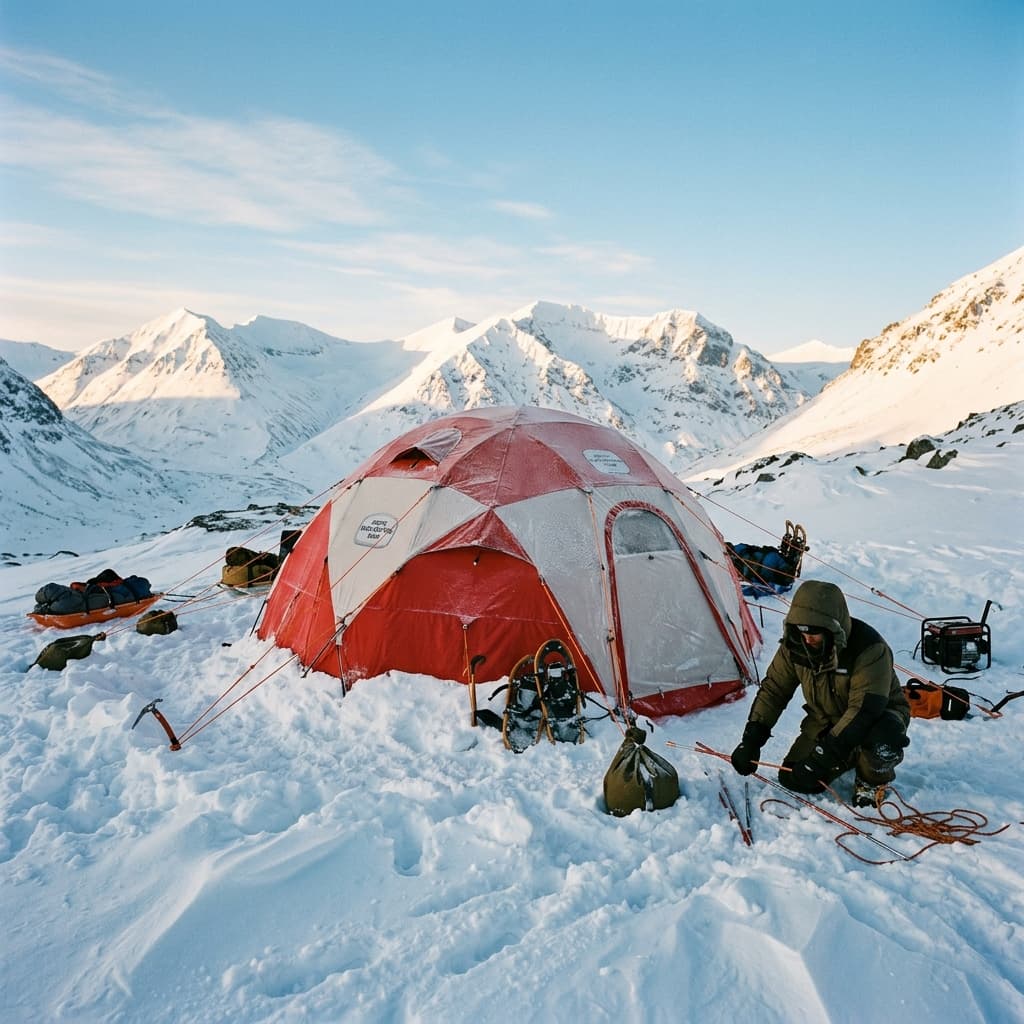
Frame deflection is the primary physical indicator of structural stress. Soft-wall shelter frames are designed to flex; they are not rigid buildings. However, there is a designed limit to this elastic deformation. When aluminum frame members bow visibly under a snow load, they are approaching their plastic yield point. Once an aluminum pole bends past this point, it will not return to its original shape when the load is removed. It has been permanently weakened and must be replaced. Operators must be trained to recognize the visual difference between normal elastic flex and dangerous plastic deformation.
Internal heat loss plays a paradoxical role in snow load management. A poorly insulated shelter leaks heat through the roof, which melts the snow in contact with the fabric. In moderate freezing conditions, this is beneficial, allowing the melted snow to slide off. However, in severe cold, the melted snow runs down the roof profile and refreezes at the eaves, where the fabric is colder, creating massive ice dams. These ice dams add extreme dead weight to the shelter perimeter and block further snow from sliding off. A highly insulated shelter prevents this melting, holding the snow as a dry powder that is more easily removed mechanically or blown off by the wind.
Operational snow removal protocols must be established before the first snow falls. Relying on the structural limit of the frame is a flawed strategy. Snow must be cleared actively to maintain the safety factor. Clearing should be done symmetrically; removing snow from one side of a shelter while leaving a heavy load on the other creates severe unbalanced shear forces that can buckle the frame laterally. Snow removal tools must not have sharp edges that could tear the cold, brittle fabric.
Tensioning the fabric skin is the most effective preventative measure against snow accumulation problems. A drum-tight skin prevents the deep sags that initiate ponding and allows the natural pitch of the roof to shed snow effectively. This requires daily adjustment of base tensioning straps and guy lines, as extreme cold causes fabric to contract and hardware to shift. A loose, flapping skin is inherently weaker and more prone to catching both wind and snow.

Secondary support systems, such as temporary internal center poles, can be deployed to increase the snow load capacity of an existing shelter during extreme, unpredicted weather events. However, these systems interfere with the usable interior floor space and require solid foundation support directly underneath them. If an internal support pole rests on soft ground or plywood flooring, the concentrated load will punch through the floor rather than supporting the roof.
Deployment site selection in mountainous terrain must consider avalanche runout zones and prevailing wind directions. A shelter deployed in the lee of a large terrain feature may experience massive snow drift accumulation, covering the structure much faster than direct precipitation alone. Drifting snow can also block ECU exhaust vents, creating a carbon monoxide hazard inside the shelter if combustion heaters are in use.
Post-winter inspection of shelter frames is essential before packing the system away for the season. Every arch must be laid flat and inspected for bowing, cracks at the connection hubs, and elongation of the set-pin holes. A frame member that has yielded slightly may not have failed during the winter, but its structural capacity is compromised, and it will fail under a lesser load during the next deployment.
We facilitate small-group sessions for customers and prospects without requiring a slide deck, focused on your stack, constraints, and the decisions you need to make next.